




Porthole Gilt Wall Mirror
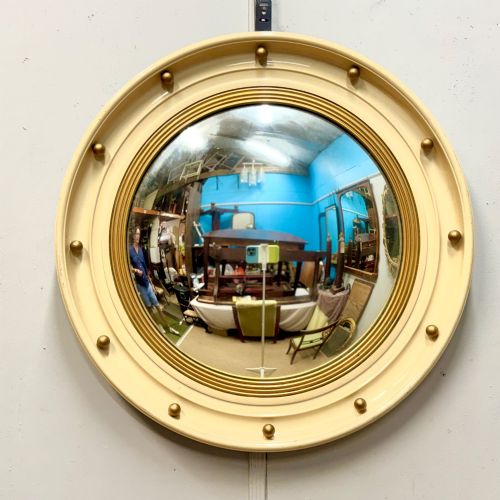
A porthole gilt wall mirror gathers light into a convex curve, offering a wide, circular view of any room it occupies.
Porthole Gilt Wall Mirror
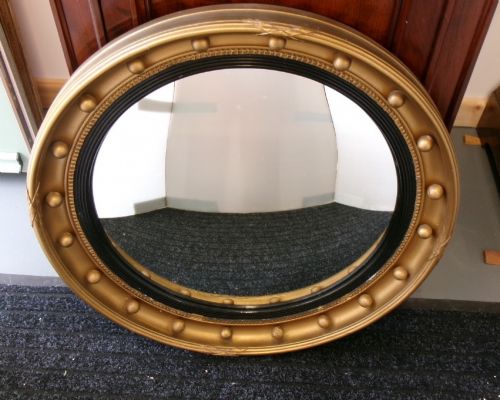
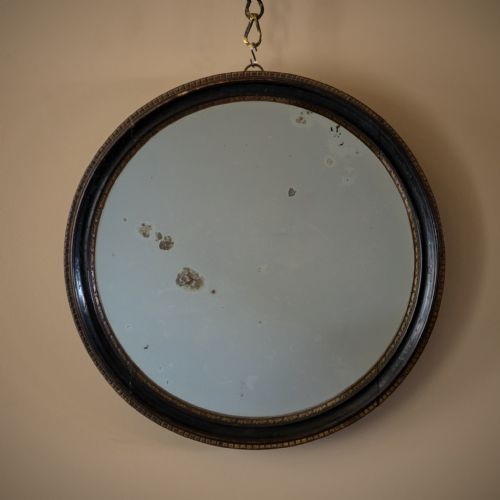
A porthole gilt wall mirror is typically circular, featuring a curved glass surface set within a decorative wooden or metal frame. These round hanging pieces appear most frequently from the nineteenth century, spanning Regency, Victorian, and later revival periods.
The form often includes a convex glass lens that projects outwards, creating a distinct curved reflection of the interior space. Examples range from simple giltwood frames to elaborate designs incorporating ebonised slips and classical styling.
How they were made
Frames are constructed from wood or gesso over wood, finished with layers of bright gold leaf or paint to achieve a gilt appearance. Some variations introduce ebonised wood details to contrast against the metallic surface.
The circular glass is blown or cast to create the characteristic outward curve, held securely within the moulded rebate of the frame.
These curved glasses capture a fish-eye view of your room, making even the tidiest parlor look like a bustling nineteenth-century ship's cabin.
What varies in quality
The crispness of the carved detail on the frame and the depth of the gilding determine the visual presence of the object. Subtleties in the joinery of the circular wooden elements and the clarity of the curved glass distinguish finer examples.
The integration of secondary decorative elements, such as ebonised slips or specific moulding profiles, reflects the care taken during manufacture across the nineteenth and early twentieth centuries.
The Porthole Gilt Wall Mirror Glossary
- Convex glass
- A curved glass lens that bulges outward towards the viewer. This shape creates a wide-angle reflection of the surrounding room.
- Giltwood
- Wood that has been coated with thin sheets of gold leaf or gold powder. It provides a bright metallic finish that reflects light.
- Ebonised wood
- Timber treated to resemble ebony, usually through dark staining or painting. It adds a sharp dark contrast to the gilt surfaces.
- Gesso
- A plaster-like mixture applied to wood frames to create a smooth surface for gilding and moulding. It allows for crisp decorative details.
Porthole Gilt Wall Mirror: Frequently Asked Questions
How do I hang a heavy convex mirror?
These round mirrors require robust wall fixings due to the substantial weight of the timber frame and glass. Secure attachments into wall studs or appropriate masonry anchors ensure safe placement.
Positioning the piece at eye level allows the curved reflection to capture the best angles of natural light from windows across the room.
What is a convex mirror used for?
Historically, convex mirrors were placed in grand halls and principal rooms to monitor activity across a wide space. The curved glass gathers light from multiple directions to brighten darker corners.
Today, they serve primarily as decorative wall focal points that add depth and dimension to interior spaces.
How do I clean a gilt frame?
Gilt surfaces require gentle dusting with a soft, dry brush to remove particles without disturbing the fragile gold leaf. Moisture and modern cleaning chemicals can damage the underlying gesso and finish.
Keeping the piece away from direct heat sources helps preserve the stability of the wooden frame and its historical coatings.
How can I tell a Regency mirror apart?
Regency period mirrors often display classical motifs and specific frame profiles associated with early nineteenth-century design. These pieces frequently feature rich gilding and precise circular proportions.
Later revival iterations from the Victorian period or the twentieth century adopt similar forms but show distinct construction details upon closer inspection.