
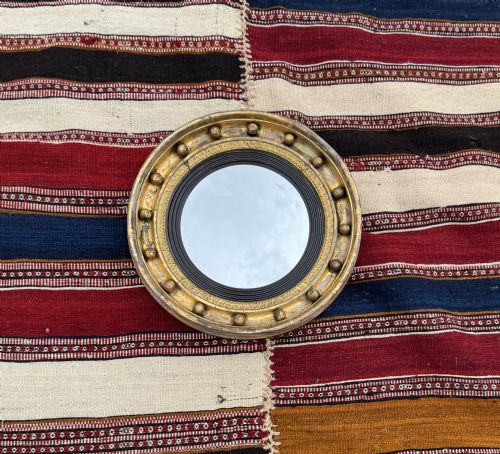

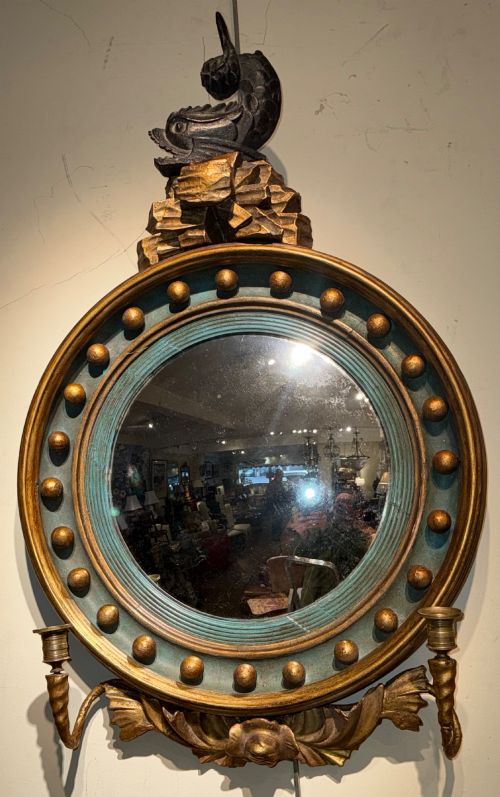


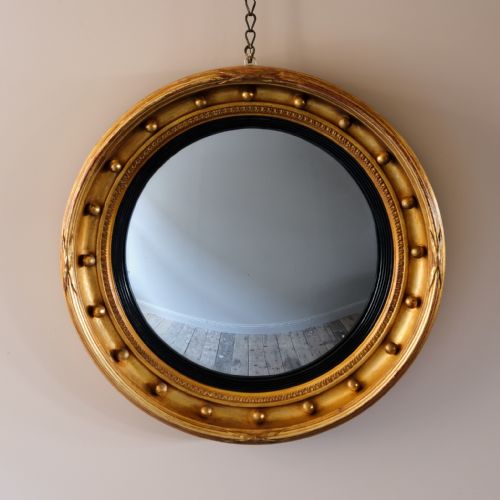


Bullseye Convex Wall Mirror
A bullseye convex wall mirror brings a distorted, luminous fish-eye view of the room, prized for centuries to light dark corners and hold the eye.
Bullseye Convex Wall Mirror
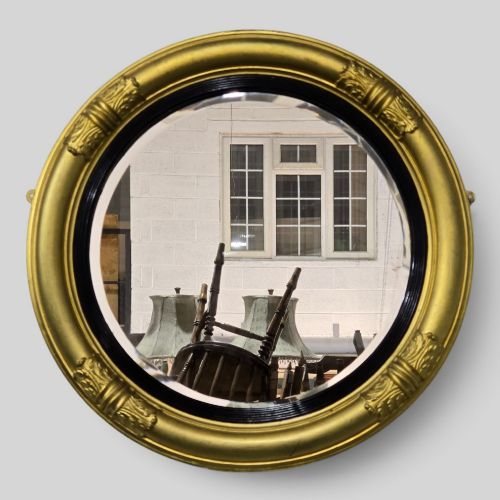
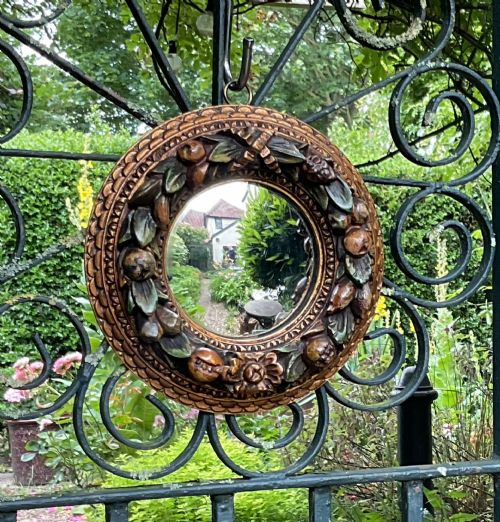
A bullseye convex wall mirror is a circular looking glass curved outward to capture a wide-angle reflection of the entire interior in a single frame. When you search for a bullseye convex wall mirror, you encounter pieces spanning the Georgian, Regency, Victorian, and early twentieth-century periods, alongside later revivals.
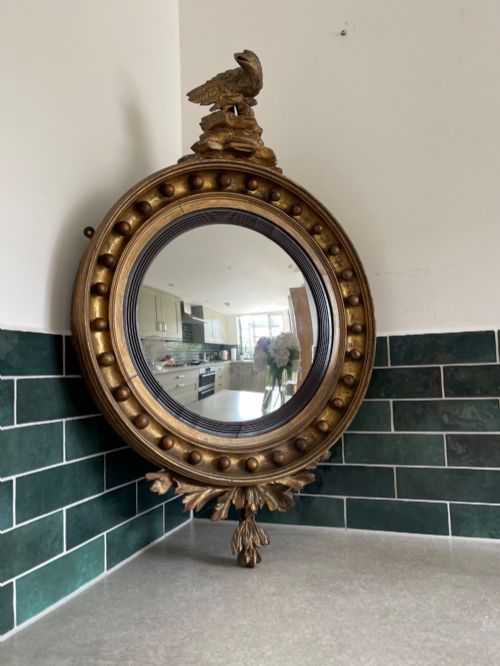
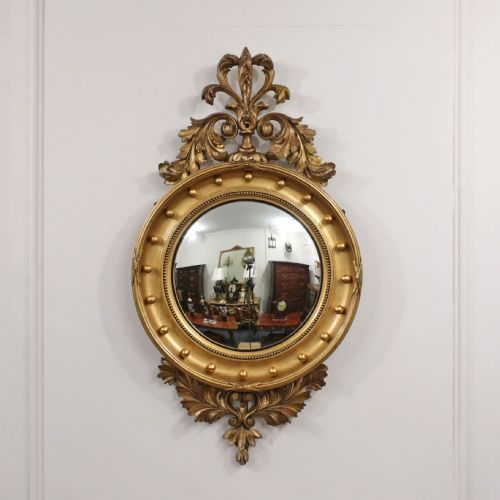
The version you meet most often on this page is the Regency giltwood circular mirror, frequently featuring carved details such as an eagle surmount perched atop the frame. These wall mirrors range from small hall pieces to large, commanding wall ornaments.
Makers and craftsmen of the nineteenth century also produced timber, mahogany, and brass variants, alongside gesso-coated frames finished in bright gold leaf. While Regency originals dominate, the listings include examples from eighteen-hundred up to nineteen-thirty, reflecting enduring popularity across multiple eras.
Materials and construction methods
Makers fashioned these round frames from timber, mahogany, and ebonised wood, often applying a layer of gesso to build up crisp decorative mouldings. Giltwood surfaces were painstakingly covered in thin gold leaf to achieve a brilliant, reflective metallic sheen.
The convex mirror glass itself was blown or cast before silvering, set deep within a moulded circular rebate that often featured inner ebonised reeded slips and decorative brass balls.
Several mirrors feature vigilant eagles perched on top, watching over the room with unblinking wooden eyes.
Distinguishing quality across the range
The fineness of the carved ornament sets superior examples apart, particularly the anatomical detail and feather work on eagle surmounts or the crispness of the giltwood acanthus leaves. Heavy, solid timber construction and well-preserved original gilding indicate careful historical maintenance.
The depth and clarity of the curved mirror glass influence visual impact, alongside the proportion of the ebonised reeded slip relative to the outer frame. Early Regency pieces demonstrate a harmony of scale that later revivals occasionally miss.
The Bullseye Convex Wall Mirror Glossary
- Convex mirror
- A curved circular glass that reflects a wide, fish-eye perspective of the surrounding space. This optical distortion was deliberately used by interior designers to brighten rooms.
- Giltwood
- Timber coated in gesso and covered with fine gold leaf. It provides a durable and brilliant metallic finish characteristic of Regency frames.
- Ebonised wood
- Dark timber stained or treated to imitate ebony. It frequently appears on the inner reeded slip of the mirror frame.
- Gesso
- A plaster-like mixture applied to wood bases to create smooth surfaces for carving or gilding. It allows intricate decorative details to be moulded onto the frame.
- Reeded slip
- A narrow, fluted inner ring framing the mirror glass. It creates a visual border between the reflective surface and the outer gilt frame.
Bullseye Convex Wall Mirror: Frequently Asked Questions
Why are convex mirrors curved outwards?
The outward curve bends light rays to capture a panoramic view of the entire room within a compact circular frame. This optical property made them popular in historical interiors for monitoring large spaces.
Georgian and Regency homeowners also utilised them to reflect natural daylight from windows into darker hallways and corners.
How can I tell a Regency original from a later revival?
Examine the construction of the timber backing and the composition of the gesso layer for signs of age and shrinkage. Early nineteenth-century pieces often display hand-carved details and antique mirror glass with subtle foxing.
Revival pieces from the twentieth century tend to show machine tooling, modern backing boards, and uniform flat gilding without historical wear.
What rooms suit a convex wall mirror best?
Dining rooms, hallways, and drawing rooms benefit most from the wide-angle perspective and bright focal point these mirrors provide. Their compact circular format fits well above mantelpieces or narrow console tables.
Placing them opposite a window maximises their original purpose of distributing ambient daylight across the interior space.