



Gilt Convex Girandole Mirror
A gilt convex girandole mirror captures the room in a single curved plate, bringing light and depth to any interior.
Gilt Convex Girandole Mirror
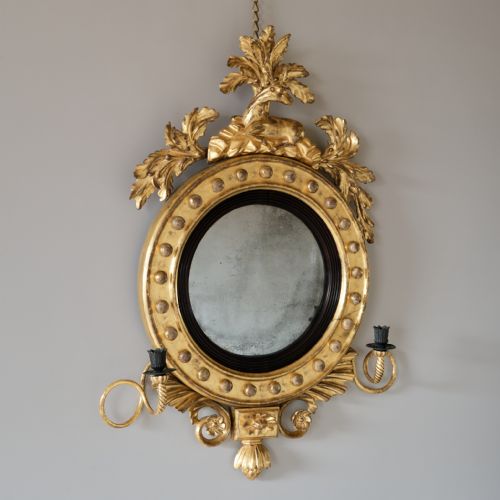
A gilt convex girandole mirror is a round wall-hanging glass plate set within a circular frame, often accompanied by candle arms known as girandoles. The form distorts the reflection into a wide-angle panorama, which made them popular for supervising large reception rooms.
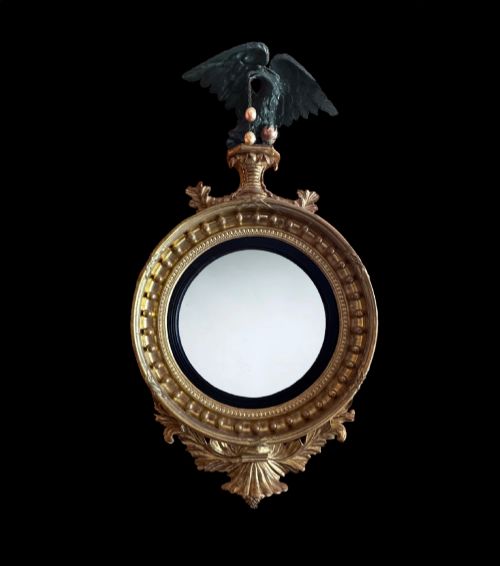
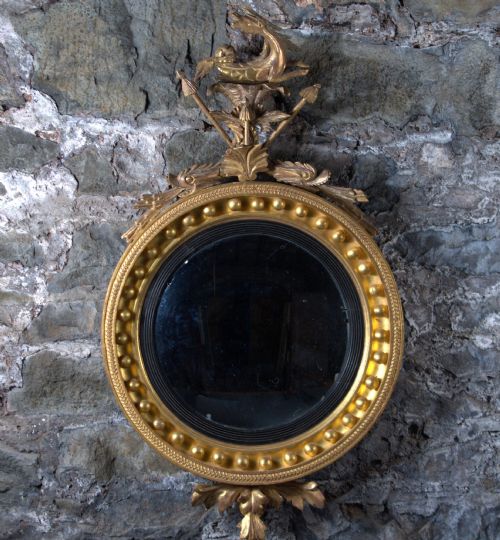
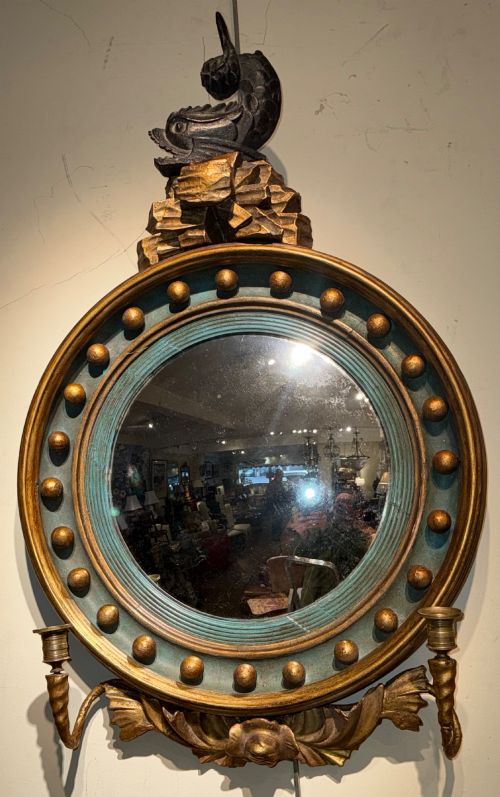
Most examples found here date from the Regency period, though Victorian, 19th-century, and early 20th-century revivals also appear. You will frequently encounter forms featuring carved birds, such as eagles, perched atop the frame or dragons integrated into the wood.
They exist in various dimensions, ranging from smaller pieces designed for intimate spaces to large wall mirrors measuring significant proportions. The frame construction relies heavily on carved wood and gesso finished in bright metallic leaf.
How They Were Made
The frames are constructed from wood and gesso, carved and layered before receiving a fine application of metal leaf to achieve the characteristic bright finish. Ebonised wood details frequently contrast against the gilt surfaces.
The curved mirror glass itself creates the distinctive bulging reflection, housed securely within deep circular mouldings. Metal components such as brass form the structural elements for candle sconces when the piece incorporates girandole arms.
Convex mirrors were once dubbed banker's mirrors because their wide-angle view allowed shopkeepers to keep an eye on all corners of the room.
What Varies in Quality
The depth and clarity of the carved wooden ornamentation separate standard items from superior works, particularly where complex creatures like eagles or dragons surmount the frame. Crisply defined gesso work retains its sharpness beneath the metallic leaf.
The proportion between the convex glass plate and the surrounding frame dictates the visual balance of the piece. Surviving candle arms and original mercury mirror glass also influence the character of the object.
The Gilt Convex Girandole Mirror Glossary
- Convex glass
- A curved glass plate that swells outward, producing a wide-angle, spherical reflection of the room. This optical property distinguishes these glasses from flat wall mirrors.
- Girandole
- A wall bracket or mirror equipped with candle branches. The term specifically identifies pieces designed to hold lit candles in front of the reflecting surface.
- Giltwood
- Timber coated with gold leaf or metal leaf over a prepared base. It provides the bright reflective surface seen on traditional frames.
- Gesso
- A plaster-like mixture applied to wooden frames to create a smooth surface for carving and gilding. It allows for intricate moulded details around the mirror edge.
- Ebonised wood
- Timber treated to resemble ebony, creating a dark contrast against the bright metallic leaf of the frame. This technique appears on specific Regency and 19th-century examples.
Gilt Convex Girandole Mirror: Frequently Asked Questions
Where should I hang a convex mirror?
These pieces work effectively in entrance halls, dining rooms, and living spaces where they can reflect natural light and open up the visual field of the room.
Because the curved glass shrinks the reflection, position the mirror at eye level opposite a window or chandelier to maximise the illuminated effect.
What is the difference between a convex mirror and a girandole?
A standard convex mirror consists only of the circular frame and glass plate, focusing purely on reflection and wall decoration.
A girandole incorporates attached candle arms or sconces extending from the frame, combining illumination with the optical glass.
How do I identify a Regency period mirror?
Regency pieces often display characteristic motifs such as reeded ebony inner bezels, spherical ball ornaments around the frame, and carved eagle crests.
The construction techniques, wood density, and hand-applied gesso finishes of the early 19th century further separate authentic Regency items from later 20th-century revivals.
How do I clean the glass safely?
Use a soft, dry microfibre cloth to gently remove dust from the curved glass plate without applying heavy pressure to the surface.
Avoid spraying liquid cleaners directly onto the glass, as moisture can seep behind the plate and damage the historical backing or the surrounding giltwood frame.