

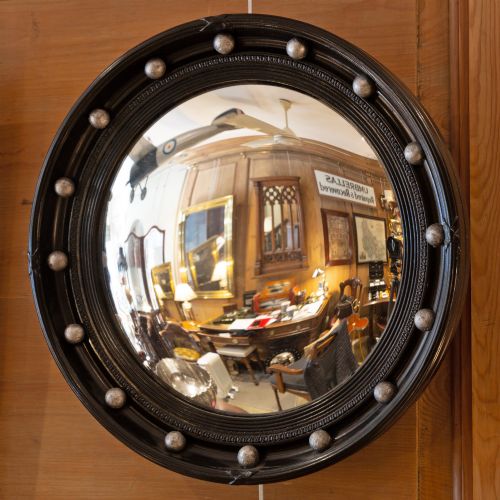
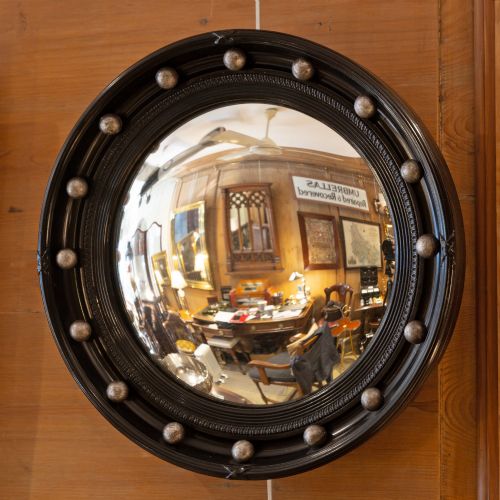
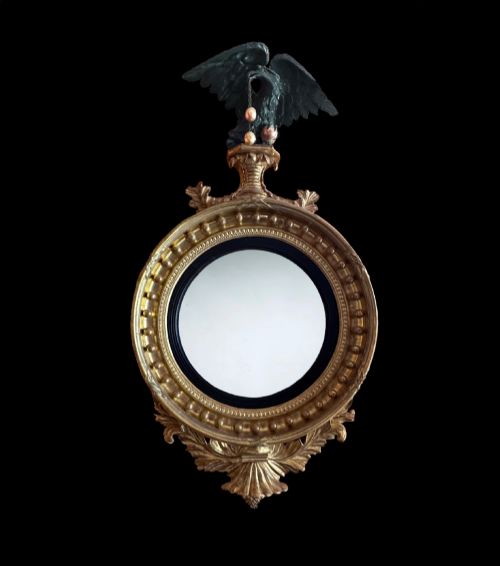
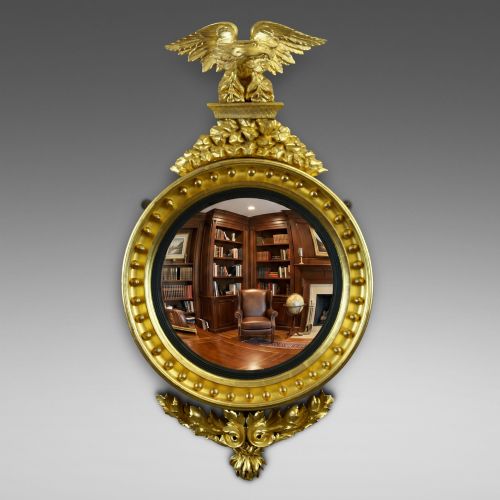







Ball Frame Convex Mirror
A ball frame convex mirror distorts the room in a circular sweep, offering a striking focal point that draws the eye across any wall.
Ball Frame Convex Mirror
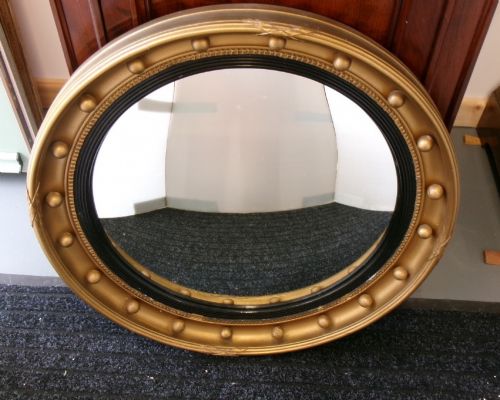
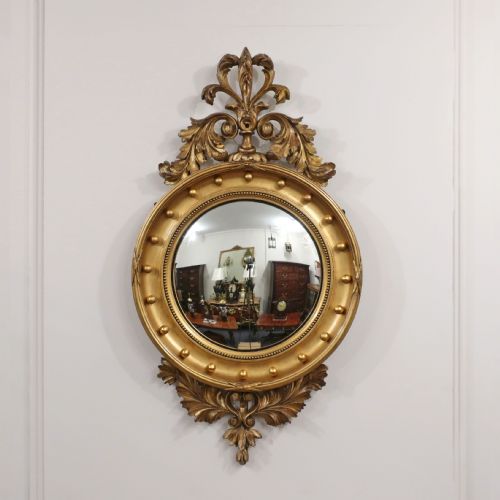
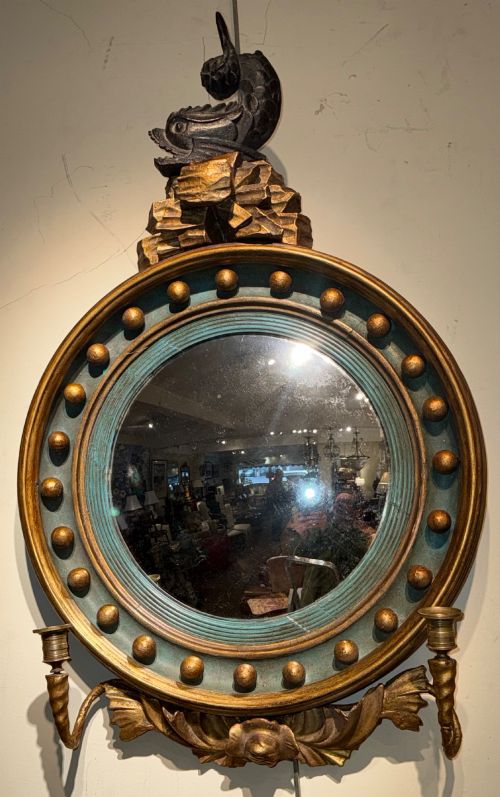
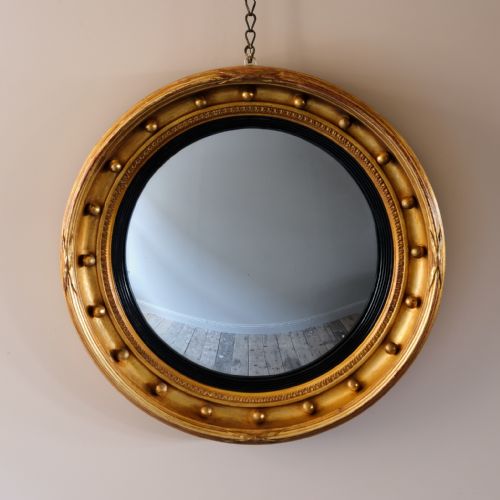
When you search for a ball frame convex mirror, you encounter circular wall mirrors defined by spherical ornaments set into the frame. These pieces span the Regency period through to the Victorian era, alongside later revivals from the twentieth century.
The most common examples on this page are giltwood frames from the nineteenth century, often described simply as convex wall mirrors. They range from small items suitable for a hall to large centrepieces designed for principal reception rooms.
Makers drew on Regency style and its later revivals, producing circular mirrors that reflect an entire interior within a curved glass plate. This form brings depth and light into smaller spaces by capturing a wide angle of the room.
How they were made
Frames rely on wood, gesso, and giltwood, built up to hold the heavy curved glass securely in place. Craftsmen applied gold leaf or paint over prepared surfaces, shaping the wooden balls that stud the outer rim.
The mirror plates themselves consist of curved glass, known historically as distended or convex glass, which creates the characteristic fish-eye reflection. Ebonised wood and gilt metal also appear in the construction of later or revival pieces.
Ball Frame Convex Mirror Retail Price Guide 2026
Typical asking prices for ball frame convex mirror among the pieces listed under this phrase on Sellingantiques today, from the lower quarter to the upper quarter. They describe what is for sale here now, not the wider market.
Materials recorded across the inventory include giltwood, ebonised wood, gesso, mirrored glass, and painted wood.
What varies in quality
The crispness of the carved detail on the frame and the depth of the gilding set finer examples apart from simpler pieces. Early Regency frames show hand-carved ornament, whereas later Victorian and revival versions often employ moulded gesso compositions.
The condition and clarity of the convex glass plate influence the overall character, alongside the original attachment of the ball ornaments to the frame. Substantial giltwood frames demonstrate superior joinery and materials compared to lighter contemporary alternatives.
The Ball Frame Convex Mirror Glossary
- Convex glass
- A curved glass plate that bubbles outward, shrinking the reflection to capture a panoramic view of the interior. This form was traditionally blown or slumped.
- Giltwood
- Timber covered with a thin layer of gold leaf over a prepared base of gesso. It provides a brilliant metallic sheen that catches domestic candlelight or daylight.
- Gesso
- A plaster mixture applied to wood frames to create a smooth surface for gilding or to cast decorative ornaments in relief. It allows for intricate moulding around the circular rim.
- Ebonised wood
- Timber treated to imitate ebony, giving a dark, polished finish that contrasts with gilded details. This treatment appears on specific nineteenth-century frames.
- Regency
- An architectural and design period spanning the early nineteenth century, characterised by classical motifs and bold circular forms. Pieces from this era often feature carved eagle crests or detailed ball frames.
Ball Frame Convex Mirror: Frequently Asked Questions
Where should I hang a convex mirror?
These mirrors suit principal living spaces, hallways, or dining rooms where their wide field of reflection can open up the room. Positioning them opposite a window maximises the light they pull into the interior.
Because they project outwards and often carry significant weight, they require secure wall fixings and a height that allows viewers to look directly into the centre glass.
How do I date an antique convex mirror?
Dating relies on examining the construction of the wooden frame, the composition of the gesso, and the backboards. Earlier Regency pieces often display hand-carved elements and older mirror plates, while Victorian and later revival items feature heavier moulded gesso.
The presence of original gilding and the type of fixings at the rear also offer clear indicators of the period of manufacture.
Why does the reflection appear curved?
The curved glass plate acts as a wide-angle lens, causing objects across the room to appear smaller and more distant than they actually are. This optical property was originally prized for security and for monitoring activity in large domestic spaces.
Makers deliberately chose this shape to compress an entire room into a single circular frame, creating a decorative tableau on the wall.
How do I clean a giltwood frame?
Giltwood surfaces require gentle dusting with a soft, dry brush to prevent damage to the delicate gold leaf or gesso. Moisture and modern cleaning chemicals will strip the historic finish and should be avoided entirely.
For the glass plate, a small amount of glass cleaner applied to a cloth rather than sprayed directly onto the surface protects the surrounding frame from moisture.