


Porcelain Vase with Handles
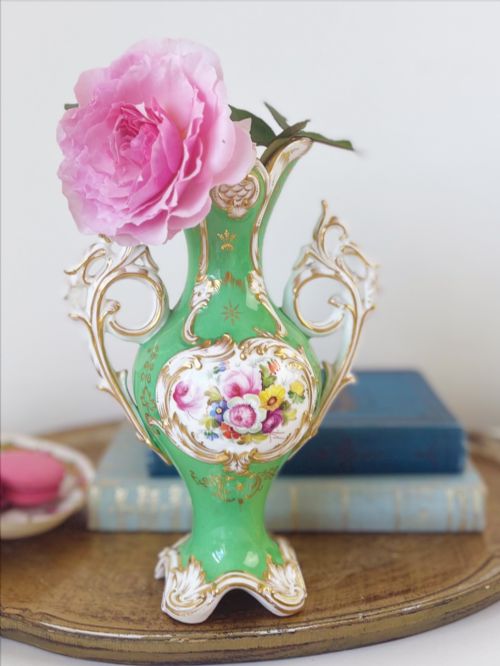
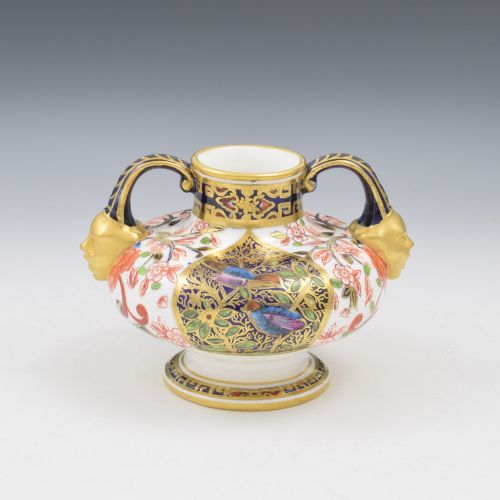
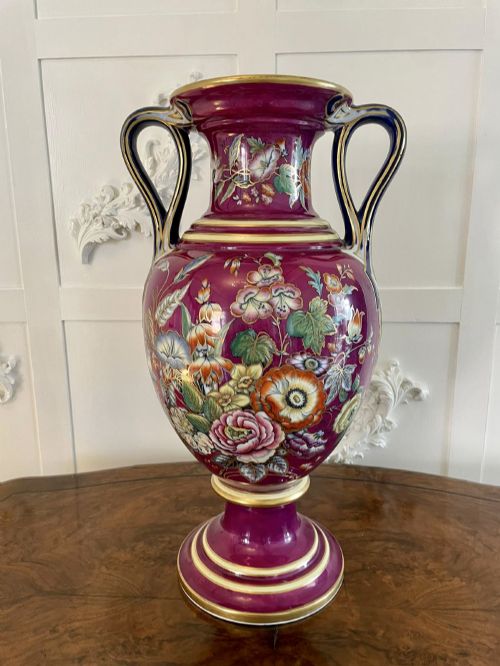
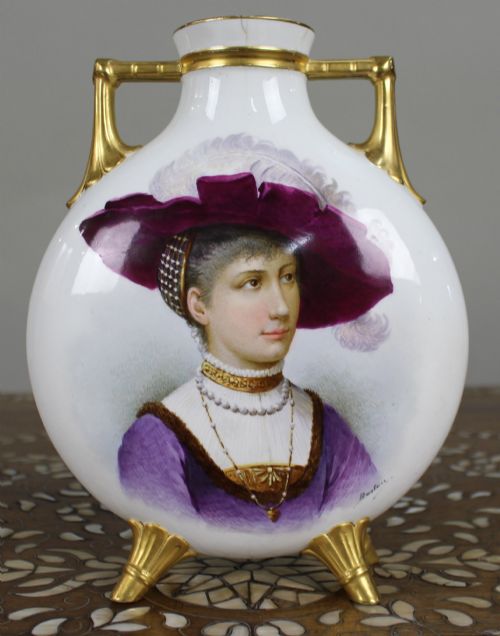
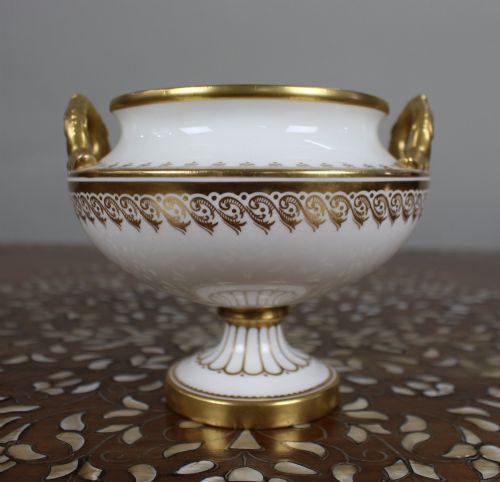
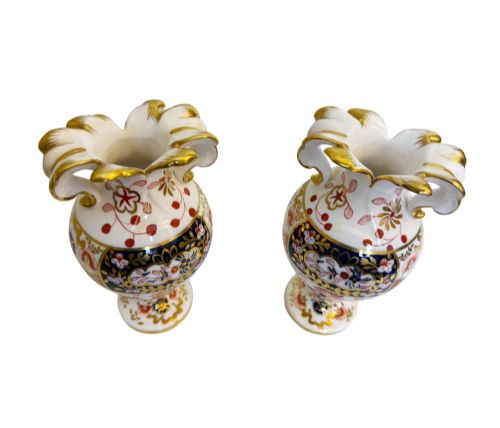
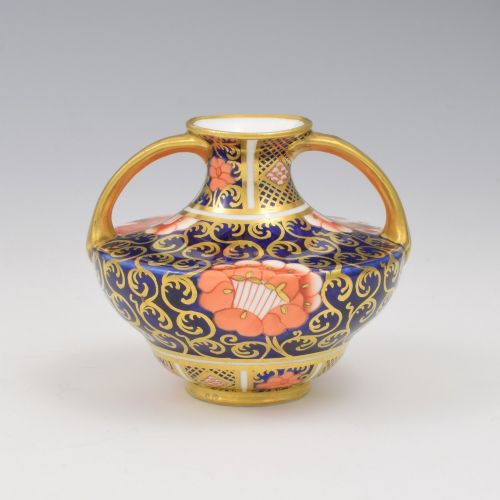
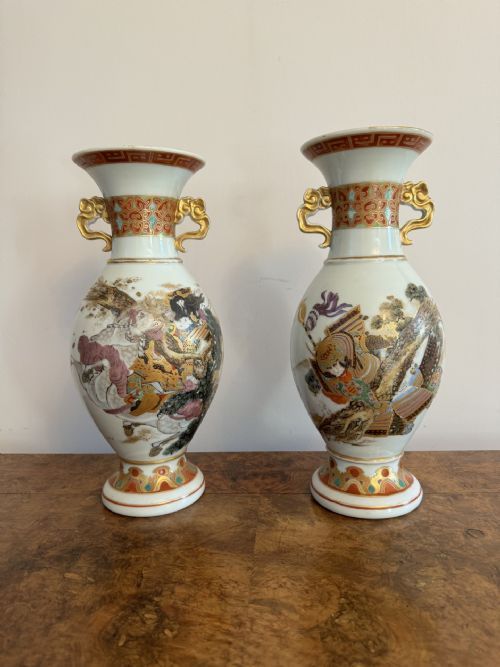
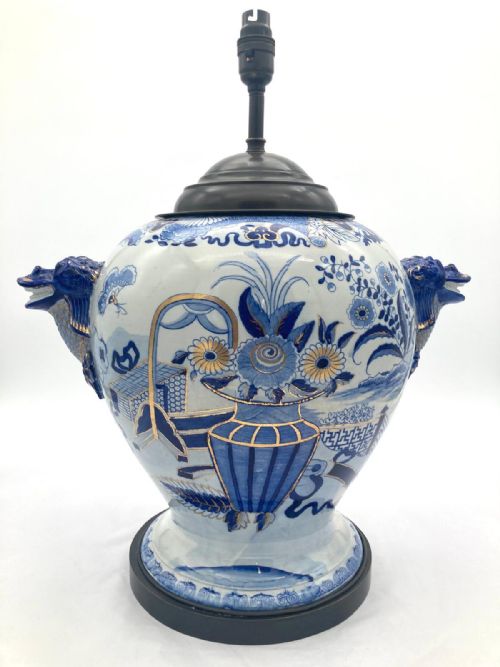
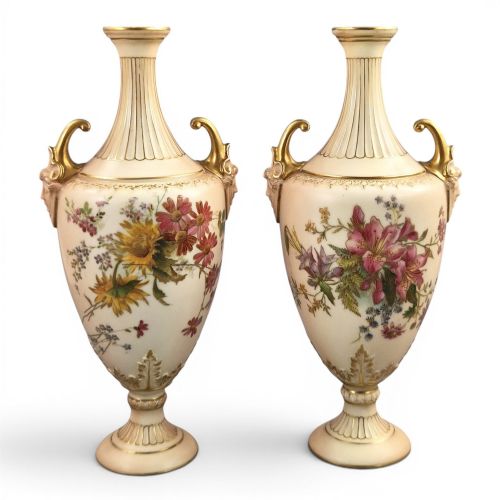
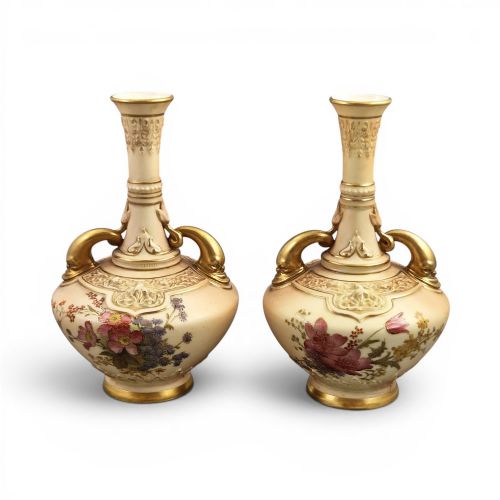
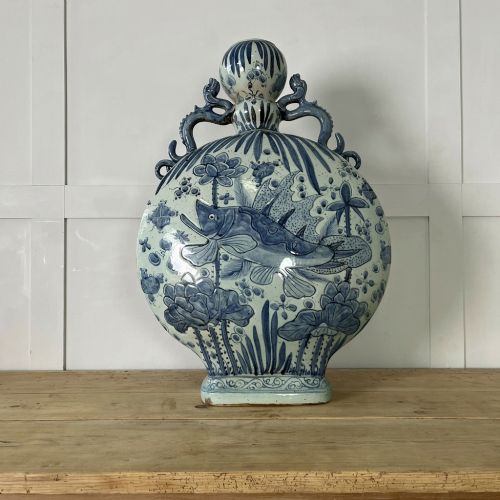
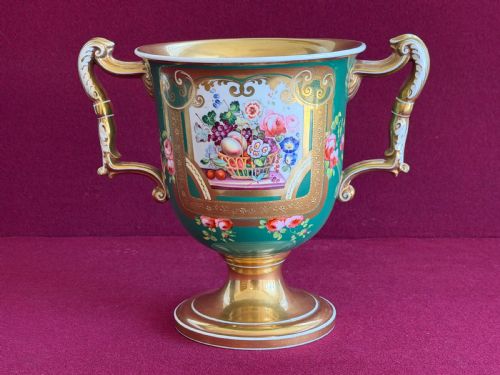
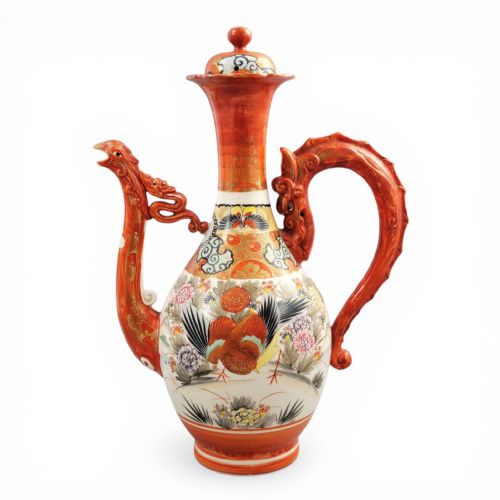
These porcelain vase with handles examples bring hand-painted artistry and sculptural form to a room.
Porcelain Vase with Handles
A porcelain vase with handles combines glazed ceramic bodies with functional or decorative side grips, taking the form of twin-handled vessels, ewers, and pilgrim flasks. Buyers searching for a porcelain vase with handles will frequently encounter nineteenth-century pieces, including Victorian interpretations and Japanese Meiji period examples.
The selection ranges from Regency lidded urns and French Rococo Revival shapes to English factory productions from Worcester and Coalport. Japanese Kutani and Satsuma wares also feature prominently, often displaying distinct figural handles such as lions, elephants, or dragons.
Makers utilised various grounding colours and decorative motifs, ranging from floral arrangements and fruit studies to birds and historical scenes. These pieces serve primarily as decorative objects or mantel centrepieces rather than utilitarian vessels for cut flowers.
Materials and Techniques
Potters shaped these vessels from porcelain, earthenware, and ironstone, applying overglaze enamel colours and hand-painted details by brush. Gilding, gold leaf, and gold gilt accents highlight the rims, foot rings, and handle contours.
Raised white enamel, moriage relief work, and wood stands appear across specific Japanese and European items. Kiln firing fixed the painted pigments and glazes to the ceramic body before final gilding operations.
Listings feature porcelain vase with handles examples spanning the Regency era, Victorian period, and Japanese Meiji production.
Markers of Quality
Quality rests in the precision of the hand-painted decoration, where fine brushwork on floral panels, fruit, or figural scenes separates standard factory items from master-painted studio pieces. The crispness of moulded handle details, such as animal masks or scrollwork, also indicates superior craftsmanship.
The application of gilding and raised enamel work shows varying degrees of hand skill and preservation over time. Factory provenance, artist signatures, and matched pairs further distinguish the higher tiers of these ceramic works.
Chamberlain Worcester·Spode·Samson Paris·Coalport·Hadley's Worcester·KPM·Royal Worcester·Derby·Royal Crown Derby·Alfred Stellmacher for Turn Teplitz
The Porcelain Vase with Handles Glossary
- Moriage
- A Japanese pottery technique using clay piped from a syringe to create raised decorative patterns before glazing and firing. This method gives vases a heavily textured surface.
- Ewer
- A large jug or pitcher with a wide spout and a handle, designed historically for pouring water. In decorative ceramics, ewers often feature elaborate handles and symmetrical spouts.
- Gilding
- The application of gold leaf or gold paint to the surface of porcelain. It highlights handles, rims, and borders.
- Pilgrim Flask
- A flat-sided bottle-shaped vessel with small loop handles for suspension cords. Nineteenth-century factories adapted this ancient travel form into decorative display pieces.
- Shishi
- A mythical Japanese lion-dog guardian figure often sculpted as handles or finials on ceramic vessels. These figures appear frequently on Kutani and Satsuma wares.
Porcelain Vase with Handles: Frequently Asked Questions
How do I date an antique porcelain vase with handles?
Dating relies on factory backstamps, painted decorator marks, and stylistic clues like Victorian floral motifs or Japanese Meiji period dragon handles. Comparing the ceramic body and glaze characteristics with known factory production periods helps narrow the manufacturing decade.
Certain pieces carry specific artist signatures or registration numbers that pinpoint their exact year of origin within the nineteenth or early twentieth century.
Were these handled vases meant for display or flowers?
Most nineteenth-century decorative vessels with handles served as mantel centrepieces, cabinet ornaments, or pairing pieces on pedestals. Their delicate hand-painted surfaces and intricate gilt handles meant they functioned primarily as ornamental art objects.
While some larger urns and jars could hold water, their historical role was decorative rather than utilitarian, preserving the enamel and gold leaf from moisture damage.
What is the difference between Satsuma and Kutani porcelain?
Satsuma wares typically feature an ivory-coloured, crackle-glazed earthenware or porcelain body decorated with fine polychrome enamel and heavy gold leaf. They often depict court scenes, flowers, and imperial crests like the Shimazu mark.
Kutani wares generally display a crisper porcelain or ceramic base with bold overglaze enamel palettes, frequently utilising iron-red and green tones alongside raised moriage decoration and animal handles.
How should I clean a hand-painted porcelain vase?
Dust these delicate ceramic items gently with a soft, dry brush to prevent abrasive particles from scratching the overglaze enamel or worn gilding. Avoid using chemical cleaners, immersion in water, or harsh scrubbing on antique gold leaf.
If deeper cleaning is necessary for unglazed interiors or sturdy glazed surfaces, consult a professional conservator to protect the fragile hand-painted details and historical repairs.