
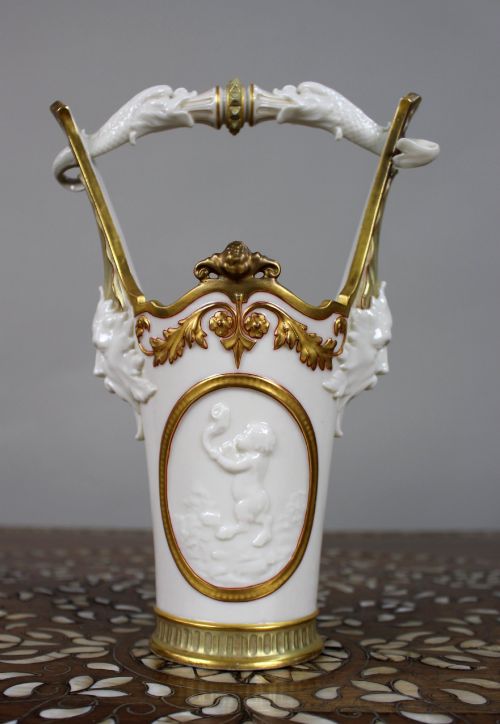


Vintage Royal Worcester Vessel
A vintage royal worcester vessel brings fine painted porcelain and gilt detail to a room, offering the classic forms of Edwardian and Victorian design.
Vintage Royal Worcester Vessel
A vintage royal worcester vessel encompasses porcelain and bone china forms produced across the nineteenth and twentieth centuries, spanning the Victorian and Edwardian periods up to the nineteen-sixties. Buyers seeking a vintage royal worcester vessel will encounter a variety of decorative objects, from traditional vases and jardinieres to ginger jars, flower holders, and ewers.
The pieces listed on this page showcase distinct artistic traditions, including hand-painted fruit, birds such as storks and pheasants, and figurative scenes. Forms range from miniature loving cups and ovoid vases to large exhibition pieces retailed by firms like A.B. Daniell and Son.
How they were made
The manufacture of a vintage royal worcester vessel relies on high-fired porcelain and bone china as the primary ceramic bodies. Artisans applied detailed hand-painted enamel decoration directly onto the ceramic surface, creating rich pictorial scenes of flora and fauna.
Gilding and gold leaf accents were frequently applied to the rims, handles, and borders to highlight the contours of the vessels. Skilled painters signed their work onto the porcelain, combining traditional ceramic shaping with fine art miniature painting.
Materials recorded across the inventory include standard porcelain, bone china, gold leaf, enamel, and applied gilding.
What varies in quality
Quality in a vintage royal worcester vessel is determined by the skill and reputation of the artist responsible for the hand-painted decoration. Signed works by notable painters such as James Stinton, Walter Powell, or John Smith command greater attention than unsigned or standard production items.
The complexity of the form and the extent of the gilding also distinguish the pieces, with exhibition-quality items featuring elaborate modelling and extensive gold leaf work. The clarity of the enamel colours and the preservation of the painted surface over time reflect the original standard of production.
James Hadley·Walter Powell·John Smith·James Stinton·H Ayrton
The Vintage Royal Worcester Vessel Glossary
- Bone China
- A type of porcelain containing bone ash, known for its high strength, chip resistance, and warm white translucency. It provides a smooth base for delicate enamel painting.
- Ewers
- Large jugs with wide spouts and decorative handles, originating from vessels used for pouring water. In porcelain production, they served as ornamental display pieces.
- Jardinieres
- Large decorative pots designed to hold live plants or floral arrangements. They often feature substantial ceramic bodies decorated with painted scenes or figures.
- Ovoid
- Egg-shaped in profile, describing the rounded body of certain vases. This curved silhouette was a popular canvas for landscape and animal painting.
- Pot Pourri
- A vessel featuring a pierced or perforated lid designed to diffuse scent from dried flower petals and spices. These containers combine utility with ornamental painting.
Vintage Royal Worcester Vessel: Frequently Asked Questions
How do I identify the date of my vessel?
Dating relies on factory marks stamped to the base of the porcelain, which changed systematically across the Victorian and Edwardian periods. Collectors also look at the painting style, clothing of figures, and overall form to narrow down the decade of production.
Comparison with documented examples from makers working in specific years helps confirm the era. Examining the style of gilding and the specific signature format provides further chronological clues.
Are these vessels suitable for holding fresh flowers?
While many pieces such as flower holders and vases were designed for utilitarian floral display, valuable painted porcelain is frequently used purely for display to protect the antique surface. Moisture and mineral deposits from water can potentially harm interior unglazed areas or delicate finishes over time.
Using a discreet inner liner can allow for practical use without exposing the antique ceramic body to standing water. Careful handling remains essential regardless of whether the vessel holds flowers or stands empty on a shelf.
What is the difference between an ewer and a vase?
An ewer is specifically formed with a pouring spout and a distinct handle, mimicking historical water jugs used before modern plumbing. Vases are closed-bottom containers primarily shaped for holding floral stems or serving as decorative ornaments.
Both forms received the same high standard of hand-painted decoration and gilding from the factory's artists. The presence of the handle and spout defines the ewer, whereas vases present varied symmetrical or ovoid silhouettes.
How should I clean my painted porcelain?
Dusting gently with a soft, dry microfibre cloth is the safest method for maintaining the surface of hand-painted porcelain and gilt details. Avoid using harsh chemical cleaners, abrasive sponges, or soaking the vessel in water, which can degrade the enamel and gold leaf.
If the piece requires deeper cleaning, a slightly damp cloth with mild soap can be applied cautiously to glazed areas only. Professional conservation advice should be sought if the ceramic bears stubborn marks or structural wear.