


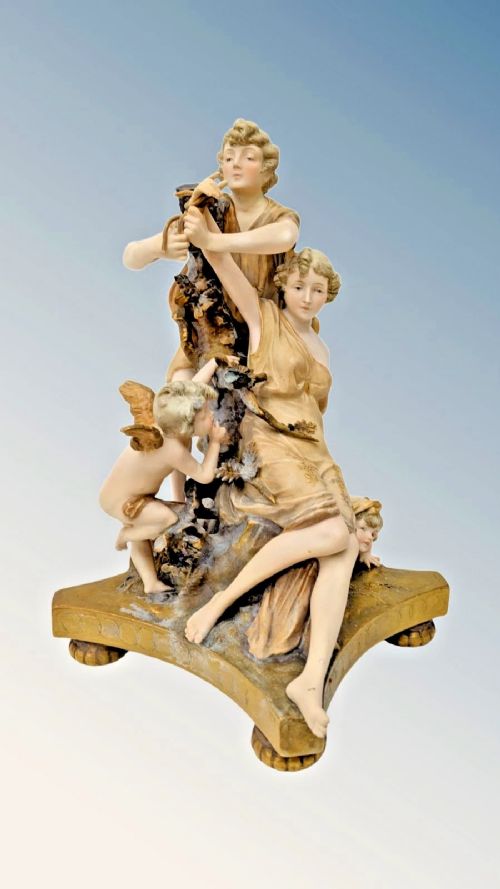


Porcelain Putti Figures
Porcelain putti figures are decorative ceramic sculptures of winged celestial children that bring classical charm and playful movement to mantelpieces and tables.
Porcelain Putti Figures
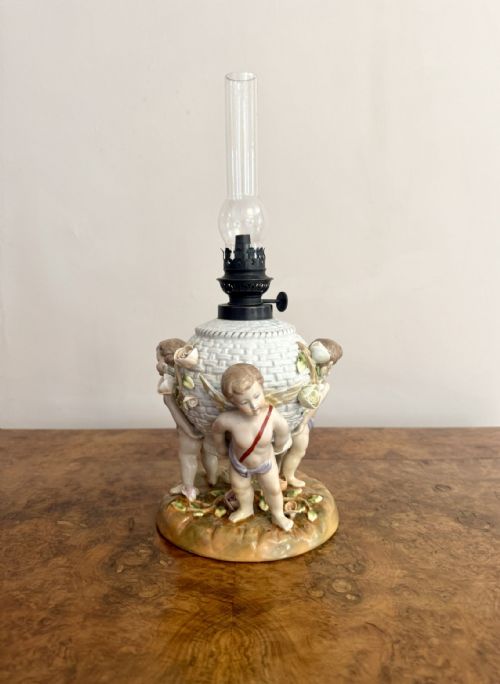
Porcelain putti figures appear in various decorative forms across this page, ranging from standalone figurines and allegorical sets to functional candlesticks, oil lamps, and mantel clocks. These pieces frequently draw upon 18th-century models, with numerous examples originating from German and English factories during the Georgian and 19th-century periods.
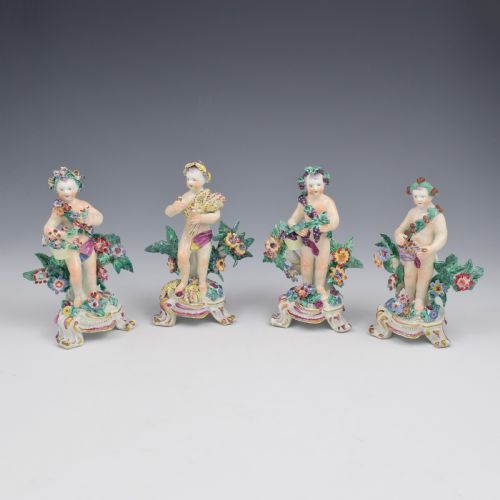
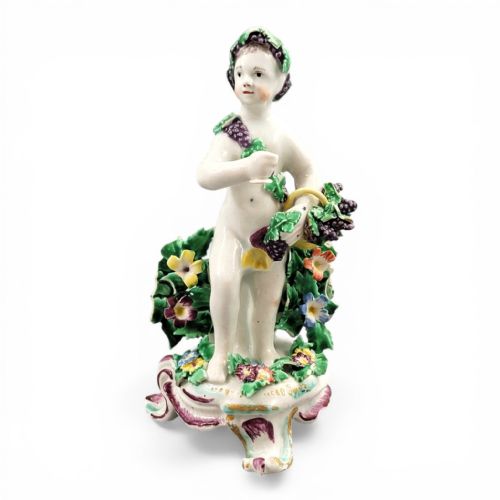
Buyers will encounter single cherubs holding attributes like hats or baskets alongside pairs and larger groupings depicting seasons, elements, or mythological scenes. The styling spans Rococo Revival curves and Neoclassical symmetry through to later Victorian interpretations and occasional Art Nouveau contours.
Makers represented on the page include renowned European porcelain works such as Meissen, Bow, Derby, and Royal Worcester, alongside continental factories like Sitzendorf, Volkstedt, and Royal Dux. These pieces capture the cherubic form in soft-paste porcelain, hard-paste porcelain, and biscuit porcelain, often combined with gilt bronze or enamel.
Materials and technique
Potters shaped these figures using hard-paste or soft-paste porcelain, sometimes employing unglazed biscuit porcelain to achieve a matte, marble-like finish akin to carved stone. Skilled modellers cast the pieces in moulds before applying fine hand-painting, enamel colours, and delicate gilding.
Many items incorporate secondary materials such as gilt bronze mounts, or function as complex assemblies housing clockwork mechanisms and oil lamp reservoirs. Glaze was applied to seal the ceramic body, providing either a glossy finish or leaving specific biscuit areas exposed for textural contrast.
Distinctions in execution
Quality rests heavily on the sharpness of the moulding and the delicacy of the hand-painted details, particularly in facial expressions, hair texture, and floral appliques. Earlier figures from factories like Bow or Meissen display crisp definition and nuanced modelling that separate them from mass-produced later copies.
The integration of secondary elements, such as gilt bronze mounts on clocks and lamps, dictates the overall refinement of the piece. Superior examples maintain intact applied elements, crisp gilding, and expert firing without significant warping or kiln blemishes.
Sitzendorf·Derby·Bow·Royal Dux Bohemia·Meissen·Ernst Wallace·Edme Samson·Royal Worcester·Minton·Volkstedt·Triebner ENS and Eckert·Phillipe H Mourey·Johann Joachim Kandler
The Porcelain Putti Figures Glossary
- Putto
- A plump, naked winged infant depicted in classical art and porcelain. They appear singly or in groups across many European table ornaments and candelabra.
- Biscuit Porcelain
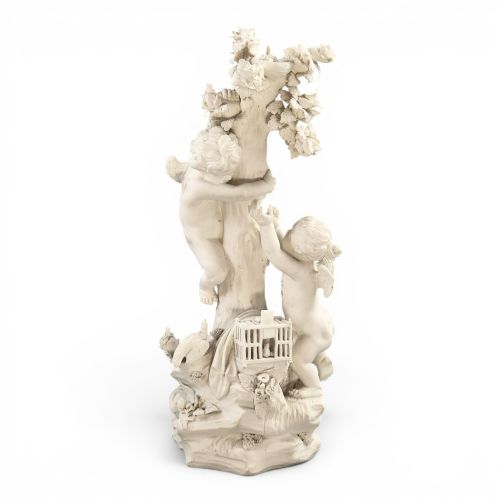
- Unfired or single-fired porcelain left unglazed to produce a matte, white surface resembling marble. This technique was favoured by factories such as Derby for classical figures.
- Soft-Paste Porcelain
- An artificial porcelain composition fired at lower temperatures than hard-paste, common in early English factories like Bow and Chelsea. It yields a warm, slightly creamy body beneath the glaze.
- Sweetmeat Figure
- A small porcelain dish or figure designed to hold small confections or sweetmeats at a formal dining table. These often feature putti holding baskets or bowls.
- Gilt Bronze
- An ornamental bronze object coated in a thin layer of gold, frequently paired with porcelain in French mantel clocks and oil lamps.
Porcelain Putti Figures: Frequently Asked Questions
What is a putto?
A putto is a representation of a plump, winged child, often associated with cupids or cherubs in classical mythology and decorative art.
These figures were widely used by European porcelain factories to personify seasons, elements, or allegorical themes on decorative objects.
How do I identify early porcelain?
Early porcelain figures often show softer paste bodies, hand-painted underglaze blue marks, and distinct modelling styles associated with 18th-century factories.
Examining the base, glaze pooling, and weight can also help distinguish Georgian and 18th-century pieces from later 19th-century revivals.
Were these figures functional?
Many porcelain putti figures served a dual purpose as candlesticks, oil lamps, centrepiece vases, or components of mantel clocks.
Smaller figurines were primarily decorative, intended for display on mantelpieces, brackets, or dining tables during formal dining.
What is biscuit porcelain?
Biscuit porcelain is unglazed ceramic that has been fired once, producing a matte, tactile surface similar to carved marble.
Factories like Derby utilised this finish to highlight the sculptural contours of human figures without the interruption of a glossy glaze.