


Paired Cherub Figurines
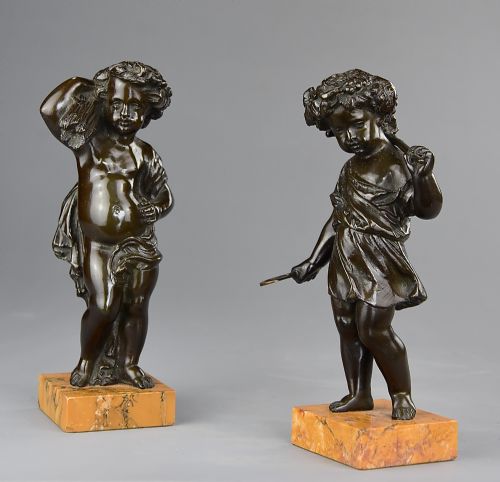
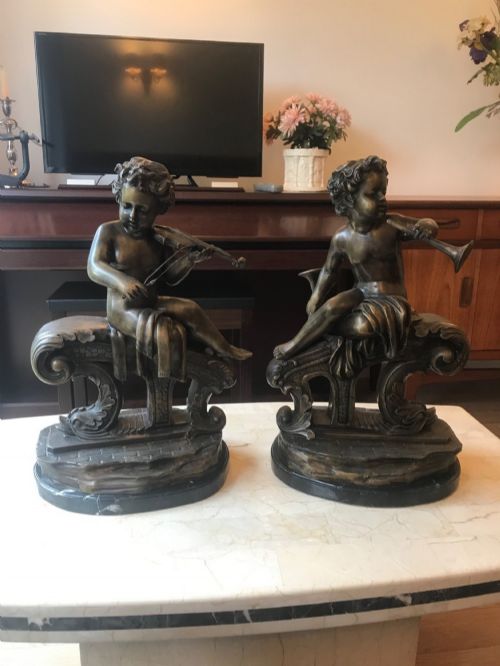
These paired cherub figurines bring classical form and playful putti figures into domestic interiors, offering symmetry and charm for display on mantelpieces and tables.
Paired Cherub Figurines
Most examples hail from the nineteenth century, including Victorian interpretations and French Rococo Revival designs. Pieces range from musical instrument players and harvest allegories to practical bookends and carved candlesticks.
How they were made
Metal versions rely on bronze casting, often finished with gilt or gold leaf accents, and frequently mounted upon heavy marble bases. Ceramic examples utilise porcelain or terracotta bodies finished with enamel, glaze and polychrome silvering.
Carved wooden alternatives employ traditional timber techniques to shape angel candlesticks and cherubic figures. Each method reflects the prevailing style of its period, from Baroque flourishes to Art Nouveau curves.
The listings span from the seventeenth century through the Victorian era to the mid-twentieth century, dominated by nineteenth-century works.
What varies in quality
The refinement of the casting or modelling dictates the distinction between standard production and superior work. Crisp detail in facial expressions, hair and drapery reveals the skill of the original hand.
Materials also separate tiers of execution, such as dense heavy marble mounts paired with finely chased bronze against lighter ceramic bodies. Harmony between the two matched figures completes the integrity of the pair.
Claude Michael Clodion·H. Schubert·Edme Samson·Volkstedt·Dumond
The Paired Cherub Figurines Glossary
- Putti
- Plumed or unwinged male infant figures derived from classical art and frequently depicted in Renaissance and revival decorative objects.
- Sweetmeat dish
- A small decorative vessel designed for holding confectioneries, often flanked or supported by figural ceramics.
- Grand Tour
- A cultural journey undertaken by nineteenth-century travellers who collected classical bronzes and souvenir sculptures across Europe.
- Rococo Revival
- A nineteenth-century design movement favouring ornate asymmetry, swirling scrollwork and playful naturalistic motifs.
- Polychrome
- The practice of decorating sculptural surfaces in multiple distinct colours using enamels or paints.
Paired Cherub Figurines: Frequently Asked Questions
What distinguishes putti from cherubs?
Putti are secular mythological infants derived from classical art, whereas cherubs originate from biblical descriptions of celestial beings. In decorative arts, the terms are often used interchangeably to describe winged child figures.
Craftsmen across the eighteenth and nineteenth centuries applied both labels freely to bronze and porcelain sculptures without strict adherence to theological definitions.
How were sweetmeat figures used?
Sweetmeat figures functioned as tabletop serving pieces for small confections, nuts and dried fruits during formal dining or parlour gatherings. The attached dishes held the treats while the surrounding figurines provided decorative conversation pieces.
Guests would help themselves to the sweets while admiring the porcelain modelling and painted enamel details close at hand.
Where should I display bronze putti?
Bronze putti on marble bases suit stable horizontal surfaces such as mantelpieces, sideboards and heavy desks where their weight is supported. Placing them away from direct moisture protects the metal patina and any gilt highlights.
Paired figures look best when balanced symmetrically to frame a central mirror, clock or larger ornament.
How do I date nineteenth-century bronzes?
Dating bronze figures involves examining the quality of the casting, the colour and texture of the patina, and the tooling marks on the underside. Nineteenth-century examples often reference earlier French models or Italian grand tour excavations.
Associated materials like turned marble bases and signature stamps help narrow down the period of manufacture.