




Porcelain Mounted Desk
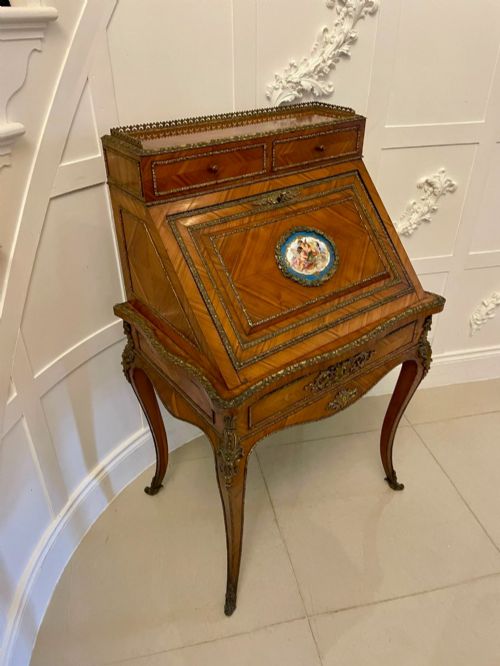
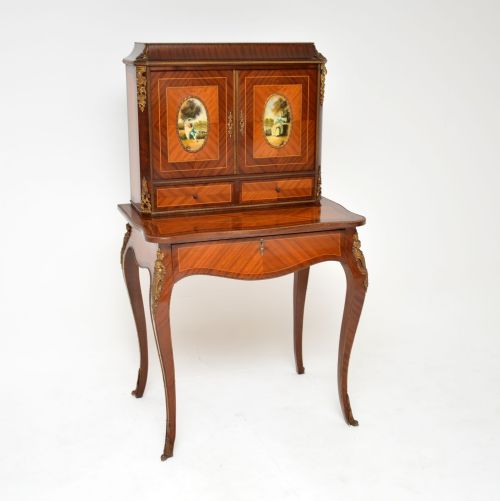
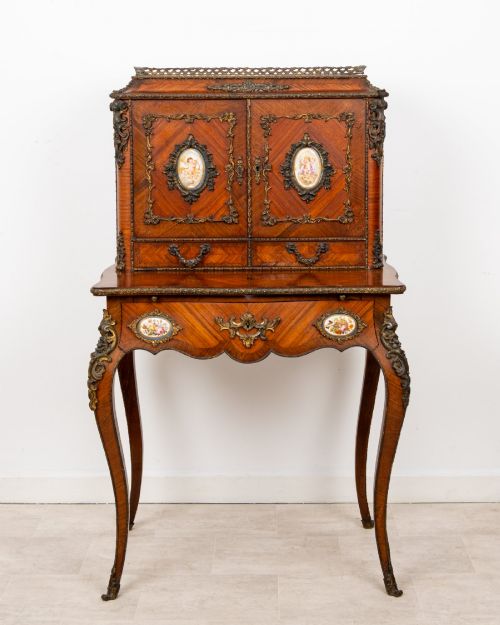
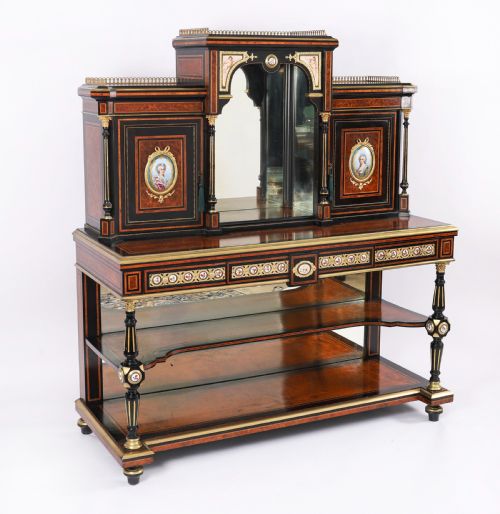
A porcelain mounted desk unites rich cabinet woods with fired ceramic plaques and gilt bronze mounts, bringing French opulence to a study.
Porcelain Mounted Desk
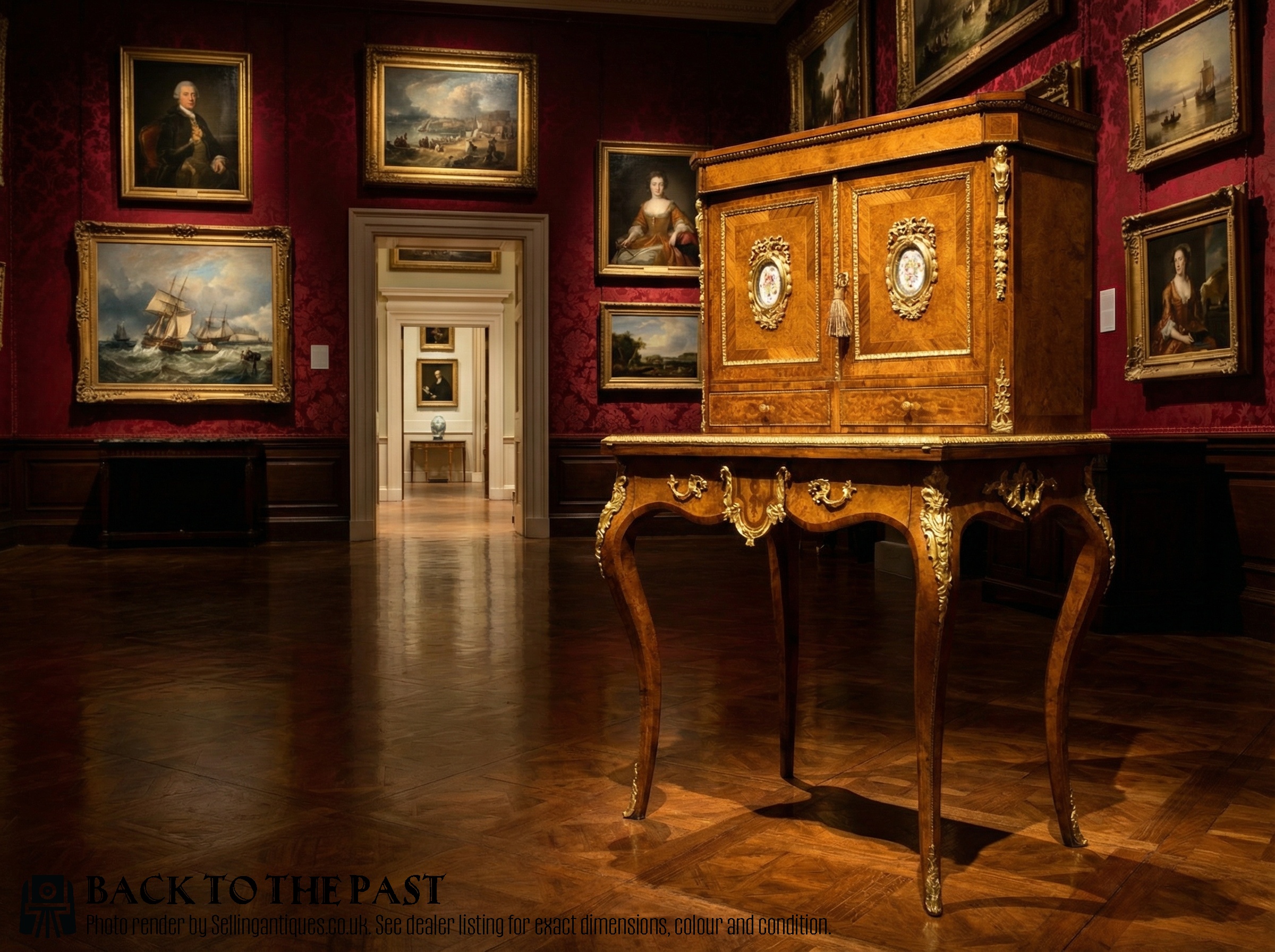
A porcelain mounted desk primarily takes the form of a French writing table, bureau plat, or bonheur du jour originating from the nineteenth century. These pieces combine compact writing surfaces with raised upper cabinets, drawers, or folding flaps designed for correspondence.
The aesthetic draws heavily on Louis XV and Louis XVI revivals, pairing figured timbers with inset ceramic plaques depicting floral or pastoral scenes. Most examples reflect nineteenth century French manufacturing, though earlier eighteenth century traditions and later Victorian interpretations also appear.
Judging Quality and Craftsmanship
The definition and hand-chasing of the ormolu mounts separate superior examples from standard production, as crisp bronze work requires skilled chiselling after casting. Heavier, deeply carved mounts indicate a higher grade of workshop output.
The artistry of the porcelain plaques determines much of the piece's standing, with finely hand-painted ceramic details carrying greater distinction than mass-produced transfers. Additionally, the selection and matching of timber veneers across curved surfaces reveal the underlying standard of the cabinetmaker.
Porcelain Mounted Desk Retail Price Guide 2026
Typical asking prices for porcelain mounted desk among the pieces listed under this phrase on Sellingantiques today, from the lower quarter to the upper quarter. They describe what is for sale here now, not the wider market.
Cabinetmakers occasionally tucked miniature hidden drawers behind porcelain plaques to store secret love letters.
The Porcelain Mounted Desk Glossary
- Ormolu
- Gilded bronze used for decorative mounts and furniture trimming. The technique involves applying a mercury and gold amalgam to cast bronze before heating.
- Bonheur du jour
- A small, light lady's writing desk featuring a cabinet or tier of shelves on top. This form gained popularity in France during the eighteenth century and saw a major revival in the nineteenth century.
- Kingwood
- A dense, richly figured Brazilian timber prized for its distinctive dark violet and brown grain. It served as a primary veneer for high-grade European furniture.
- Bureau plat
- A flat-topped writing table with drawers beneath the work surface, finished on all sides so it could stand free in a room.
- Pate sur pate
- A ceramic decorating technique where liquid clay is applied layer upon layer to a dark body to create a low relief cameo effect.
Porcelain Mounted Desk: Frequently Asked Questions
What is a porcelain mounted desk?
A porcelain mounted desk is a nineteenth century writing table or cabinet decorated with ceramic plaques and gilt bronze mounts, following French revival styles.
These pieces were built for writing and correspondence, combining timber drawers with decorative porcelain insets.
How do I date a desk?
Dating relies on timber choices, mount styles, and construction methods. Nineteenth century pieces often use kingwood or amboyna with Louis XV revival or neoclassical cast bronze.
Plaque markings and regional cabinetmaking traits help narrow the origin to specific decades between 1860 and 1900.
Where were these desks made?
Most surviving examples originate from French workshops in Paris, responding to a strong demand for ornate revival furniture during the Victorian era.
English and German makers also adopted these French techniques, producing similar bureau and writing table forms.
How do I care for the wood?
Protect the polished timber and porcelain surfaces by keeping the desk away from direct sunlight and sudden temperature changes. Regular dusting with a soft, dry cloth preserves the finish.
Avoid commercial liquid polishes, which can build up a residue and dull the gilt bronze mounts.