




Porcelain Lady Ornament
A porcelain lady ornament brings character to a room, ranging from delicate eighteenth-century figures to bold art deco flappers.
Porcelain Lady Ornament
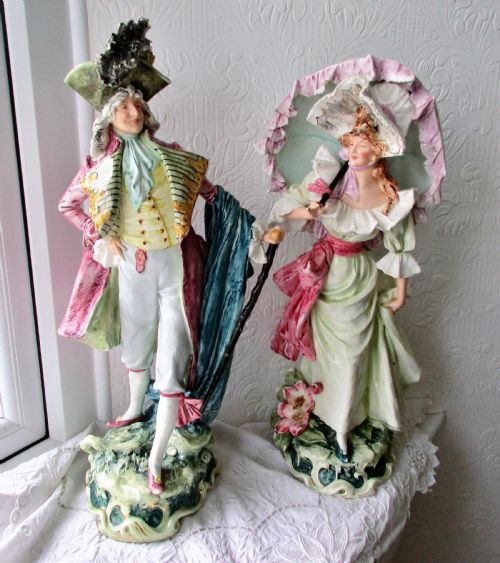
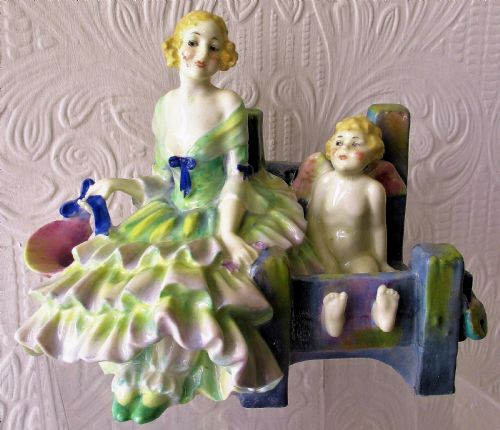
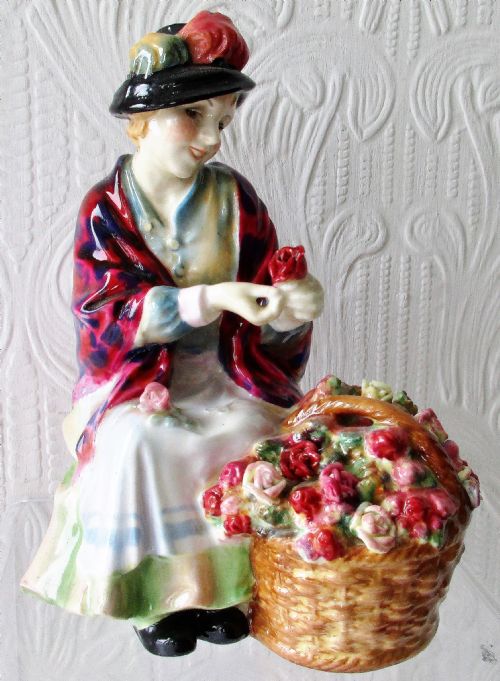
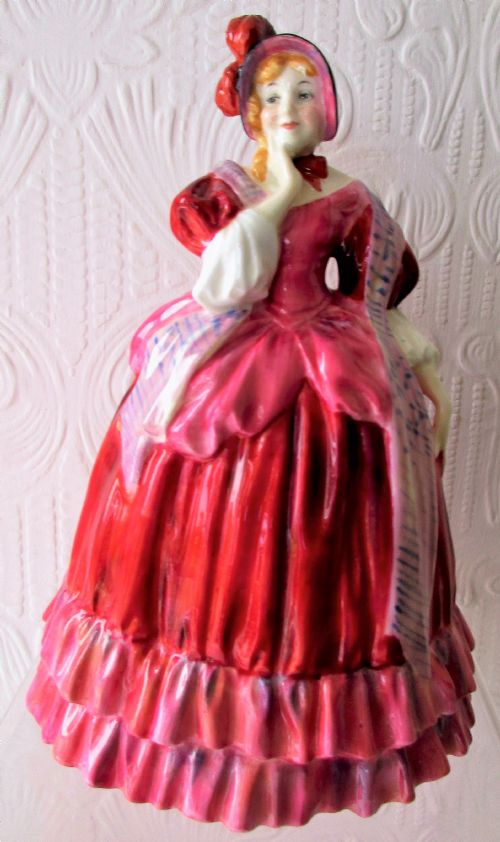
When buyers search for a porcelain lady ornament, they find glazed and bisques figures spanning several centuries of European and Asian manufacture. These objects take the form of standalone figurines, powder puff stands, hat pin holders, and vases depicting women in historical, regional, or modern dress. English factories, continental European potteries, and Japanese workshops all contributed to this diverse category of ceramic art.
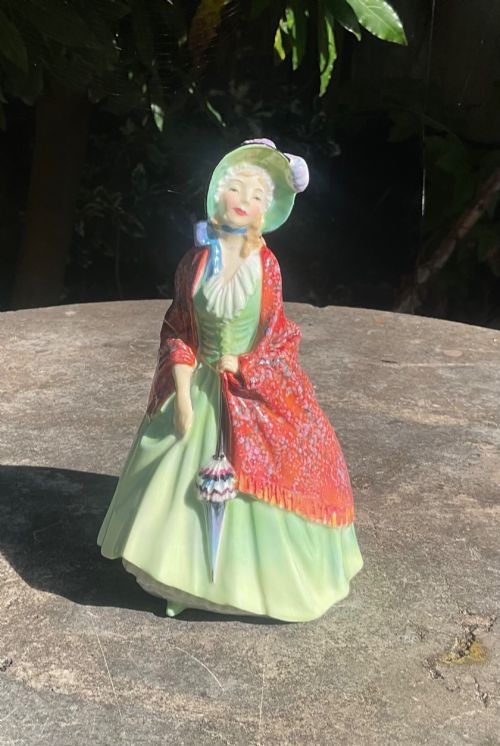
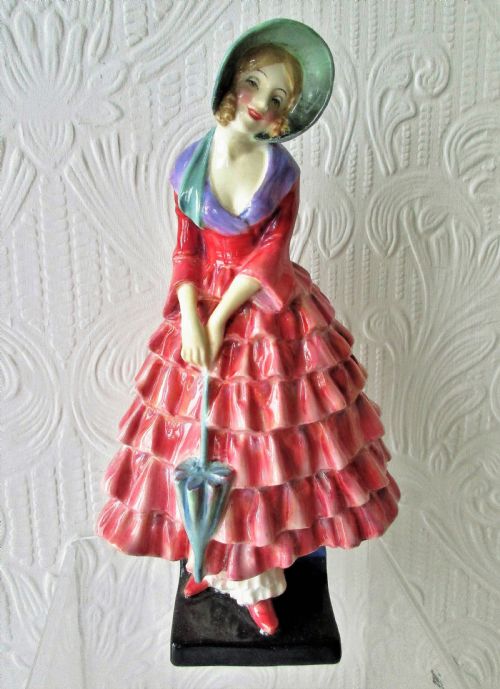
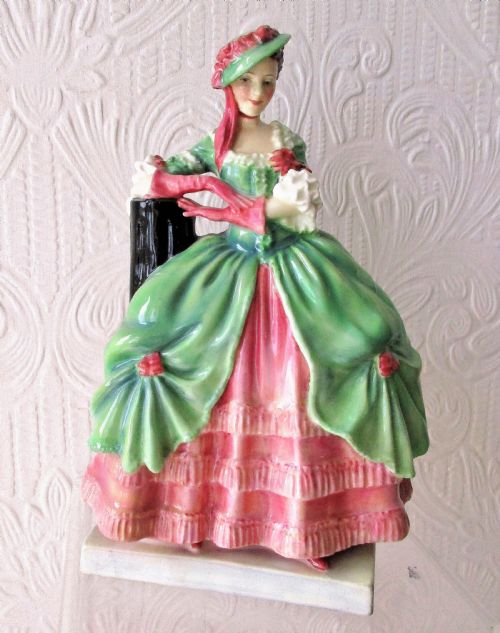
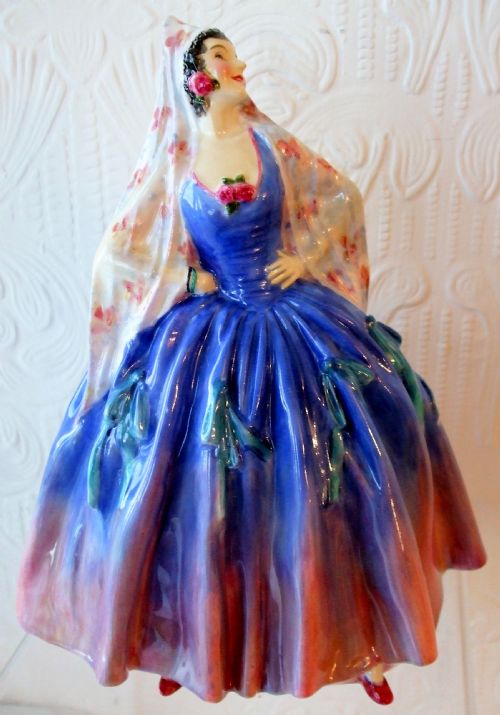
The version most commonly met on this page is the twentieth-century English porcelain figurine, particularly those produced during the nineteen-thirties by major makers. Alongside these sit continental eighteenth and nineteenth-century pieces, including Meissen and French biscuit porcelain, as well as Japanese Kutani and Meiji period figures. The selection covers everything from elaborate Rococo Revival groups to sleek Art Deco green dress ladies.
These items served both decorative and functional roles in domestic interiors, operating as mantel ornaments, dressing table accessories, or vanity pieces. Their subjects include named characters, literary heroines, musicians, and traditional figures such as geisha or courtly ladies. Each period brought distinct clothing styles, postures, and colour palettes to the depiction of the female form.
How they were made
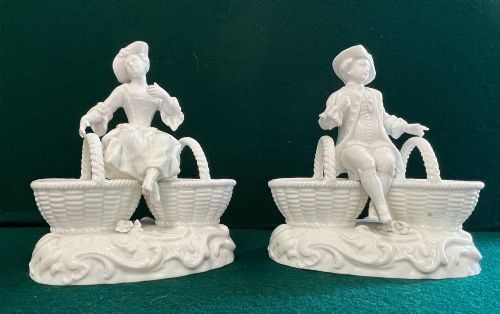
Makers shaped these ornaments using porcelain, bone china, ceramic, and faience, often finishing the surfaces with transparent glazes or leaving them as unglazed bisque. Biscuit porcelain provided a matte, marble-like texture favoured by nineteenth-century French manufacturers like Vion et Baury. Glazed ceramics allowed for vibrant polychrome enamels and detailed underglaze painting.
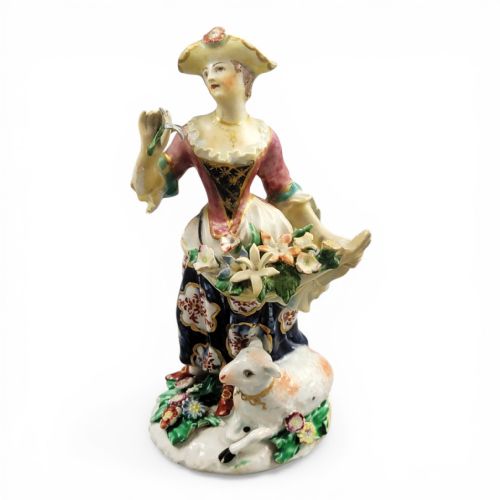
Many figures incorporated applied elements such as delicate flowers, lace, ribbons, and handheld accessories modelled separately before attachment. Painters applied enamel colours and gold leaf highlights by hand before firing the pieces in kilns to fix the decoration. Moulds varied from simple two-piece presses to complex assemblies requiring numerous distinct components.
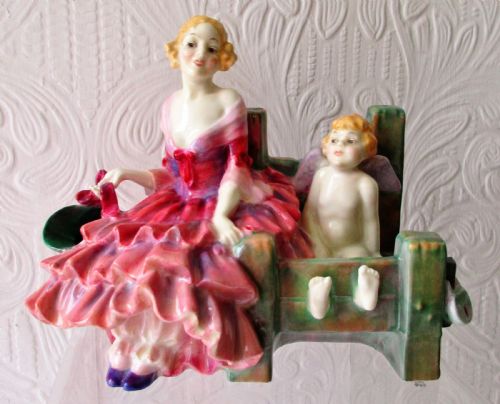
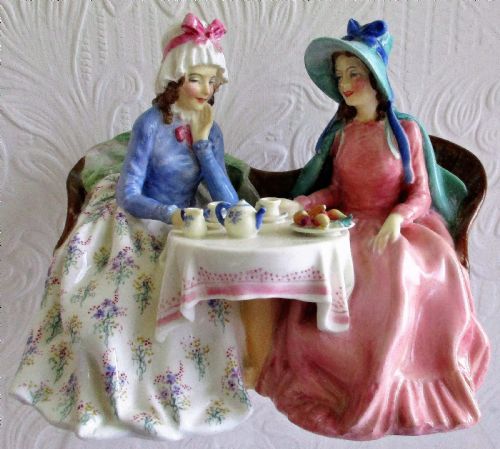
Several ladies spend their time holding jugs, playing drums, or resting inside armchairs rather than just standing still.
What varies in quality
The precision of the enamel work and the application of gold leaf or gilt details also define the tier of an ornament. Fine hand-painted decoration shows clean lines and careful shading, whereas lesser items rely on stencilled transfers or thick, opaque washes. The complexity of the original design, especially in multi-figure groups or intricate lacework, reflects the technical skill of the pottery.
Royal Doulton·Meissen·Royal Worcester·Bow Porcelain·Vion et Baury·Royal Dux·Samson
The Porcelain Lady Ornament Glossary
- Bisque
- Unglazed porcelain fired once to create a matte, porous surface with a texture similar to marble. It was widely used in nineteenth-century figures for its soft appearance.
- Bone china
- A type of soft-paste porcelain incorporating animal bone ash, producing a strong, milky-white body that allows for thin, delicate casting.
- Enamel
- Opaque or translucent coloured glass fused to the ceramic surface during a secondary low-temperature kiln firing. It provides the bright decorative colours on glazed figures.
- Faience
- Tin-glazed earthenware produced across continental Europe, often featuring hand-painted designs over an opaque white background.
- Hat pin holder
- A hollow ceramic or porcelain vessel pierced with holes in the top or rim to store long decorative pins used in Edwardian hats.
- Powder puff stand
- A vanity accessory designed to hold cosmetic powder puffs, frequently taking the form of a seated or standing female figure.
Porcelain Lady Ornament: Frequently Asked Questions
What is a porcelain lady ornament?
A porcelain lady ornament is a ceramic or porcelain figure depicting a woman, created for decorative display or as a functional vanity item.
These pieces range from early European factory figures to twentieth-century art deco shelf ornaments and powder puff stands.
How do I identify art deco figures?
Art deco figures typically feature stylised geometric clothing, such as flapper dresses or sweeping gowns, alongside smooth ceramic surfaces and distinct nineteen-thirties colour palettes.
German and English potteries produced many of these striking modern designs during the interwar period.
Where were these figurines made?
Makers across England, France, Germany, and Japan produced these ceramic figures using local clays, glazes, and regional artistic traditions.
European factories such as Meissen, Royal Doulton, and Royal Worcester operated alongside Japanese kilns creating Kutani ware.
How should I clean my ornament?
Dust porcelain ornaments gently with a soft, dry brush to prevent the accumulation of dirt on delicate painted surfaces and applied details.
Avoid using water, chemical cleaners, or immersion, especially on pieces with gilt highlights, enamel decoration, or unglazed bisque bodies.