
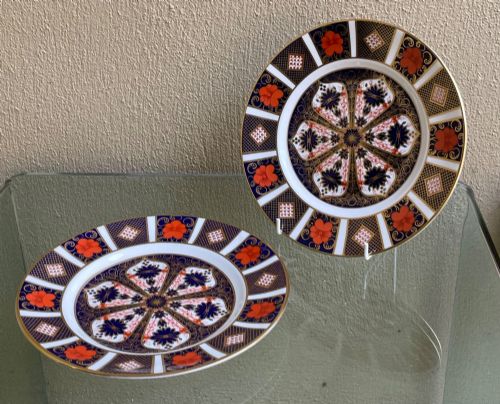

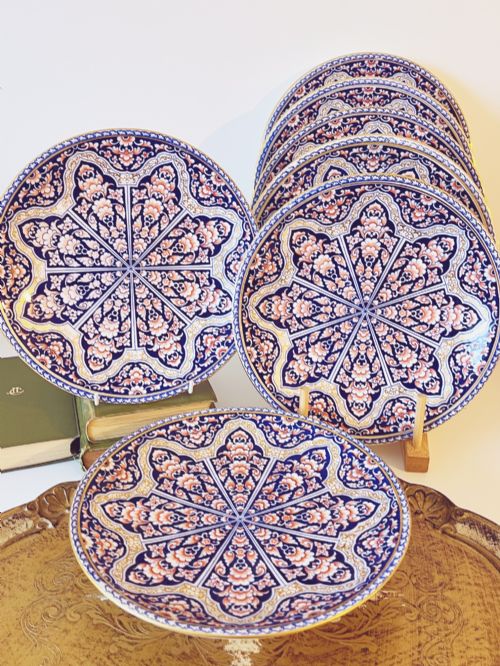
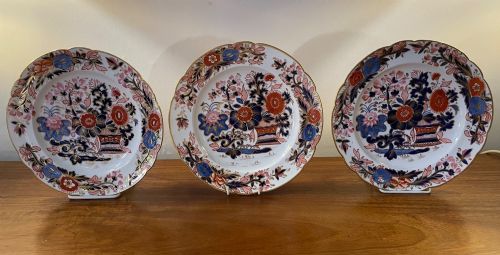


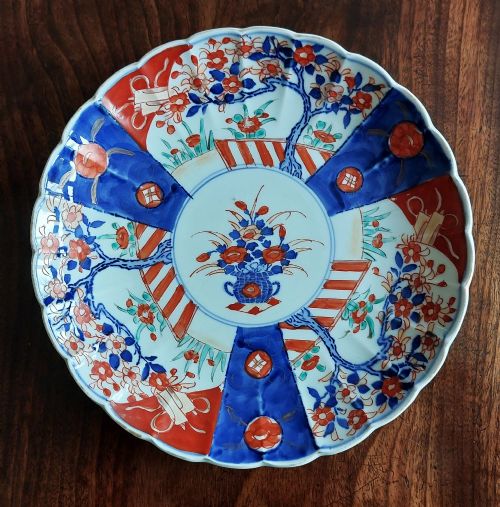




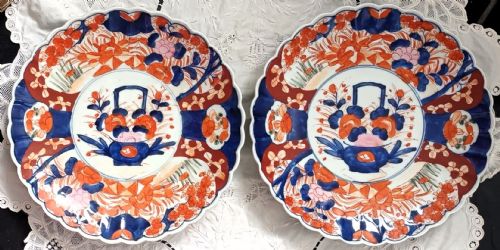
Porcelain Imari Wall Plate
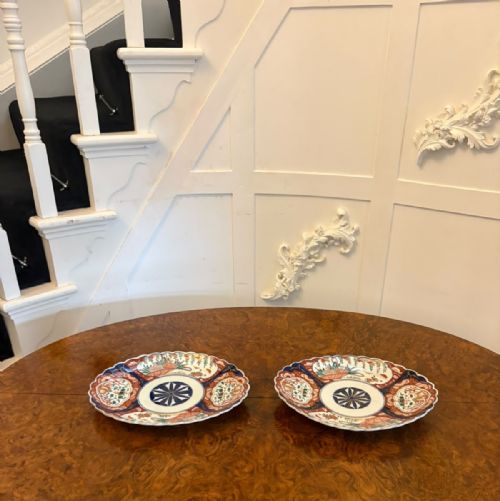
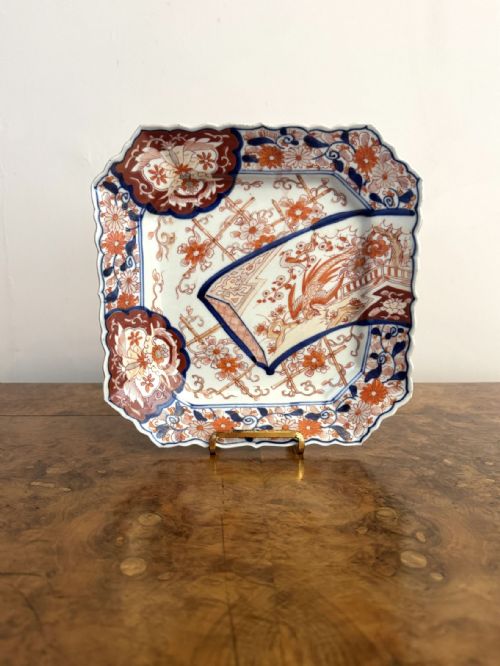
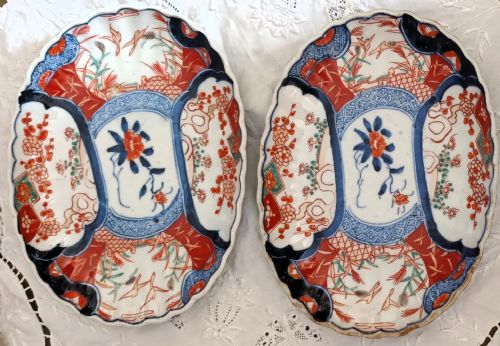
These porcelain imari wall plates bring together rich cobalt underglaze, enamel colour and gold leaf in traditional decorative schemes.
Porcelain Imari Wall Plate
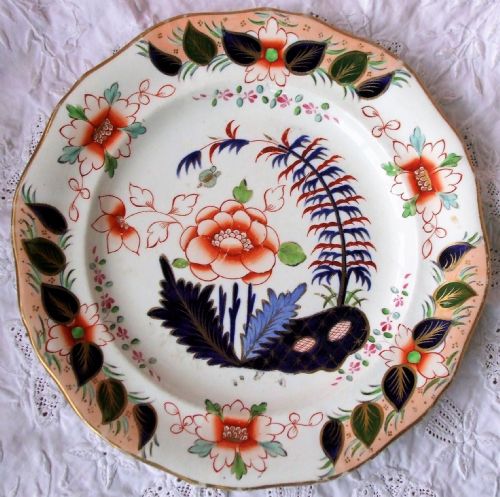
A porcelain imari wall plate represents a distinct tradition of ceramic decoration originating in Japan and later interpreted by English potteries. When searching for a porcelain imari wall plate, buyers encounter Japanese exports from the Meiji and Edo periods alongside 19th-century English ironstone and bone china adaptations.
The objects take various forms including large chargers, scalloped dishes, square plates and complete dessert services. Japanese Arita wares and pieces bearing the Imari palette from Staffordshire factories dominate the selection.
How They Were Made
Potters shaped ceramic clay or porcelain bodies before applying cobalt underglaze pigments to the surface. Artisans then fired the pieces at high temperatures to set the deep blue tones beneath a clear glaze.
Following the initial firing, workshops added vibrant enamel colours and gold leaf details in geometric and floral motifs, often requiring subsequent lower-temperature fixings in kiln chambers.
The listings feature porcelain, ceramic, bone china, enamel, gold leaf, gilt and cobalt underglaze across Japanese and English traditions.
What Varies in Quality
The crispness of the cobalt underglaze painting and the precision of the enamel detailing separate standard examples from finer studio output. Hand-painted brushwork displays a deliberate fluidity absent in mechanical transfer printing.
The density and weight of the porcelain or ironstone body indicate the origin of the piece. Well-preserved gilding and vibrant, intact enamels retain the visual depth intended by the original decorator.
Royal Crown Derby·John Davenport of Longport
The Porcelain Imari Wall Plate Glossary
- Imari palette
- A distinct decorative colour scheme combining underglaze cobalt blue with iron red and gilt highlights. This palette defined traditional Japanese export wares and inspired numerous English interpretations.
- Meiji Period
- The era in Japanese history spanning from 1868 to 1912, known for prolific ceramic production aimed at international markets. Pieces from this time often feature elaborate bird and floral motifs.
- Cobalt Underglaze
- A blue pigment applied directly to the raw ceramic body before glazing and firing. This technique protects the pigment beneath a glossy, durable surface layer.
- Ironstone
- A heavy, durable type of ceramic developed in 19th-century England as a robust alternative to porcelain. Factories utilised this dense material for durable tableware decorated in the Imari style.
- Charger
- A large decorative plate traditionally used for formal display rather than dining. These substantial pieces highlight complex painted compositions across a wide surface area.
Porcelain Imari Wall Plate: Frequently Asked Questions
How do I hang a heavy charger on the wall?
Displaying a large plate requires a secure, coated wire wall hanger that distributes the weight evenly across the rim. Ensure the fixing is anchored directly into wall studs or uses appropriate masonry plugs.
Position the plate away from direct sunlight and heat sources to protect the delicate enamel and gold leaf decorations from gradual fading.
Are these plates safe for daily dining use?
Most antique examples serve primarily as decorative objects rather than functional tableware. The overglaze enamels and gilt details can wear down with frequent washing and cutlery use.
Gentle hand washing in lukewarm water preserves the fragile pigments. Avoid soaking or placing antique ceramics in modern dishwashers.
How do I tell Japanese Imari from English copies?
Japanese porcelain typically exhibits a lighter body, finer potting and distinctive foot rings compared to heavier English ironstone. The paste and glaze texture often reveal the distinct manufacturing traditions of Arita potteries versus Staffordshire factories.
Maker marks on the underside can clarify the origin, though many early export pieces remain unmarked. Examining the cobalt depth and enamel texture provides further clues to provenance.
What period do most of these plates date from?
The selection spans from the mid-18th century through to the early 20th century. Late 19th-century Meiji period Japanese imports and Victorian English ironstone pieces appear frequently.
Earlier 18th-century Chinese export examples also feature, demonstrating the wide geographic spread of this enduring decorative tradition.