



Edo Style Imari Charger
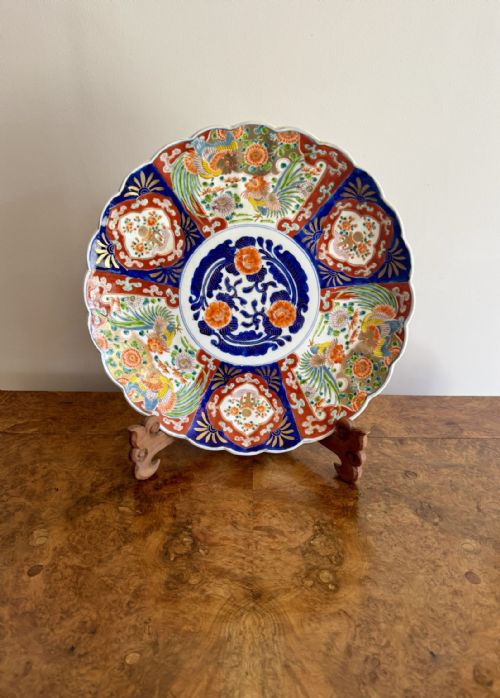
These edo style imari charger pieces bring rich Japanese design and bold palettes to a room, offering the visual weight collectors want.
Edo Style Imari Charger
When you search for edo style imari charger, you are looking at decorative plates, chargers, and dishes originating from Japan and dating from the 19th century up to the early twentieth century.
The pieces on this page span several decades, including items from 1850, 1890, 1900, and 1920, representing Japanese Imari and Japanese Edo / Meiji styles.
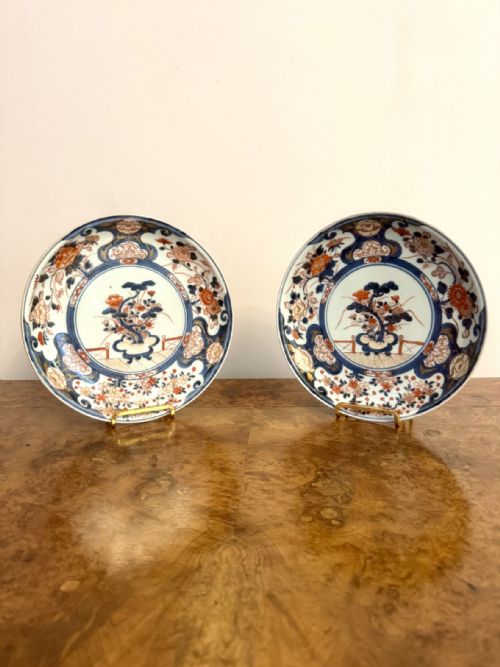
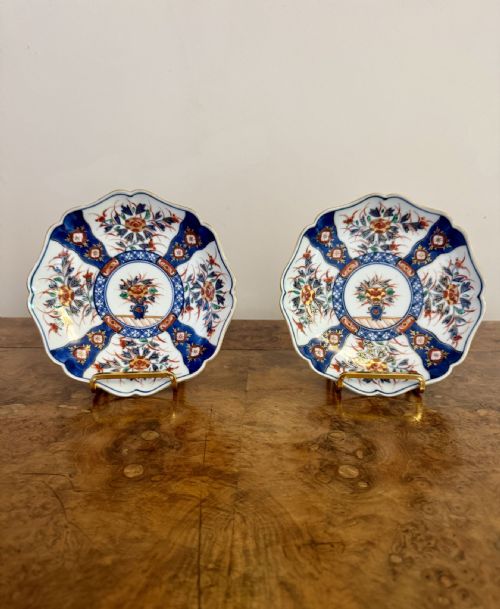
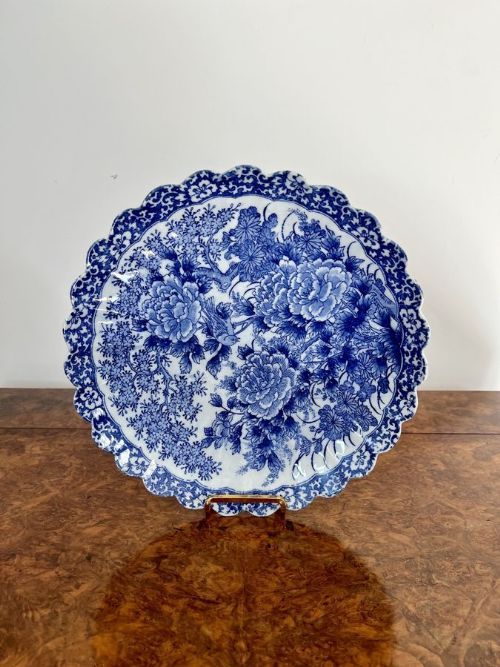
You will encounter individual decorative plates, scalloped edge plates, unusual shaped plates, and impressive pairs of chargers suited for display.
Materials and methods
These items are formed from ceramic and porcelain, decorated with enamel, glaze, cobalt glaze, and cobalt underglaze.
Selected examples incorporate gold leaf and gilt highlights to enrich the traditional palette and surface detail.
Scalloped edges give hardworking porcelain plates a ruffled personality that refuses to sit quietly on the wall.
Judging quality
Quality across these examples rests on the crispness of the hand-painted brushwork and the vibrancy of the cobalt and enamel colours.
Form also plays a part, distinguishing standard circular plates from scalloped edges and unusual shaped plates.
The Edo Style Imari Charger Glossary
- Imari
- A style of Japanese porcelain traditionally decorated in underglaze blue, iron red, and gold. It originated in the town of Arita and was shipped from the port of Imari.
- Charger
- A large decorative plate or platter used historically for service or display on a sideboard. These pieces often feature the most elaborate hand-painted designs.
- Cobalt Underglaze
- A blue pigment applied to the ceramic body before glazing and firing. This technique protects the blue colour beneath a glossy finish.
- Scalloped
- A shaped edge finished in a series of curves resembling a scallop shell. This decorative shaping appears frequently on plates from this tradition.
Edo Style Imari Charger: Frequently Asked Questions
How were these chargers used?
These large plates and chargers were primarily intended for decorative display rather than daily dining. They sat on sideboards or hung on walls to showcase wealth and taste.
Today, they serve the same aesthetic purpose, bringing strong colour and pattern to traditional and modern interiors alike.
How do I date these pieces?
Dating relies on the materials, potting style, and characteristics of the glaze and enamel. Items on this page span the nineteenth century and the early twentieth century.
Examining the foot ring and the quality of the cobalt underglaze provides further clues regarding the period of production.
Are these items hand painted?
The pieces recorded here feature hand-painted decoration executed with fine detail and distinct colour palettes. Artisans applied cobalt, enamel, and gilt by hand before firing.
Close inspection reveals the subtle brushstrokes and variations characteristic of individual artistic execution.
What shapes are available?
While standard circular plates and chargers form the core of the selection, you will also find scalloped edge plates and unusual shaped variations.
Pairs of matching plates and chargers also appear, offering symmetry for display arrangements.