

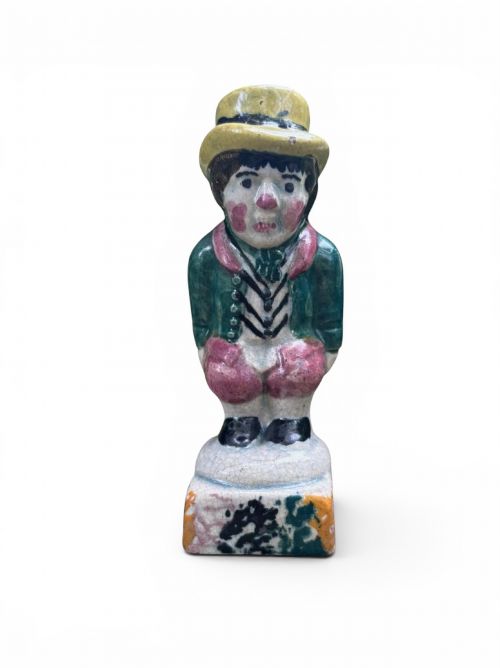
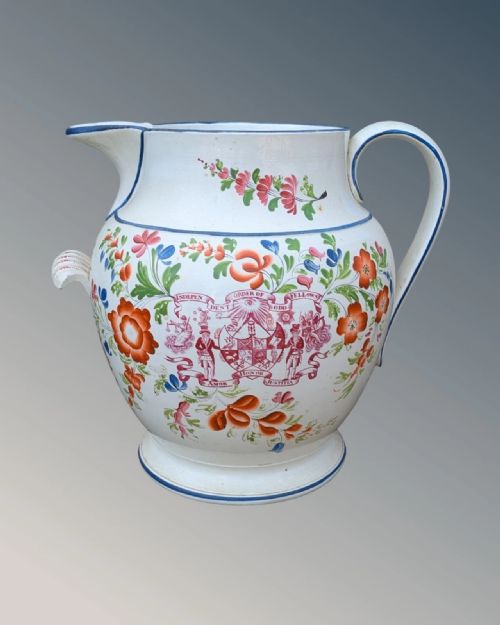

Polychrome Staffordshire Pottery
Polychrome staffordshire pottery brings British figures and jugs home with bright colour, hand-painted details and historic character.
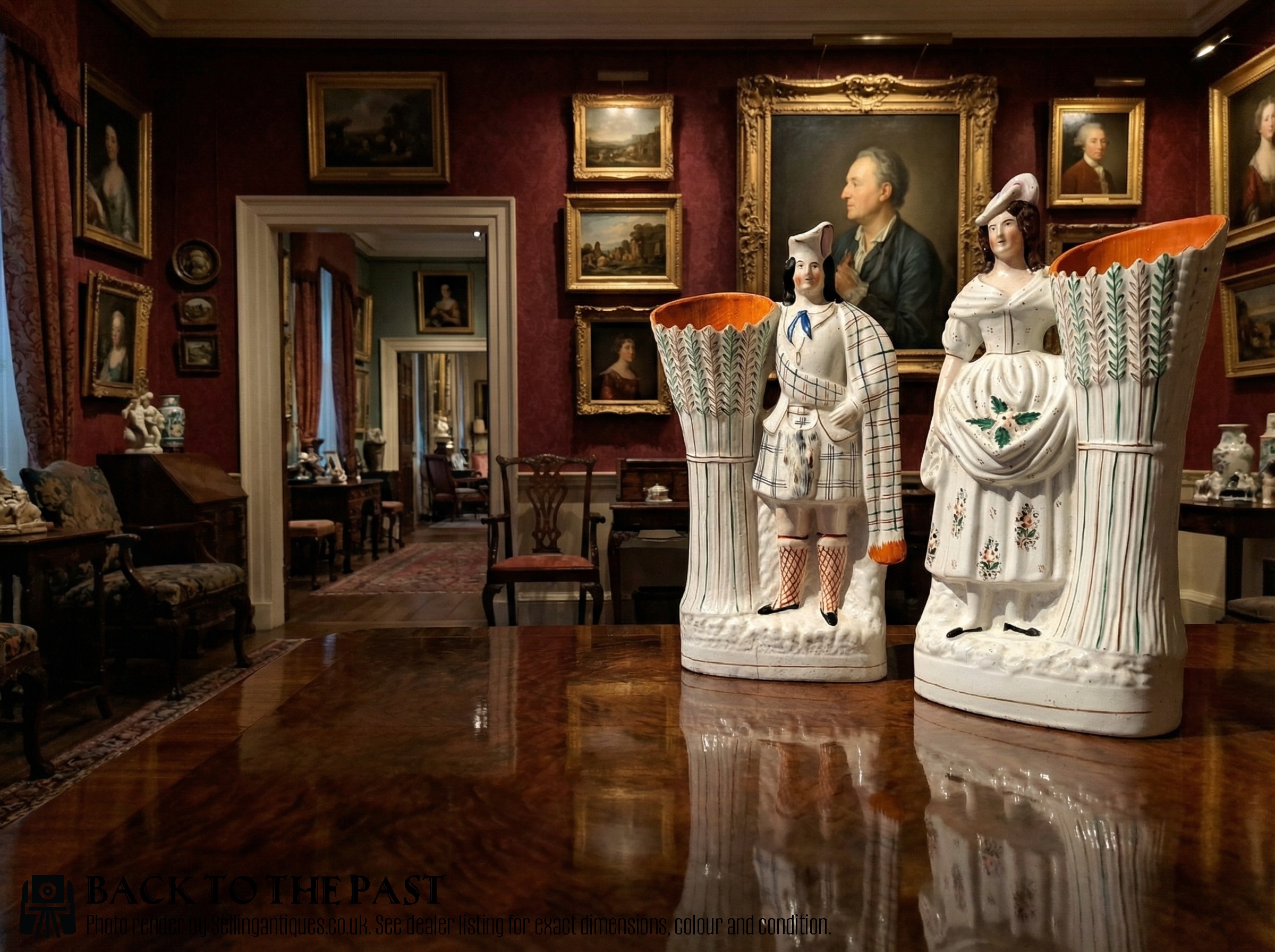
Polychrome Staffordshire Pottery
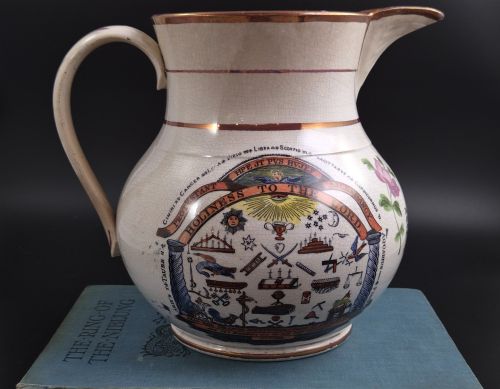
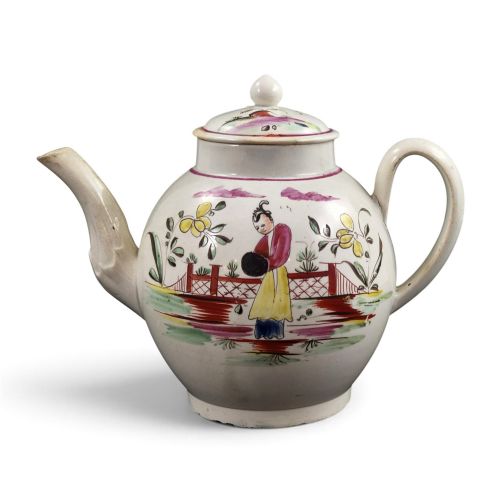
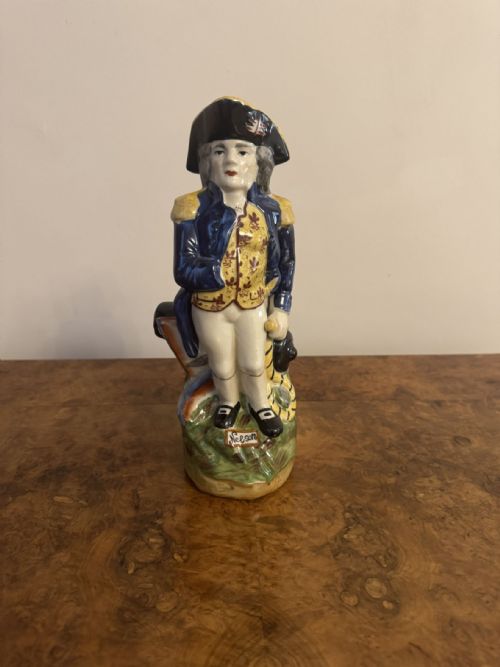
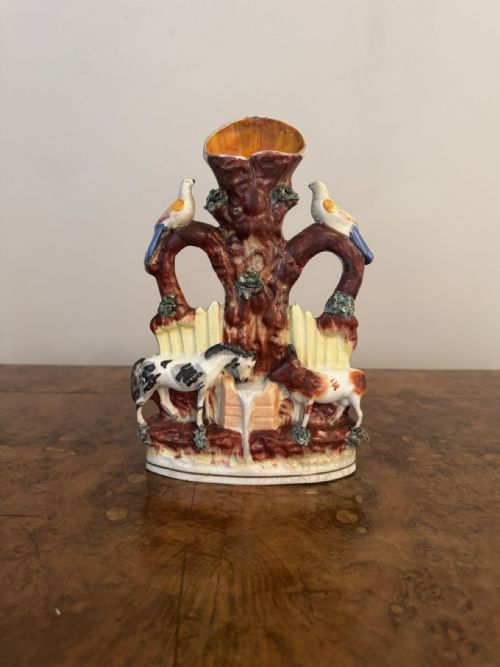
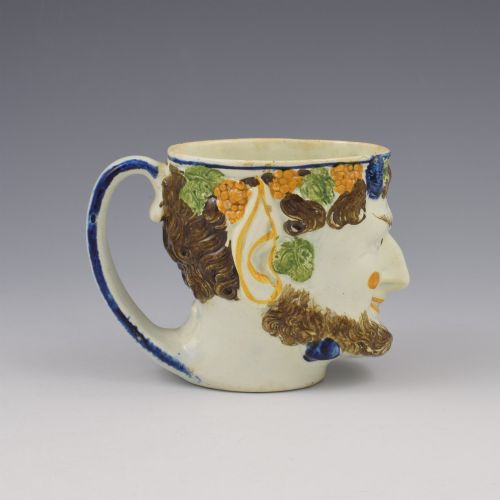
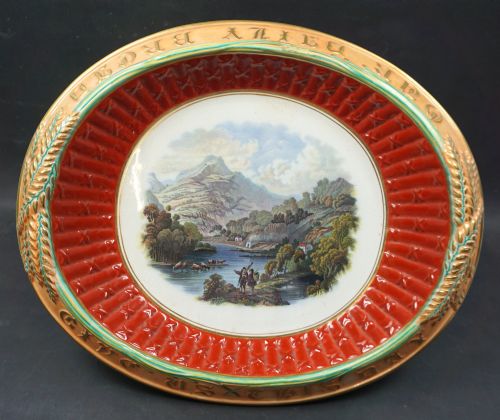
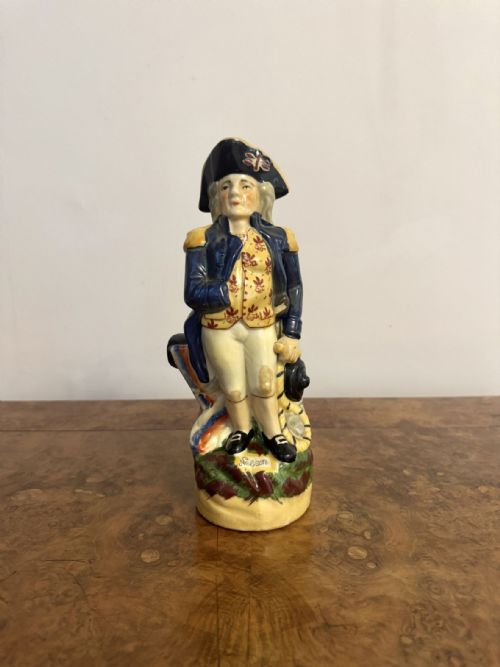
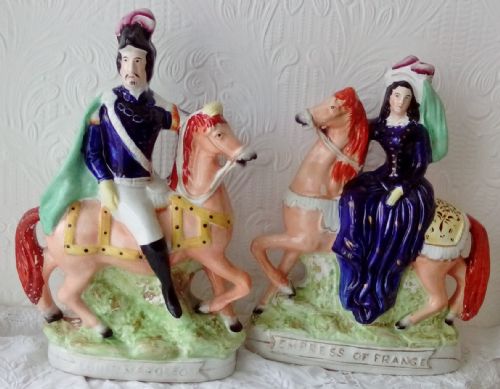
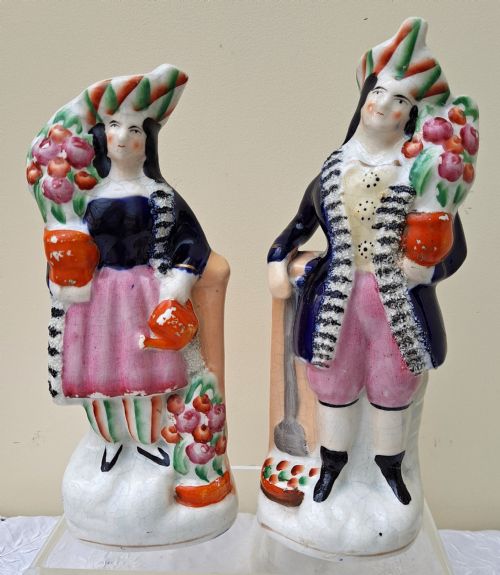
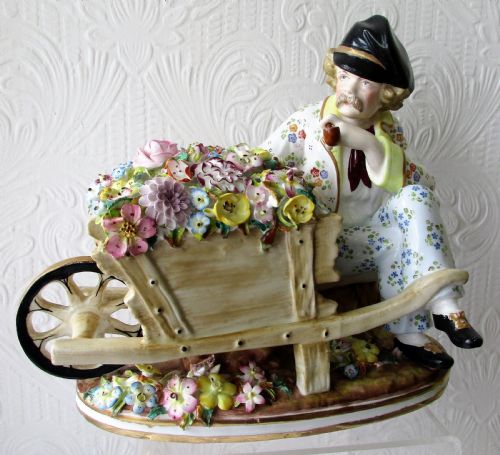
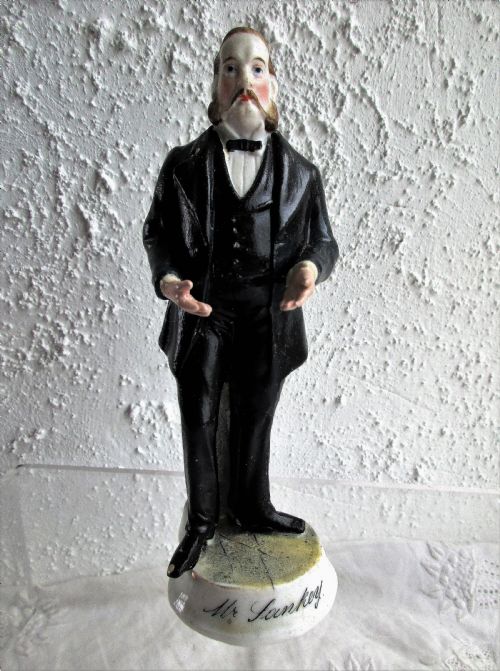
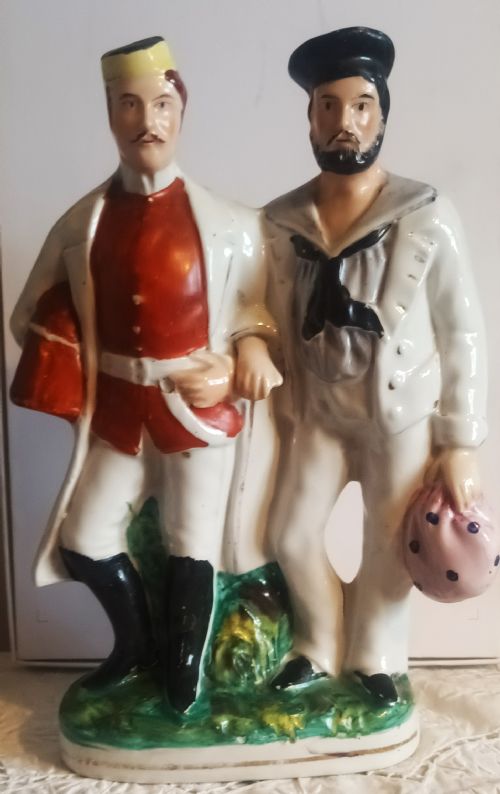
When you search for polychrome staffordshire pottery, you look at earthenware figures, toby jugs, spill vases and plates made in English potteries. These range from late Georgian pearlware to Victorian flatbacks depicting literary scenes, historic personalities and military commanders.
The most common examples on this page are 19th-century Victorian figures and flatbacks, alongside earlier Georgian creamware and pearlware jugs. Subjects span royalty, political figures, animals and theatrical groups, modelled for display on mantelpieces.
Makers and makers' marks appear occasionally, though many pieces remain unmarked works of provincial potteries. The output covers commemorative jugs, pepper pots and decorative plaques recording events from the Crimean War to local societies.
Materials and construction
Potters shaped these objects using earthenware, creamware and pearlware bodies, often formed in multi-part moulds. Lead glaze was applied over the surface to create a protective, glossy finish that interacted with the underlying clay bodies.
Decoration relied on hand-painted enamel colours applied directly over or under the glaze, sometimes supplemented by gold leaf or blue transfer printing. The pigments produced vibrant blues, oranges, greens and yellows characteristic of the palette.
Listings span earthenware, creamware and pearlware bodies decorated with hand-painted enamel colours and lead glaze.
What separates quality
Colour application dictates visual success, with skilled decorators using rich, well-fired enamels that hold their intensity across the surface. Softer moulding and hasty painting separate standard production items from the finest modelled figures.
John Bevington·Ralph Wood·John Ridgway
The Polychrome Staffordshire Pottery Glossary
- Pearlware
- A refined earthenware developed in the late 18th century featuring a bluish glaze that pooled in recesses to mask the cream-coloured body beneath.
- Flatback
- A figure moulded with a finished front and a plain or unpainted reverse, designed to stand directly against a wall on a mantelpiece.
- Toby jug
- A ceramic jug modelled in the form of a stout, cheerful person, usually seated and holding a mug or glass of beer.
- Spill vase
- A hollow hollow-backed ceramic vessel designed to hold wooden spills used for lighting candles and fires.
- Creamware
- A pale yellow-glazed earthenware perfected by Josiah Wedgwood and widely adopted by Staffordshire potteries during the Georgian period.
Polychrome Staffordshire Pottery: Frequently Asked Questions
What is a staffordshire flatback?
A flatback is a pottery figure designed with a finished front and a flat, unpainted back intended for display on a mantelpiece.
These pieces were produced in large numbers during the Victorian era to decorate domestic interiors with scenes of public figures or animals.
How do I date staffordshire pottery?
Dating relies on stylistic clues, ceramic bodies such as pearlware versus later earthenware, and the historical subjects depicted.
Georgian examples tend to show pearlware bodies and earlier glazing techniques, while Victorian flatbacks often feature brighter enamels and subjects from the mid 19th century.
What is a toby jug?
A toby jug is a drinking vessel modelled as a seated individual, frequently wearing 18th-century tricorn hat attire.
These jugs served practical functions in taverns and homes before becoming decorative mantelpiece objects.
How were these figures coloured?
Potters applied enamel colours by hand over or under the lead glaze before firing the ceramic bodies in a kiln.
This technique produced the characteristic polychrome palette seen on figures, jugs and plaques.