


Antique Equestrian Mantel Ornament
These antique equestrian mantel ornaments bring the power and theatre of the nineteenth-century stable and battlefield straight onto the shelf.
Antique Equestrian Mantel Ornament
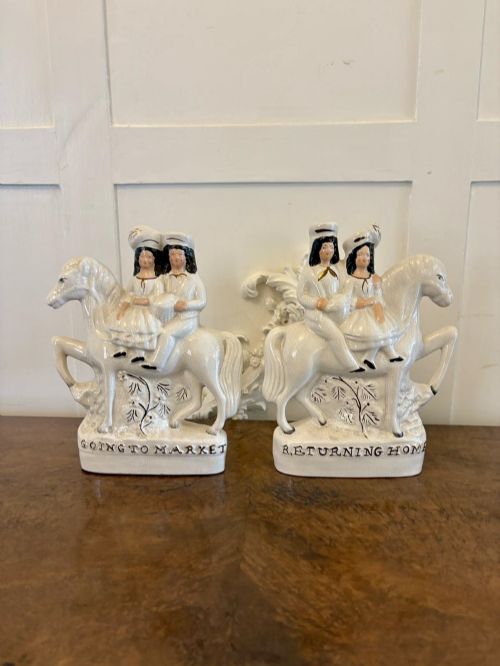
An antique equestrian mantel ornament captures horses and their riders in earthenware pottery or cast bronze, designed specifically to sit prominently upon a fireplace ledge. Buyers searching for an antique equestrian mantel ornament encounter nineteenth-century figures and sculptures that portray historical rulers, royal children, and riders alongside hunters and musicians. These decorative objects range from Staffordshire flat back pottery pairs to Austrian bronze sculptures and French works.
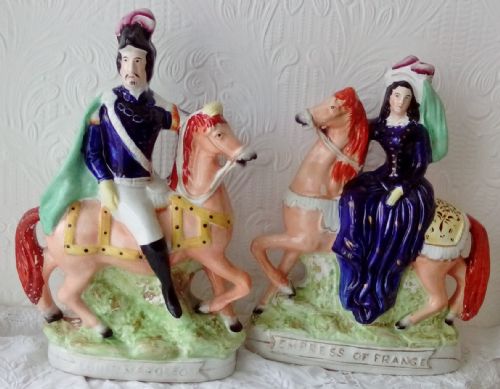
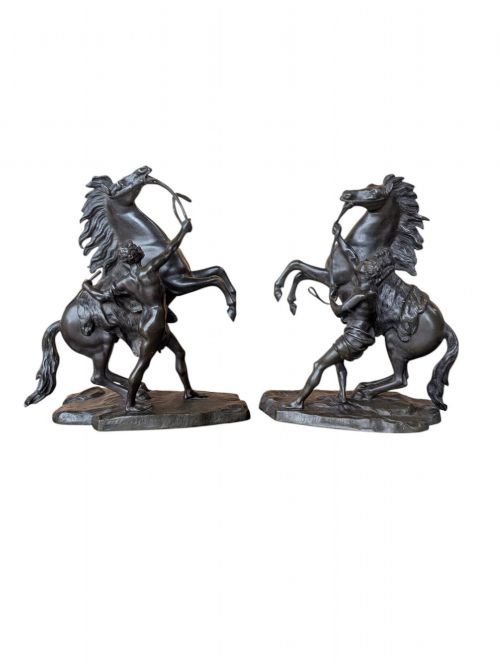
The most common examples on this page are Victorian Staffordshire pottery figures modelled as flat backs intended to be viewed from the front against a wall. These ceramic pieces often depict titled personages, children, or musicians seated astride horses, decorated with lead glaze and enamel paint. Alongside these earthenware pieces appear bronze sculptures of horses and historical figures such as Napoleon on horseback.
How they were made
Makers shaped the ceramic pieces from earthenware clay, using moulds to form Staffordshire pottery figures and flat backs before applying lead glaze and enamel paint. These pottery figures received their colourful decoration by hand, sometimes featuring signed details or metallic enamels fired onto the ceramic body.
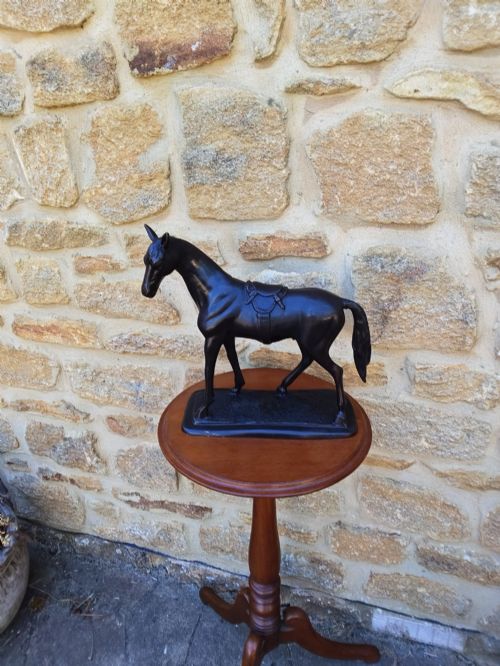
Metal sculptures on this page utilise cast bronze, often finished with painted surfaces or patination to render the musculature of bay hunter horses and military mounts. Some bronze works incorporate marble elements or bear signatures from prominent foundries and founders.
What varies in quality
The distinction between ordinary production pieces and finer examples rests upon the crispness of the modelling and the precision of the hand-painted enamels. Finer Staffordshire earthenware displays cleaner moulding lines and carefully applied colour, whereas simpler pieces show softer details in the clay and broader brushwork.
Bronze sculptures vary according to the fidelity of the casting and the sensitivity of the chasing work applied after the metal cools from the mould. Superior bronze pieces capture the subtle tension in a horse's anatomy and the refined details of military dress or harness.
Franz Bergman
The Antique Equestrian Mantel Ornament Glossary
- Flat back
- A pottery figure moulded with a finished front and a plain, unadorned reverse designed to stand flat against a mantelpiece. This construction saved clay and production time during the nineteenth century.
- Lead glaze
- A shiny, transparent glass coating applied to earthenware pottery before firing to seal the porous clay body. It produces a glossy surface finish typical of Victorian Staffordshire works.
- Animalier
- A nineteenth-century artistic style focusing on the realistic depiction of animals, particularly horses and hounds. This movement produced finely detailed bronze sculptures.
- Enamel paint
- Opaque vitreous or oil-based colours applied over the glaze of ceramic figures for surface decoration. It provides the bright hues seen on Victorian pottery garments and horse trappings.
Antique Equestrian Mantel Ornament: Frequently Asked Questions
What periods do these ornaments come from?
The listings span the nineteenth and early twentieth centuries, primarily capturing the Victorian era alongside French Empire and Animalier movements.
Most pieces date between eighteen-sixty and nineteen-twenty, reflecting the height of Staffordshire pottery production and European bronze casting.
Where were these figures displayed?
These ornaments stood upon mantelpieces in nineteenth-century homes, positioned centrally above fireplaces as decorative conversation pieces.
Because many Staffordshire examples feature flat backs, owners placed them directly against drawing room walls where only the front view mattered.
How do I distinguish pottery from bronze?
Pottery pieces consist of fired earthenware covered in lead glaze and hand-painted enamel colours, often modelled as pairs of figures or flat backs.
Bronze sculptures are cast metal objects depicting single horses, hunters, or historical figures on horseback, sometimes mounted on marble bases.
What subjects appear on these ornaments?
Common subjects include historical commanders like Napoleon and Louis Napoleon alongside the Empress of France, royal children, and musicians on horseback.
Other sculptures portray naturalistic animals such as bay hunter horses modelled by prominent nineteenth-century bronze artists.