


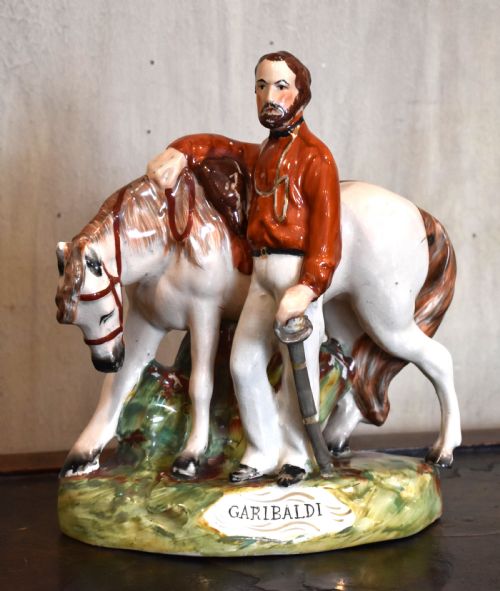


Equestrian Ceramic Figurine
An equestrian ceramic figurine captures mounted riders and horses in clay, offering a tangible piece of historic portraiture and folk art for the collector.
Equestrian Ceramic Figurine
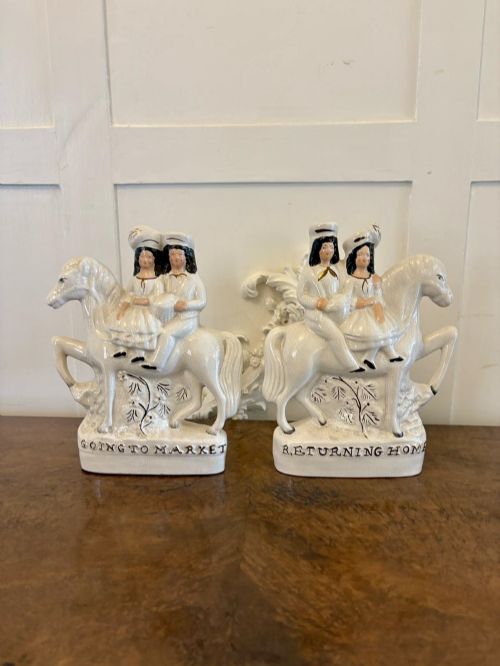
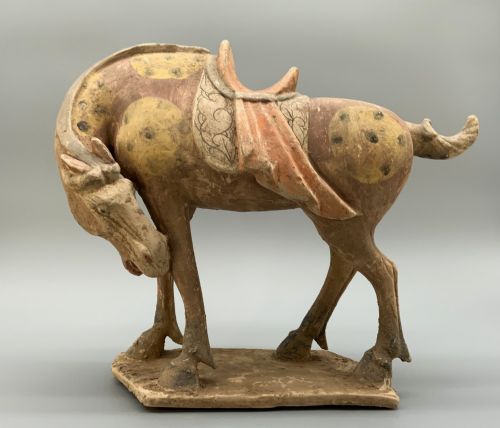
When you search for an equestrian ceramic figurine, you encounter sculptural works depicting riders and horses across various periods, from Victorian Staffordshire flatbacks to early Chinese pottery. These pieces represent historical figures, royals, literary characters and anonymous riders modelled in clay.
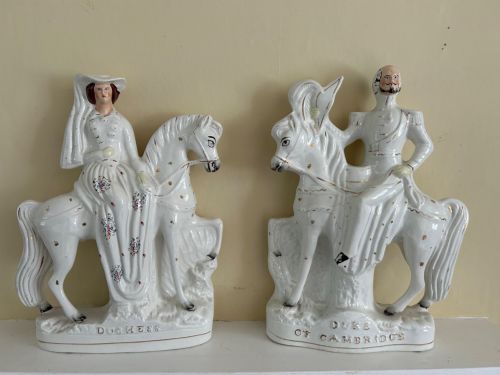
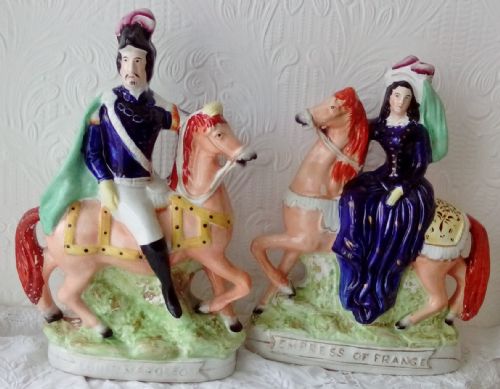
The Victorian Staffordshire examples dominate the selection, often portraying figures like the Duke and Duchess of Cambridge, Joan of Arc, Garibaldi or Scottish highlanders on horseback. Alongside these domestic works, the offerings extend to earlier Chinese Tang dynasty pottery horses and twentieth-century interpretations.
Most items appear as pairs or individual flatback figures designed for mantelpiece display. Their makers captured the subjects of the day, translating political events, royalty and folk heroes into accessible ceramic ornaments for Victorian homes.
Materials and methods
The makers utilised earthenware, terracotta and clay as the primary base for these sculptures, shaping them through moulding and hand-modelling techniques. Earthenware formed the standard body for nineteenth-century Staffordshire works, while earlier Chinese pieces relied on fine pottery bodies.
Surface decoration involved lead glazes, enamel paints and sancai glazing methods. Artisans applied these liquid colours and glazes directly to the fired clay before a secondary firing fixed the vibrant palettes onto the ceramic surface.
The listings span from pre-sixteenth century Chinese pottery to Victorian earthenware and twentieth-century Art Deco interpretations.
Judging quality
The weight of the object and the stability of the flatback base also indicate superior production standards. Pieces that maintain their original glaze lustre and show minimal restoration command greater interest among collectors.
The Equestrian Ceramic Figurine Glossary
- Flatback
- A ceramic figure modelled fully on the front and sides while the reverse remains flat and unglazed. This design allowed the piece to sit flush against a wall or mantelpiece.
- Staffordshire pottery
- Earthenware produced in the pottery districts of Staffordshire, England. These works include the popular nineteenth-century figures of people and animals.
- Sancai
- A three-colour glaze technique characteristic of Tang dynasty ceramics. The method typically combines amber, green and creamy white tones.
- Earthenware
- Porous pottery fired at relatively low temperatures. It requires a glaze to become impermeable to liquids.
Equestrian Ceramic Figurine: Frequently Asked Questions
What are flatback figures?
Flatback figures are ceramic sculptures designed with a finished front and a flat, unpainted reverse. This specific construction allowed them to sit neatly on mantels and shelves against cottage walls.
Potters moulded these pieces efficiently for domestic interior decoration during the nineteenth century.
How do I care for antique pottery?
Keep ceramic figures out of direct sunlight to prevent enamel colours from fading over time. Dust them gently with a soft, dry brush rather than liquid cleaners.
Avoid displaying them in areas prone to high humidity or rapid temperature changes to protect the ancient clay and glaze.
Are Tang horses genuine?
Tang dynasty pottery horses date back over a thousand years to ancient China. Collectors examine the clay composition, burial wear and glaze characteristics to determine authenticity.
Later twentieth-century workshops also produced Tang style interpretations using traditional sancai glazes.
Why were these figures made?
Victorian Staffordshire makers produced mounted figures to commemorate current events, political leaders, military heroes and royalty. They provided affordable household decoration for middle-class homes wanting to display their loyalties and interests.
Earlier Chinese examples served funerary purposes, accompanying the deceased into the afterlife.