




Staffordshire Horse Ornament
A staffordshire horse ornament brings nineteenth-century character to a room, capturing historical figures and domestic scenes in glazed ceramic.
Staffordshire Horse Ornament
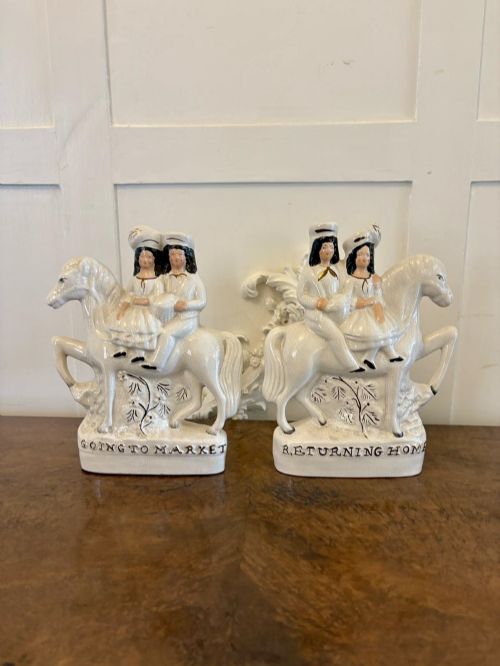
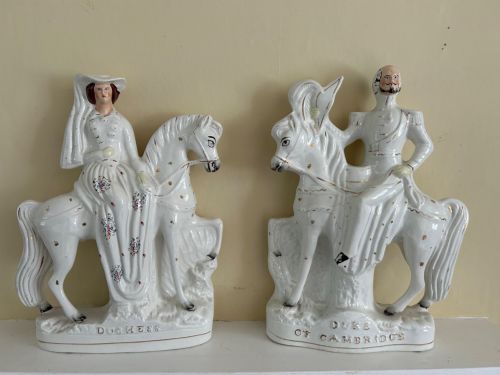
When you search for a staffordshire horse ornament, you are looking at nineteenth-century ceramic figures produced in the Staffordshire potteries. These pieces depict riders, historical personalities, and equestrian subjects modelled in the Victorian style.
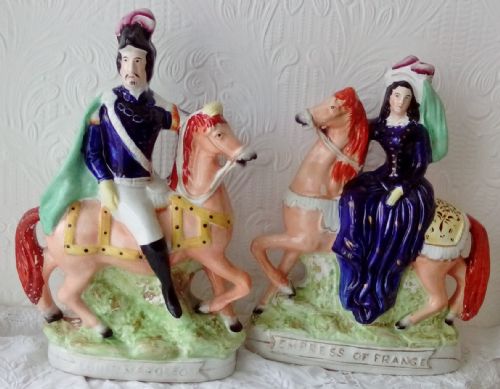
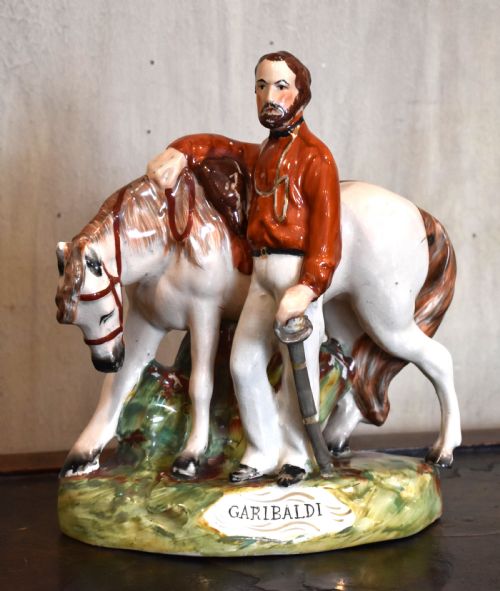
The most common examples on this page are flatback figures and pairs showing mounted riders, royal children, soldiers, and literary or political figures such as Joan of Arc, Garibaldi, and Louis Napoleon.
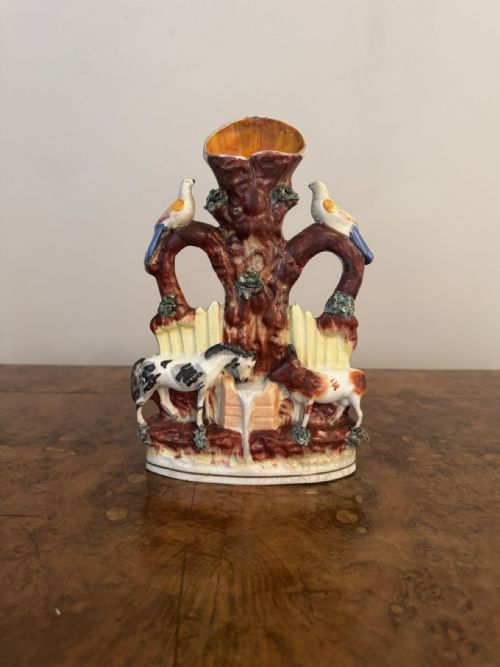
Originating from the Victorian era, these decorative ceramics encompass spill vases and pottery figurines designed for display on mantelpieces rather than practical use.
How they were made
These figures are shaped from earthenware and finished with lead glaze and enamel paint to build up the surface decoration. Artisans applied bright colours and occasional gilt highlights to bring out the details of clothing and harness.
The construction typically involves press-moulded earthenware, resulting in the characteristic flatback form meant to be viewed from the front. A glossy glaze seals the ceramic body and protects the underlying enamel paint.
Listings on this page span the nineteenth century, featuring earthenware materials finished with glaze, enamel paint, and gilt.
What varies in quality
The presence of matching pairs and well-preserved gilt detailing also separates the better examples from standard production pieces of the nineteenth century.
The Staffordshire Horse Ornament Glossary
- Flatback
- A ceramic figure designed with a finished front and an unglazed or simply painted flat rear surface. This construction saved clay and allowed the piece to sit flush against a wall or mantelpiece.
- Earthenware
- A porous pottery body fired at lower temperatures and coated with a glaze to render it waterproof. It serves as the standard material base for Victorian Staffordshire figures.
- Spill vase
- A hollow pottery cylinder incorporated into the figure design to hold wooden spills for lighting fires. These practical additions often sit beside the main equestrian subject.
- Enamel paint
- Opaque vitreous colours fused to the glazed ceramic surface during a secondary low-temperature firing. It provides the bright palette seen on nineteenth-century figures.
- Lead glaze
- A glossy coating containing lead oxide applied to earthenware before firing. It produces a smooth, reflective finish characteristic of Victorian pottery.
Staffordshire Horse Ornament: Frequently Asked Questions
Where were these figures displayed?
Victorian households placed these ceramic pieces on mantelpieces, sideboards, and shelf displays where guests could admire the colourful subjects.
Because they were designed primarily for visual appeal rather than utility, they remained safely away from heavy daily handling.
How do I identify a Victorian piece?
Look for the characteristic earthenware body beneath the glaze, combined with typical nineteenth-century subjects such as military figures, royalty, or literary heroes.
The use of lead glaze and hand-applied enamel paint provides further indication of their period of manufacture.
What is a flatback figure?
A flatback is a ceramic sculpture moulded with a detailed front and a flat, unadorned reverse side.
This method of production allowed makers to use less material while ensuring the figure sat neatly against interior walls.
Are these ornaments fragile?
Like most antique earthenware and glazed ceramic objects, these figures require careful handling to prevent chipping the glaze or enamel paint.
Keeping them on stable surfaces away from high-traffic areas ensures they remain protected.