


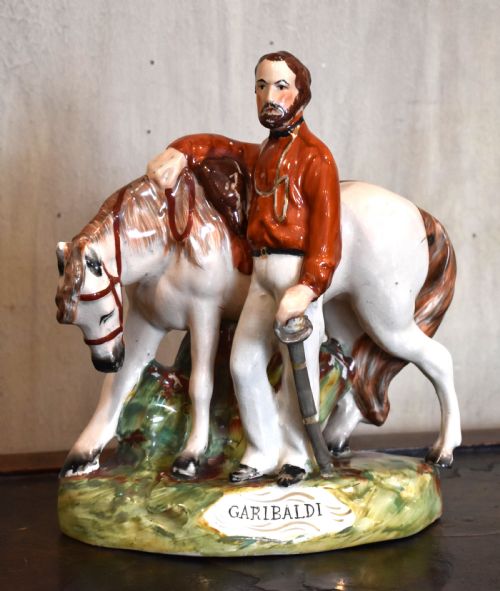


Victorian Staffordshire Horse Figure
These Victorian Staffordshire horse figure pieces bring nineteenth-century equestrian subjects and lively folk traditions straight into a room.
Victorian Staffordshire Horse Figure
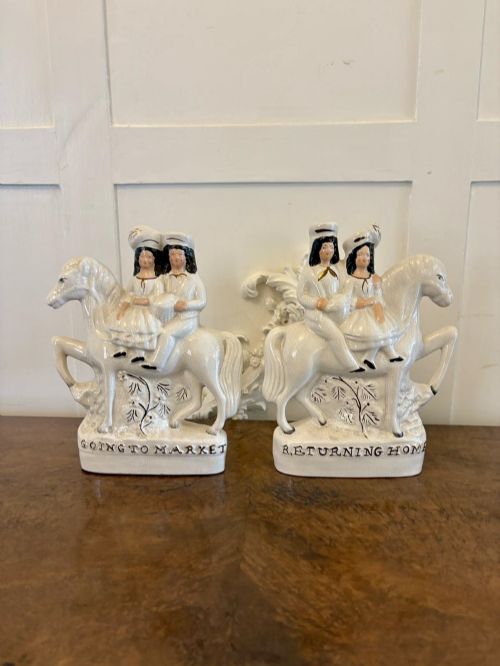
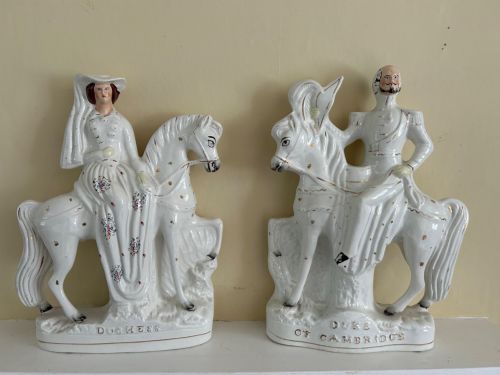
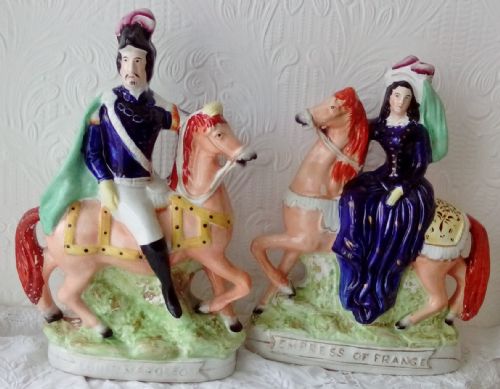
A victorian staffordshire horse figure captures mounted subjects ranging from military leaders and royalty to hunters, jockeys, and highwaymen. These earthenware ceramic pieces frequently appear as flatback pottery figures designed to sit neatly against a wall on a mantelpiece or shelf.
Makers produced these decorative figurines in pairs and single models during the nineteenth century, often depicting historical figures like Joan of Arc or Garibaldi alongside anonymous riders and musicians. The subjects reflect the popular culture and romantic interests of the Victorian era.
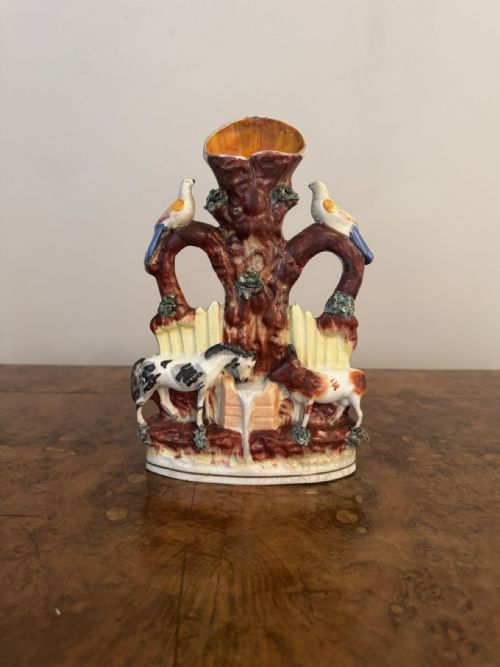
Buyers will find both single character models and symmetrical pairs among the available items. The forms vary from simple standing mounts to elaborate spill vases and large flatback compositions.
How they were made
Potters shaped these earthenware ceramic figures using traditional moulding techniques before finishing the surfaces with lead glaze. The wet clay formed the body and horse, which workers then hollowed out at the back for the flatback style.
Materials recorded across the inventory include lead glaze, enamel paint, gilt highlights, and glazed ceramic bodies.
What varies in quality
The crispness of the moulding and the precision of the hand-applied enamel paint set the finer examples apart from simpler workshop output. Better pieces show careful attention to the facial expressions of the riders and the musculature of the horses.
Surface preservation and the vibrancy of the original glaze and gilding influence the appeal of each ceramic figure. Stronger colours and minimal wear on the lead glaze indicate a superior survival from the period.
The Victorian Staffordshire Horse Figure Glossary
- Flatback
- A ceramic figure designed with an unglazed or finished flat rear surface intended to be placed against a wall. This construction saved clay and reduced weight.
- Earthenware
- A porous pottery body fired at lower temperatures, standard for nineteenth-century Staffordshire production. It requires a glaze to hold liquids.
- Enamel paint
- Coloured decoration applied to pottery, often fired at a lower temperature over the glaze. It provides the bright reds, blues, and blacks seen on riders and mounts.
- Lead glaze
- A glossy coating containing lead oxide applied to pottery before firing to waterproof the earthenware and add shine. It gives these pieces their characteristic reflective finish.
- Spill vase
- A hollow pottery figure incorporating a small vertical cylinder designed to hold wooden matches or spills for lighting fires. They combine practical household use with decorative display.
Victorian Staffordshire Horse Figure: Frequently Asked Questions
Are victorian staffordshire horse figure pieces marked?
Most pieces from this tradition carry no maker's mark or factory stamp. Potters produced them in high volumes across various small works without signing individual items.
Collectors rely on style, clay composition, and glaze characteristics rather than signatures to identify period examples.
How should I clean my ceramic figure?
Dust these glazed earthenware pieces gently with a dry, soft brush. Avoid using water, soap, or cleaning solutions, as moisture can harm old enamel paint and historic repairs.
Keep the figures away from direct sunlight and damp environments to protect the fragile surface decoration.
Why do some horses have flat backs?
Potters shaped these figures with flat rears so they could sit flush against cottage mantelpieces and shelves. This method used less material and kept production costs down for everyday buyers.
Flatback construction also helped prevent warping during the kiln firing process.
How do I spot a reproduction?
Modern copies often feature heavy, bright white clay bodies and sharp, modern enamel colours that lack the soft crazing of nineteenth-century pieces. Examine the underside and interior of the earthenware for signs of age.
Genuine items display the wear, weight, and glaze consistency typical of Victorian workshop methods.
Did they come in pairs?
Makers frequently produced these ceramics in symmetrical pairs to flank clocks or ornaments on a fireplace mantel. Subjects might include matching riders, historical figures, or companion animals.
Single figures also appear regularly where the matching piece has broken or separated over time.