

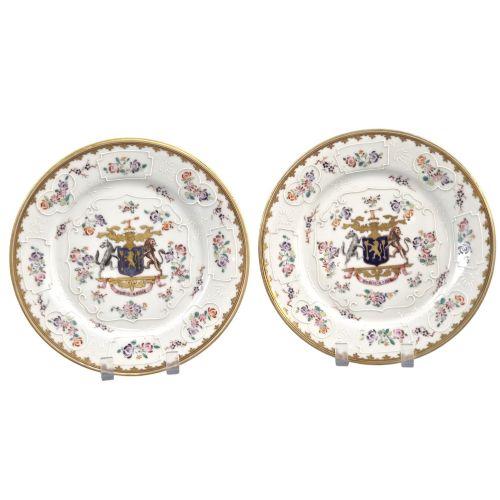


Polychrome Porcelain Display Plate
A polychrome porcelain display plate brings vibrant hand-painted colour and intricate ornament into a room, offering centuries of global ceramic artistry for the wall or cabinet.
Polychrome Porcelain Display Plate
A polychrome porcelain display plate serves primarily for visual presentation rather than dining, encompassing large chargers, cabinet plates, and shallow dishes meant for prominent placement. When searching this phrase, a buyer encounters a diverse international selection spanning European factories and Asian kilns.
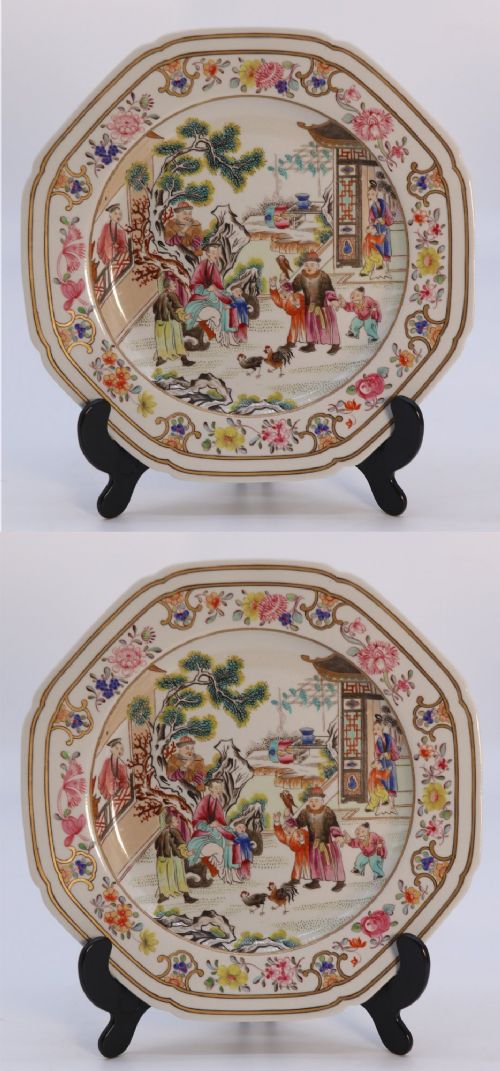
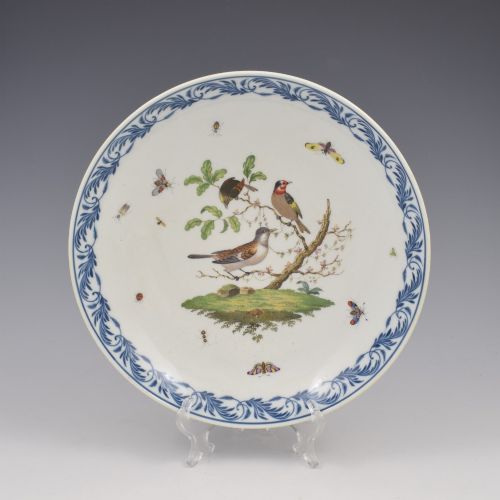
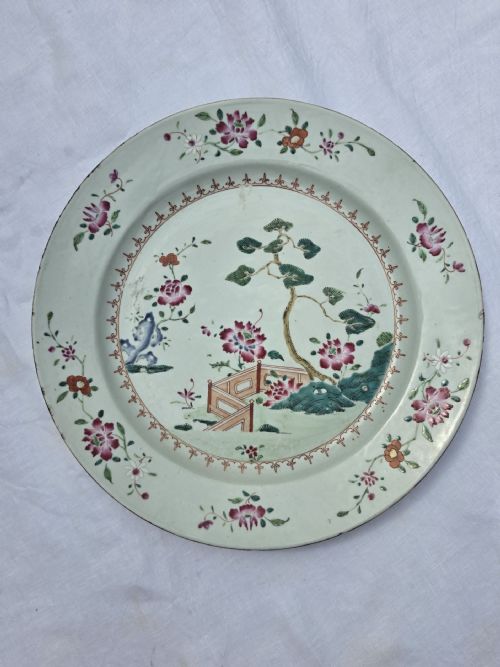
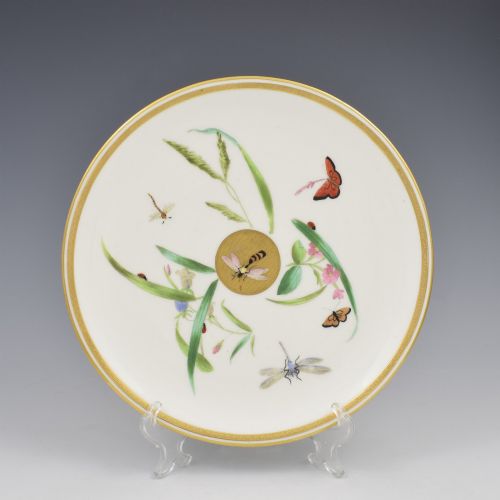
The pieces on this page draw heavily from eighteenth-century Chinese Export and Japanese Imari traditions, alongside nineteenth-century European interpretations from English and continental makers. Forms range from heavy chargers to delicate cabinet plates adorned with birds, figures, and floral motifs.
Originating across multiple periods including the Georgian era, the Victorian decades, and the Meiji period, these objects reflect distinct cultural aesthetics. Buyers find everything from Canton famille rose to Japanese Kutani and Meissen porcelain.
How they were made
Potters utilised hard-paste porcelain as the durable white body for these items, applying fluid glazes before firing at high temperatures. This stable foundation allowed makers to achieve smooth, gleaming surfaces ready for decoration.
Artisans applied enamel colours over the glaze by hand, often incorporating gold leaf, heavy gilding, and intricate overglaze painting. Subsequent low-temperature firings fixed these vibrant pigments and metallic accents permanently to the ceramic body.
Materials recorded across the inventory include hard-paste porcelain, enamel, gold leaf, and traditional glaze.
What varies in quality
The crispness and depth of the hand-painted brushwork dictate the visual success of the piece, separating rapid commercial output from meticulous studio work. Fine details in bird plumage, facial expressions, and complex floral grounds reveal the hand of a skilled artisan.
The application of gilding and enamel saturation creates a distinct hierarchy, where rich, thickly layered pigments and secure gold leaf outlast thin, flat washes. Porous or dull glazes indicate lesser execution, whereas a luminous, unblemished surface elevates the ceramic.
Spode Stone China·Meissen Porcelain·Minton Porcelain·Furstenberg·Flight Barr And Barr·Derby Porcelain·Mason And Patent Ironstone·Helena Wolfsohn
The Polychrome Porcelain Display Plate Glossary
- Charger
- A large decorative plate, typically exceeding thirty centimetres in diameter, designed for display on a wall or dresser rather than for table service.
- Famille Rose
- A major palette of Chinese ceramic glazes introduced in the eighteenth century, distinguished by opaque pink or rose enamel derived from colloidal gold.
- Imari
- A style of Japanese porcelain featuring distinctive underglaze blue and overglaze iron red, complemented by gold, historically exported through the port of Imari.
- Reticulated
- Describes ceramic work featuring an openwork lattice or pierced border cut into the rim before glazing and firing.
- Overglaze enamel
- Coloured glass fluxes painted on top of a fired and glazed ceramic body, requiring an additional low-temperature kiln firing to bond with the surface.
Polychrome Porcelain Display Plate: Frequently Asked Questions
How do I hang a heavy charger?
Displaying a large charger safely requires a properly sized spring-loaded brass hanger that grips the rim without applying excessive pressure to the ceramic body.
Ensure the wall fixing engages directly with a stud or utilises a robust masonry plug to support the considerable weight of nineteenth-century porcelain.
Can I use these plates for food?
Most antique display pieces feature delicate overglaze enamels and exposed gold leaf that can wear away or contain trace metals unsuited for modern culinary use.
These items belong in cabinets or on walls where their fragile painted surfaces remain protected from cutlery and washing.
How do I identify Chinese export porcelain?
Chinese export wares typically exhibit hard, crisp porcelain bodies decorated with classic famille rose or famille verte palettes tailored for Western markets.
Examining the foot ring often reveals fine-grained paste and subtle potting marks characteristic of eighteenth and nineteenth-century kilns.
What is the difference between Imari and Kutani?
Imari porcelain relies on a rigid triumvirate of underglaze blue, iron red, and gilt, frequently arranged in dense geometric and floral panels.
Kutani ware leans heavily into pictorial scenes dominated by rich greens, yellows, and purples, often featuring specific artist signatures on the reverse.