








Iron Red Japanese Charger
An iron red japanese charger brings striking palette and large scale to a room, offering the bold colour and hand-painted detail collectors seek.
Iron Red Japanese Charger
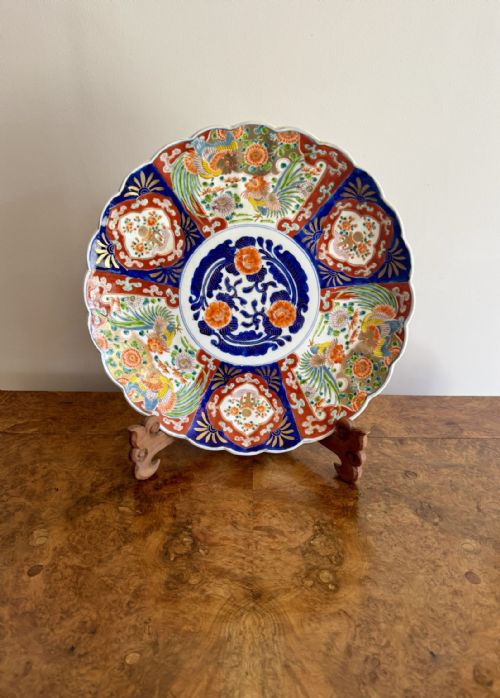
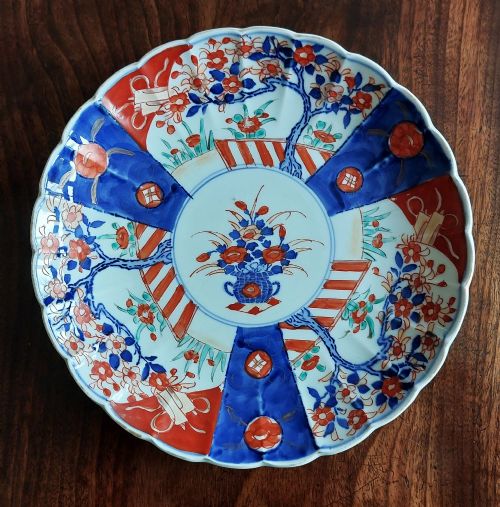
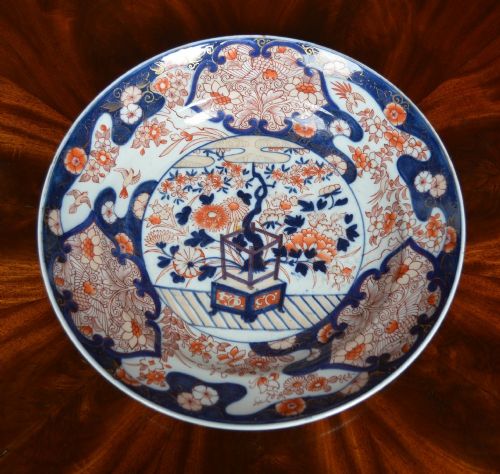
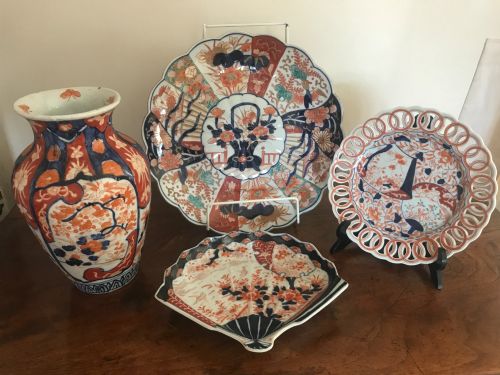
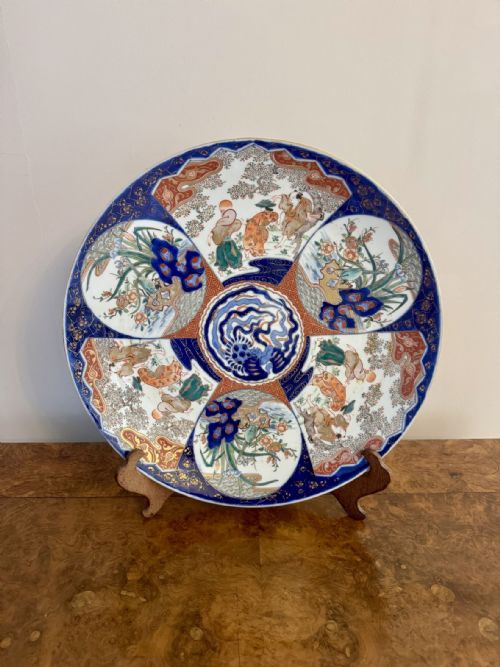
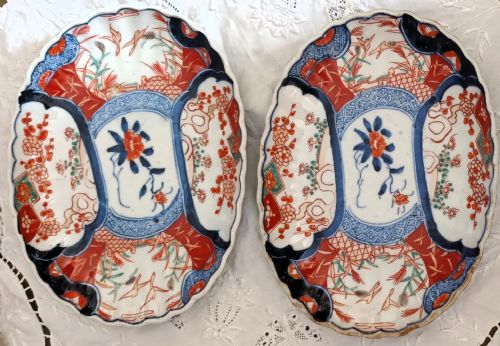
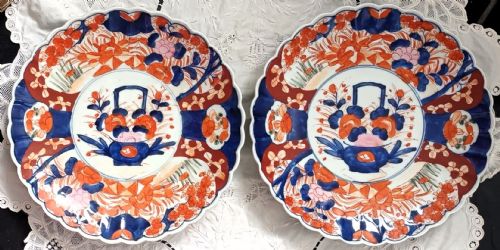
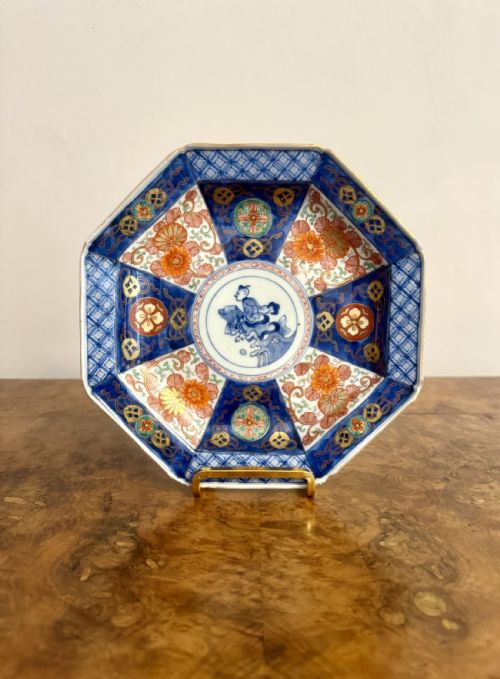
An iron red japanese charger is a large decorative ceramic plate or dish produced in Japan during the nineteenth and early twentieth centuries, spanning the Meiji period and Victorian eras. These substantial display pieces take various forms including round chargers, scalloped edge dishes, square plates, and hexagonal vessels.
The objects seen here comprise individual plates, pairs, and larger collections depicting traditional subjects such as exotic birds, floral designs, and the Seven Lucky Gods. Buyers find both simple round formats and unusual shaped edges designed for prominent wall display or tabletop presentation.
Materials and construction methods
Potters constructed these pieces using fine porcelain shaped into large plates and bowls, then painted them by hand with cobalt underglaze pigments. Artisans applied distinct iron red enamel alongside highlights of gold leaf, gilt, and gilding to create the characteristic multi-coloured palette.
The finished ceramics underwent high-temperature firing to fuse the glaze and enamel layers to the porcelain body. This process secured the intricate floral and figural compositions, ensuring the metallic gold and deep red pigments remained stable across centuries.
Listings span the Victorian era alongside the Meiji period, running from the 1850s through to the 1920s in porcelain, enamel, and gold leaf.
Distinctions in quality and execution
The standard of painting determines the tier of a piece, separating straightforward production from masterwork execution in the brushwork of floral motifs and avian subjects. Finer examples display meticulous detail in the depiction of figures like the Seven Lucky Gods and complex geometric borders.
Varying skill in the application of gold leaf and enamel accents changes the visual depth of a charger, as does the symmetry and crispness of moulded shapes such as hexagonal or scalloped edges.
The Iron Red Japanese Charger Glossary
- Charger
- A large decorative plate intended primarily for display on a wall or sideboard rather than for dining use. These substantial dishes measure significantly wider than standard dinner plates.
- Imari
- A traditional style of Japanese porcelain featuring a distinctive palette combining cobalt underglaze blue with iron red and gold overglaze. The style originated in the Edo period and continued through the Meiji era.
- Meiji Period
- The era of Japanese history lasting from 1868 to 1912, marked by significant artistic production for export markets. Ceramics from this time frequently combine traditional motifs with high decorative ambition.
- Cobalt Underglaze
- A blue pigment applied directly to the raw porcelain body prior to glazing and firing. This technique produces deep blue decoration that remains permanent beneath the clear glaze layer.
- Enamel
- A coloured glass-like substance applied over the fired glaze and subjected to a secondary lower-temperature firing. Iron red is a prominent enamel colour found across these Japanese porcelains.
Iron Red Japanese Charger: Frequently Asked Questions
How do I hang a charger safely?
Display these large plates using specialist wall mountings that distribute the weight evenly across the rim without causing stress to the porcelain body.
Ensure the fixing is secured directly into solid wall structure rather than plasterboard to support the substantial weight of nineteenth-century ceramics.
What subjects appear on these pieces?
Common decorative themes include hand-painted floral arrangements, exotic birds, and figural groupings depicting traditional subjects like the Seven Lucky Gods.
Artisans rendered these motifs using combinations of cobalt underglaze, iron red enamel, and gold leaf highlights.
How are Meiji period items dated?
Dating relies on stylistic indicators, potting characteristics, and historical production periods spanning the nineteenth and early twentieth centuries.
Pieces from this timeframe typically exhibit traditional Japanese export aesthetics combined with robust porcelain bodies.
Can these plates be used for food?
These decorative ceramics are intended for display and collection rather than culinary use, given their age and delicate overglaze enamels.
Washing should be restricted to gentle dusting or very careful cleaning without abrasive agents to protect the gold leaf and iron red pigment.