




Traditional Japanese Porcelain Dish
A traditional japanese porcelain dish brings weight and pattern to a table, combining hand-painted cobalt underglaze with rich enamels.
Traditional Japanese Porcelain Dish
When searching for a traditional japanese porcelain dish, collectors encounter plates, bowls, chargers, and platters spanning several centuries of export and domestic production. The material crosses multiple periods, including the Edo period, Meiji period, and later Victorian and Edwardian iterations.
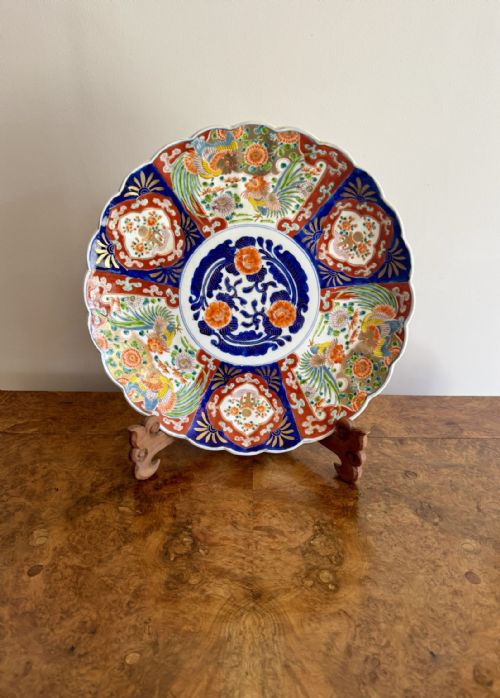
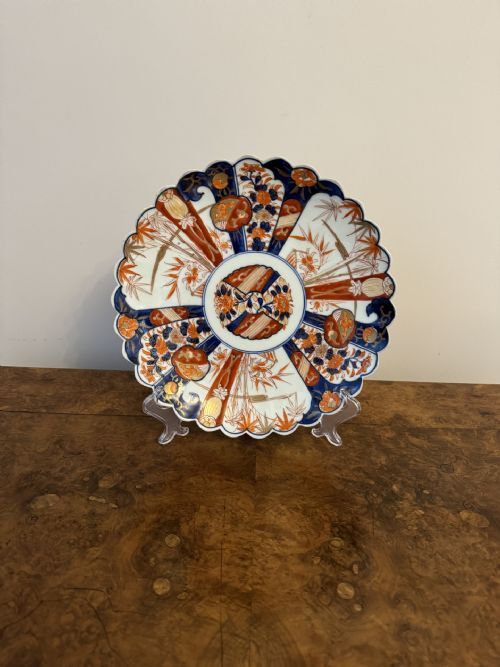
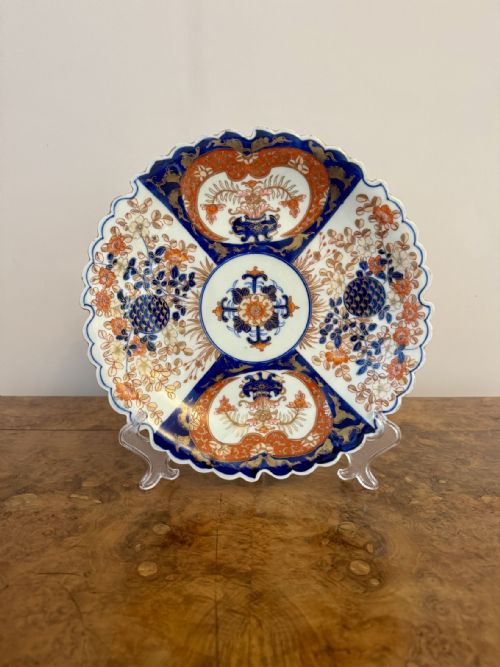
The most common forms on this page are Japanese Imari plates and large chargers, often featuring scalloped edges or square shapes. These pieces range from individual serving dishes to large sets complete with storage boxes.
Origins trace through historical workshops and export hubs such as Arita, where makers produced porcelain for both local use and international trade. Forms vary from deep bowls to wide display platters intended for fruit or decorative placement.
What varies in quality
The clarity and depth of the cobalt underglaze set certain pieces apart, distinguishing crisp brushwork from muddy or blurred transfer printing. Precision in the application of overglaze enamel and gold leaf determines the visual impact of the design.
Form and proportion also define the tier of a piece, with scalloped edges, square shapes, and large chargers requiring greater technical skill to fire without distortion. The crispness of hand-painted details separates standard export wares from superior examples.
Listings feature porcelain forms ranging from small square plates to wide chargers, spanning the seventeenth century through to the Edwardian era.
The Traditional Japanese Porcelain Dish Glossary
- Imari
- A style of Japanese porcelain named after the port from which it was shipped, characterised by a palette of cobalt blue, iron red, and gilt. It became immensely popular in European export markets during the Edo period.
- Charger
- A large decorative plate or platter intended primarily for display rather than for serving food at the table. These pieces often feature complex central medallions and detailed border patterns.
- Cobalt Underglaze
- A blue pigment applied to the unfired porcelain body before glazing and firing, which reacts to high heat to produce a permanent, deep blue colour beneath the clear glaze.
- Aka-e
- A style of Japanese ceramics featuring red overglaze painting, often combined with other colours and gold leaf to create rich pictorial scenes.
- Edo Period
- A historical epoch in Japan lasting from 1603 to 1868, noted for economic growth and stability that allowed ceramic arts to flourish.
Traditional Japanese Porcelain Dish: Frequently Asked Questions
How do I date a dish?
Dating relies on stylistic markers, potting techniques, and historical context rather than strict numerical stamps. Pieces from the Edo period differ significantly in weight and pigment tone from later Meiji or Edwardian export wares.
Examining the foot ring, glaze consistency, and type of cobalt underglaze helps narrow down the era of manufacture. Comparing the hand-painted motifs with documented periods provides further clarity.
Can I use these for food?
Most antique porcelain dishes are structurally sound enough for light service, but many owners prefer display use to preserve the overglaze enamels and gilding. Historic glazes and pigments require careful handling during washing.
Dishes with extensive gold leaf or delicate overglaze painting face gradual wear from cutlery and frequent cleaning. Hand washing in warm water without harsh detergents protects the surface.
What is an Imari charger?
An Imari charger is a broad, shallow dish designed for visual impact rather than dining, measuring substantially larger than standard dinner plates. These pieces feature the characteristic blue and red colour scheme with gilt highlights.
Historically displayed on walls, sideboards, or plate stands, chargers showcase the highest skill of the potter and painter. Their generous surfaces allowed artisans to paint elaborate floral and geometric panels.
How were these shipped?
Historic export pieces were packed securely into wooden storage boxes or barrels for long sea journeys to Western markets. Many surviving sets retain their original fitted boxes, which protected the porcelain during transit.
These storage containers form an important part of the provenance for nineteenth-century sets. They reflect the careful preparation required to transport fragile ceramics across continents.