
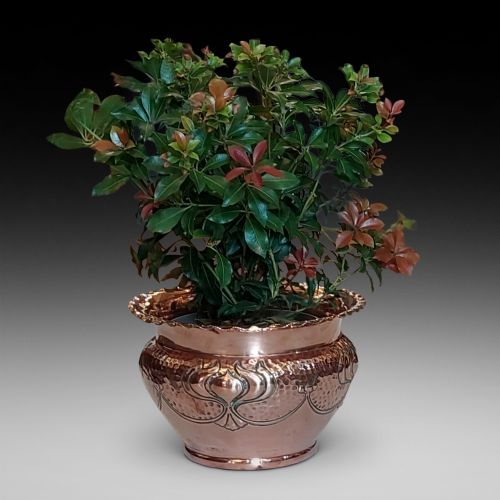
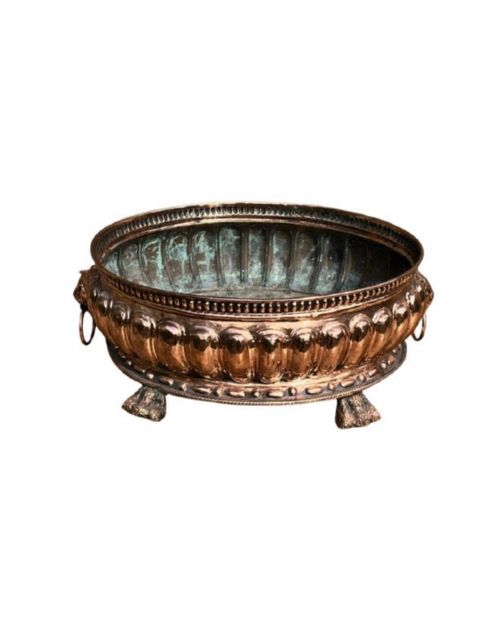


Polished Copper Planter
These polished copper planter examples combine functional metalwork with decorative presence, bringing warmth and metallic sheen to interior spaces.
Polished Copper Planter
A polished copper planter brings together domestic utility and display, appearing across periods from the eighteenth century to the twentieth century. These vessels range from compact jardinieres to substantial log buckets and wine coolers intended for hearth or floor placement.
The most common examples on this page date from the Victorian, Edwardian, and Arts and Crafts eras, often taking rounded or oval forms. Makers adapted these vessels for botanical display, fuel storage, or cooling wine, using metalworking traditions that prioritized durability alongside visual appeal.
Materials and construction methods
Makers constructed these vessels primarily from sheet copper, frequently employing hand-beaten or riveted techniques to join the metal panels securely. Handles and feet in brass, wrought iron, or cast iron provide contrasting support and structural strength.
Certain forms incorporate oak or other timbers, particularly in wine coolers and dual-purpose stands, combining wooden staves or surrounds with metal linings. Surface finishing relies on mechanical polishing to achieve a bright metallic lustre across the copper body.
Some copper planters doubled as clandestine indoor garden beds for ferns that stubbornly refused to survive the coal smoke of Victorian parlours.
Assessing quality in metalwork
Quality rests upon the weight of the metal sheet and the integrity of the construction, such as whether seams are neatly riveted or dovetailed. Heavier gauge copper maintains its structural form better under weight and daily use.
The refinement of decorative details, including hand-hammered repoussé work and the choice of contrasting mounts, distinguishes finer pieces from plain utilitarian vessels. Well-proportioned handles, secure joints, and harmonious material combinations elevate the overall presence of the object.
The Polished Copper Planter Glossary
- Jardiniere
- An ornamental pot or stand for holding flowers or plants. These vessels often feature decorative surface work or contrasting metal mounts.
- Repoussé
- A metalworking technique where the metal is hammered from the reverse side to form a raised design in relief. This method adds tactile depth to the exterior surface.
- Riveted
- Joined together using metal bolts or pins that pass through overlapping plates. This construction method secures heavy seams on buckets and large vessels.
- Wine cooler
- A vessel designed to hold bottles and ice, frequently sharing similar proportions and metal construction with large planters. These items often feature sturdy carrying handles.
- Arts and Crafts
- A design movement emphasising handcraftsmanship and simple forms over mass production. Pieces from this tradition often display visible hammering marks and honest construction.
Polished Copper Planter: Frequently Asked Questions
How do I clean polished copper safely?
Maintain the bright surface using specialised copper cleaners that remove tarnish without scratching the metal. Avoid abrasive pads that can dull the polished finish over time.
Apply the cleaner with a soft cloth, rinse thoroughly if required by the product instructions, and buff dry to restore the original lustre.
Can I plant directly inside these vessels?
Many antique metal vessels lack drainage holes and sustained moisture can accelerate internal corrosion. Using a separate plastic pot or liner protects the historic metal from damp soil.
Place a saucers inside the planter to catch excess water and remove plants for watering before returning them to the display vessel.
What is the difference between a jardiniere and a planter?
The terms are often used interchangeably, though jardiniere traditionally denotes a more decorative ornamental stand meant for indoor floral display. Planters can encompass simpler utilitarian vessels used for gardening tasks.
Both categories appear across nineteenth-century and twentieth-century listings with overlapping domestic functions.
How do I date an antique copper vessel?
Dating relies on examining construction techniques, such as machine-rolled sheets versus hand-hammered seams, alongside stylistic markers from periods like Art Nouveau or the Arts and Crafts movement. Form and proportion also offer clues to the era of manufacture.
Compare the specific rivet placement, handle design, and secondary materials like oak or brass with documented examples from the same period.