
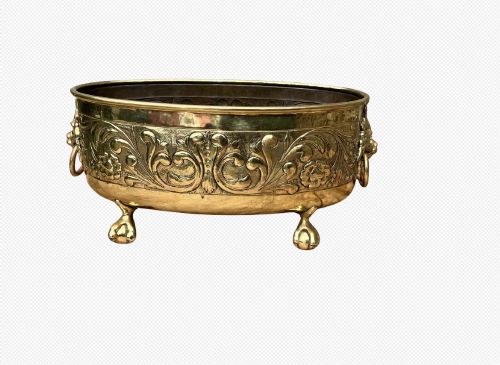


Brass Lion Feet Planter
A brass lion feet planter holds plants, fuel or wine, bringing a grounded, gleaming weight to hearths and drawing rooms.
Brass Lion Feet Planter
A brass lion feet planter draws together vessels used across centuries for holding plants, logs or wine. These pieces cross paths with jardinieres, log bins, cauldrons and coal stores, unified by metal bodies raised on animal paw feet.
The selection here spans from eighteenth-century Dutch and French pieces through Victorian examples and into the early twentieth century. Most pieces you meet will be Victorian or nineteenth century, rendered in brass or copper.
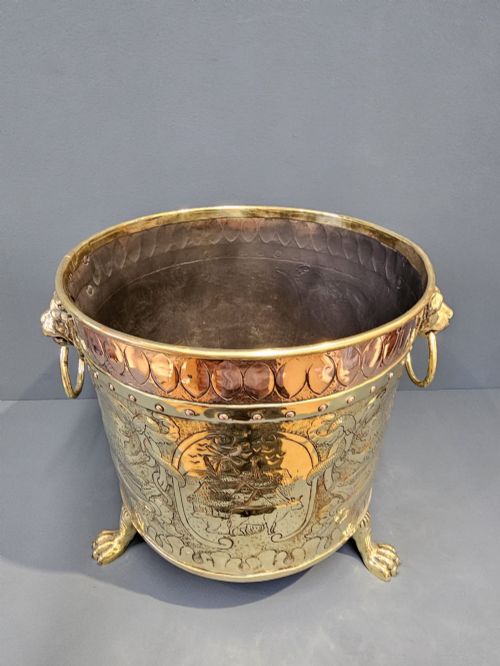
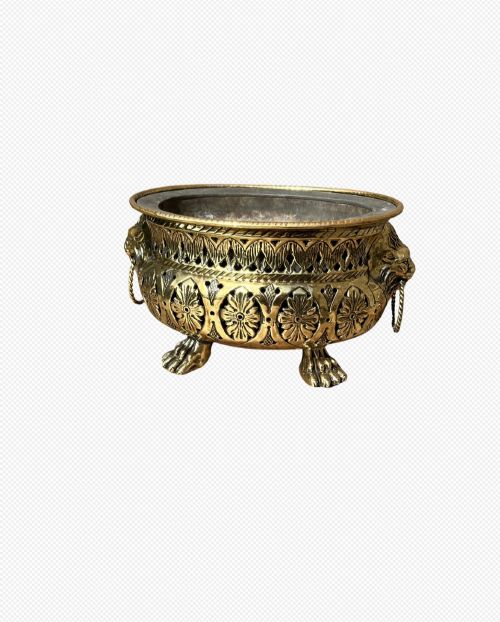
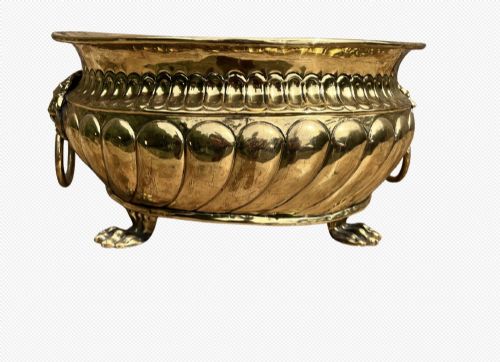
Makers shaped these items for formal rooms and firesides alike, utilising styles from Gothic Revival and French Empire to Dutch Traditional. You will encounter cylinders, cauldrons and handled jardinieres supported by distinct paw or claw feet.
Materials and construction
The bodies rely heavily on beaten brass and copper sheets, often shaped by hand. Metalworkers hammered the metal into cylindrical or cauldron forms, sometimes employing repoussé techniques to raise ornamental patterns from the reverse.
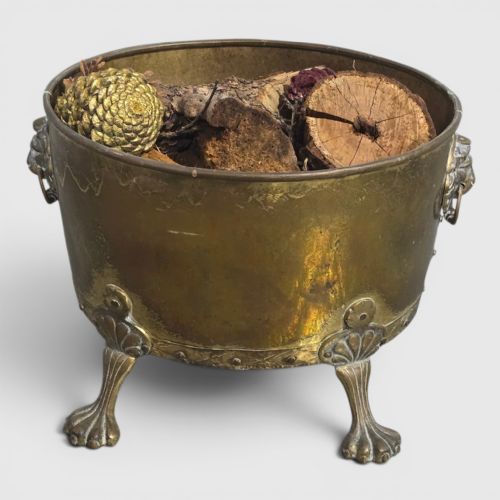
Embossing, piercing and applied copper bands appear frequently across the pieces. Feet take the specific form of cast brass lion paws or claws, joined securely to the base to bear the substantial weight of metal and contents.
Listings span the eighteenth century, the Victorian era, and the early twentieth century, utilising brass, copper, and mixed metal construction.
Assessing quality and character
Quality rests upon the crispness of the casting in the lion feet and any mask handles, alongside the depth of the repoussé work. Sharply defined claws and thick-gauge metal separate finer workshop output from lighter commercial production.
The integrity of construction matters as much as surface decoration. Seamless joining of the body, secure attachment of handles and feet, and honest patination across the brass and copper define the upper tier of these vessels.
The Brass Lion Feet Planter Glossary
- Jardiniere
- An ornamental pot or stand for holding plants or flowers. These vessels often sit on tables or directly on the floor depending on their scale.
- Repoussé
- A metalworking technique where the artisan hammers metal from the reverse side to create a raised design on the front. This method gives texture to many nineteenth-century bodies.
- Dinanderie
- The traditional medieval and later Belgian art of working brass and copper objects. The term covers various domestic vessels produced in towns along the Meuse valley.
- Cauldron
- A large metal pot with a rounded base, often used here as a descriptor for deep log bins or planters. They provide substantial volume for fireside storage.
Brass Lion Feet Planter: Frequently Asked Questions
What were brass lion feet planters used for?
These versatile metal vessels served multiple domestic purposes depending on their size and depth. Many held potted palms and flowering plants, while larger versions functioned as log bins or coal stores by the hearth.
Some early continental examples double as wine coolers, designed to hold ice and bottles during dining. Their sturdy metal construction made them practical for heavy contents in busy rooms.
How do I date a brass planter?
Dating relies on observing construction marks, stylistic cues, and the specific method used to shape the metal body. Eighteenth-century examples often show hand-beaten characteristics and distinct continental forms, whereas Victorian pieces frequently display heavier cast brass paw feet and machine-rolled rims.
Decorative motifs also offer clues, moving from French Empire and Regency classical restraint through ornate Victorian repoussé to simpler early twentieth-century designs.
Where should I place one at home?
These planters suit positions where their reflective metal surfaces catch natural light, such as beside a fireplace, on a sturdy side table, or directly on the floor. Their substantial weight anchors a room visually.
Pairing a large cylinder with logs near a hearth or filling a smaller table jardiniere with trailing foliage highlights their original decorative function.