
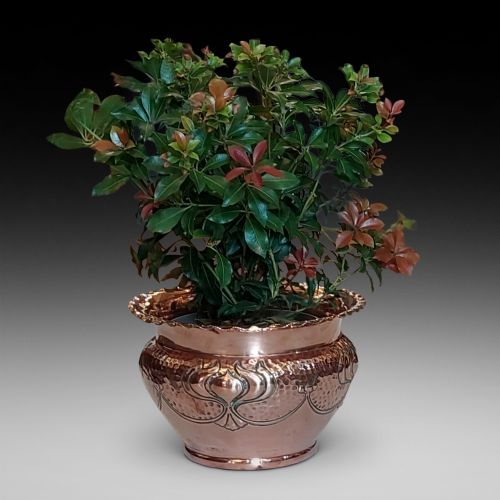

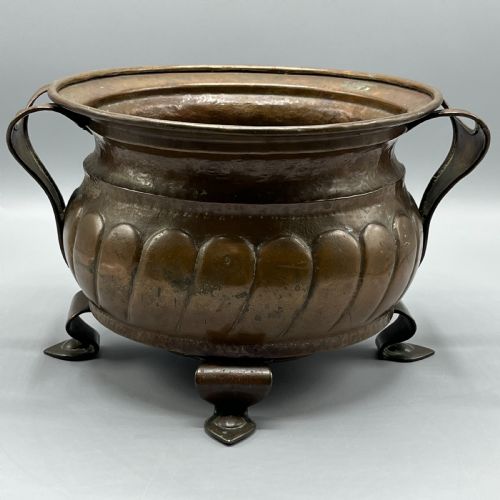


Copper Cachepot Planter
These copper cachepot planters bring warm metallic tones and historical character to indoor planting, offering a functional vessel that elevates greenery.
Copper Cachepot Planter
A copper cachepot planter serves as a decorative outer vessel for potted plants, protecting surfaces while displaying foliage inside the home. When you search for this phrase, you encounter vessels designed primarily to hold plants without direct soil contact.
The selections on this page span several distinct periods, including Victorian, Edwardian, and the Arts and Crafts movement. You are most likely to meet solid copper examples featuring riveted construction or decorative metalwork from the late nineteenth and early twentieth centuries.
Forms range from traditional bulbous jardiniere shapes to paired plant holders supported by wrought iron stands. Alongside standard copper items, you will occasionally find pieces incorporating brass trim, enamel decoration, or wooden elements.
Materials and construction techniques
Makers shaped sheet copper using hand-hammering and spinning techniques to achieve rounded bodies and reinforced rims. Brass handles, feet, and paw mounts often provide structural contrast and secure attachment through riveting.
Surface decoration frequently involves repoussé work, where designs are hammered from the reverse to create raised motifs in the metal. Certain examples incorporate wrought iron stands or internal tin linings to manage moisture.
One remarkably confident Victorian jardiniere doubles as a fireplace accessory, proving that nineteenth-century plants simply refused to freeze.
Distinctions in quality
Gauge of metal and integrity of construction differentiate everyday vessels from finer examples. Heavier copper sheets maintain their shape better over decades of use and hold a deeper, more resonant metallic tone.
The crispness of hand-hammered detailing and the quality of applied brass mounts reveal the maker's skill. Finer pieces display careful attention to joinery, rivets, and surface finish rather than hasty machine stamping.
The Copper Cachepot Planter Glossary
- Cachepot
- An ornamental container designed to hold a flowerpot and catch drainage water. The French term translates literally to hide pot.
- Jardiniere
- A large ornamental pot or stand for plants and flowers. These vessels usually sit directly on the floor or on dedicated furniture.
- Repoussé
- A metalworking technique where the metal is hammered from the underside to create a raised design in relief. This method requires considerable skill to maintain even thickness.
- Arts and Crafts
- A design movement emphasising handcraftsmanship, simple forms, and traditional materials. Objects from this tradition reject industrial mass production in favour of visible maker marks.
- Art Nouveau
- A style characterised by flowing, organic lines and floral motifs. Pieces from this period often reflect natural growth patterns in their handles and surface decoration.
Copper Cachepot Planter: Frequently Asked Questions
Can I plant directly inside a copper cachepot?
Direct planting is generally discouraged because wet soil accelerates interior corrosion and tarnishing. Most historical vessels were intended to house a separate potted plant inside.
Using a plastic or terracotta inner pot protects the historic metal from moisture damage and makes watering much simpler.
How do I clean and polish antique copper?
Gentle washing with warm soapy water removes dust and surface grime without disturbing the aged patina. Harsh chemical cleaners strip away historical character and leave the metal unnaturally bright.
Allowing the copper to retain its natural darkening preserves the visual depth accumulated over many decades.
How do I date an older copper planter?
Construction methods provide the clearest clues to a piece's age. Hand-hammering, handmade rivets, and specific stylistic markers like Arts and Crafts motifs point toward the late nineteenth or early twentieth century.
Machine-welded seams and uniform modern finishes typically indicate a later reproduction rather than an antique piece.
Where should I place these planters at home?
These metallic vessels suit tabletops, sideboards, and fireplace hearths where their warm surfaces reflect natural light. Placing them away from direct moisture prevents water spotting on the exterior finish.
Pairing a copper jardiniere with trailing foliage creates a strong contrast against wooden furniture and neutral walls.