

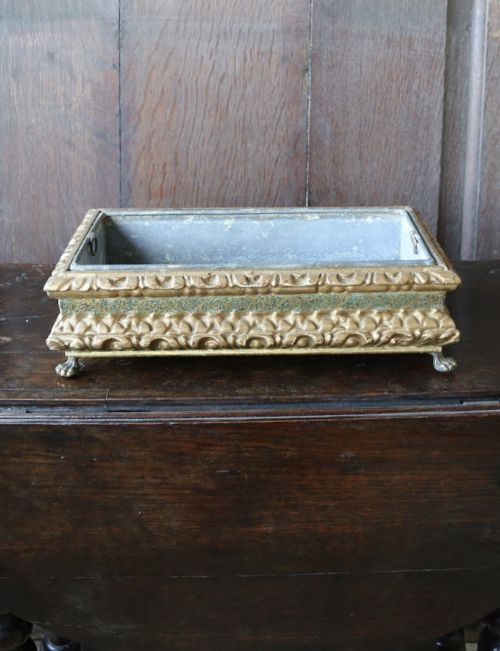


Claw Foot Planter
A claw foot planter brings weight and texture to a room, grounding greenery or logs in solid brass and copper.
Claw Foot Planter
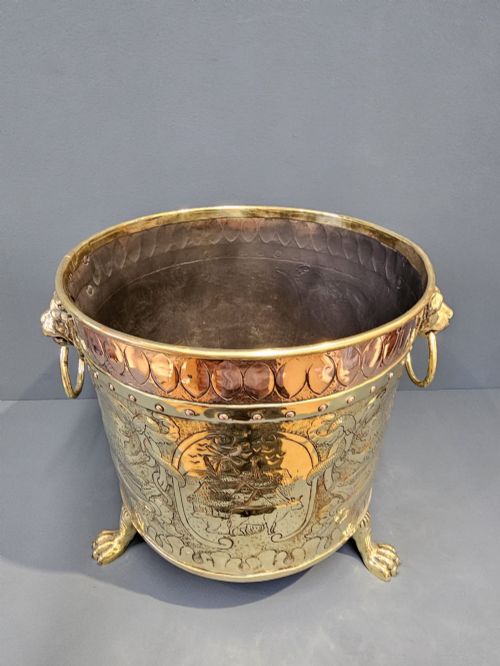
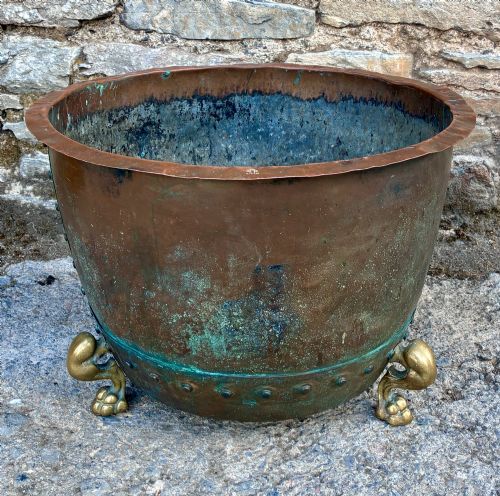
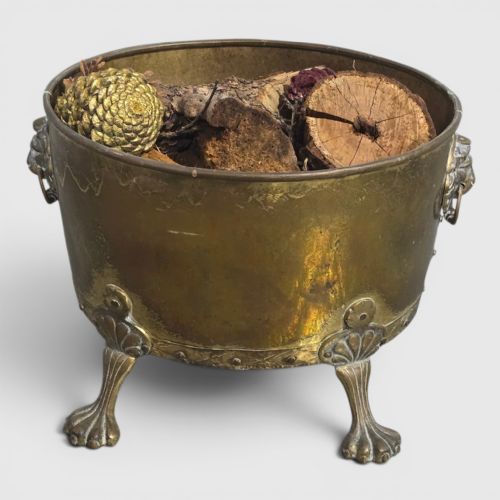
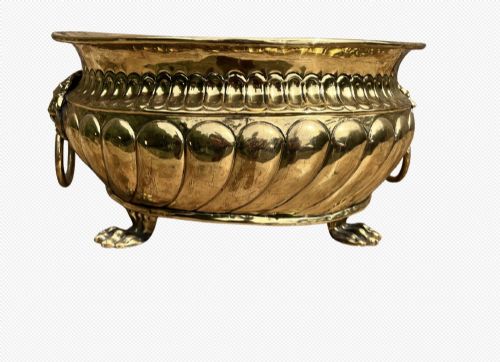
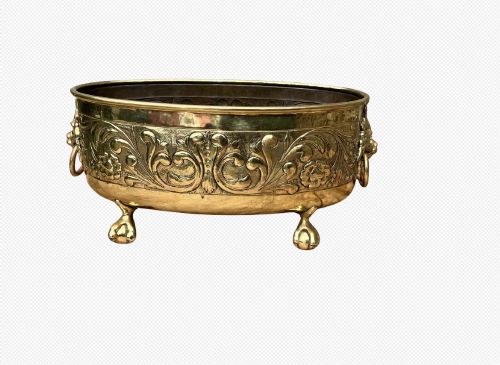
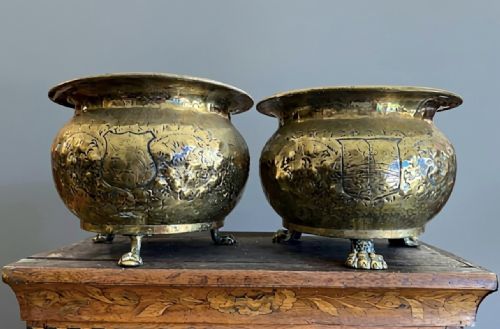
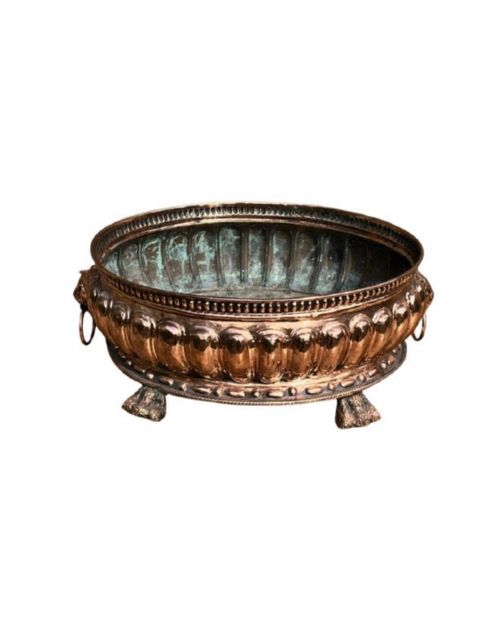
A claw foot planter serves as a vessel for plants or fuel, taking forms such as jardiniere, log bin, cauldron, and wine cooler. When you browse for a claw foot planter, you meet heavy metal containers designed to sit proudly on domestic hearths or within reception rooms.
The pieces span several periods from the eighteenth century through the Edwardian era, with Victorian examples appearing most frequently. Styles range from simple rustic farmhouse shapes to elaborate French Empire, Italian Neo-Classical, and Gothic Revival designs.
Origins vary across Britain, France, Belgium, Holland, and Italy, showing how domestic metalwork adapted to serve both utilitarian storage and ornamental display. Makers utilised robust materials to construct vessels that held weight and resisted moisture over decades of daily use.
How they were made
Makers shaped sheet metal through hand-beating, riveting, and repoussé work, building structure and surface pattern simultaneously. Brass and copper dominate the evidence, supplemented by lead, zinc, and carved giltwood.
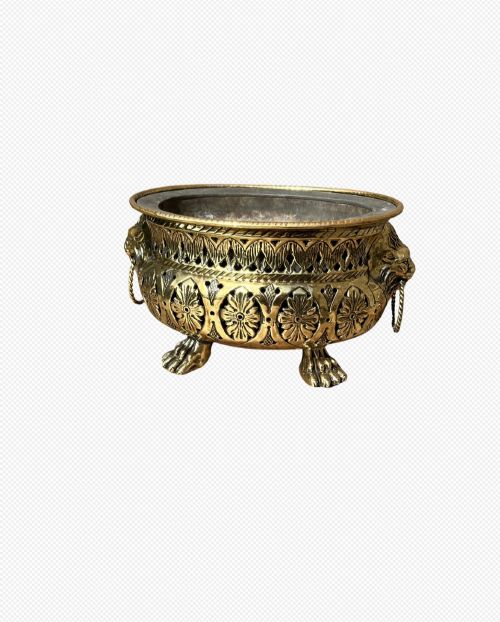
Details like lion mask handles, animal heads, and copper bands were fixed to the main body by rivets or soldering. Piercing and embossing created decorative friezes around the rims and flanks of the cylindrical bodies.
Listings feature brass and copper predominantly, alongside lead, zinc, and giltwood across Victorian, Edwardian, and eighteenth-century periods.
What varies in quality
The thickness of the metal sheet dictates the structural integrity and weight of the vessel. Heavier gauges of brass and copper hold their shape better against knocks and the internal pressure of damp soil or heavy logs.
The crispness of repoussé work and the hand-finishing on handles and feet separate standard production from finer decorative pieces. Sharp detailing on animal heads and cast claw feet indicates greater skill in the workshop.
The Claw Foot Planter Glossary
- Repoussé
- A metalworking technique where the artisan hammers the design from the reverse side to raise relief patterns on the surface. This method creates tactile decoration across brass and copper bodies.
- Jardiniere
- An ornamental pot or stand designed to hold growing plants indoors. These vessels often feature decorative pierced rims or handles.
- Log bin
- A deep container used beside a fireplace for storing firewood or coal. They frequently share materials and foot forms with planters.
- Giltwood
- Timber that has been coated with a thin layer of gold leaf or gold paint. This finish appears on decorative boxes and stands within the period.
- Wine cooler
- A large vessel originally filled with ice to chill bottles at the table. Many early examples share identical proportions with plant jardinieres.
Claw Foot Planter: Frequently Asked Questions
What is a claw foot planter?
A claw foot planter is a metal vessel, usually made of brass or copper, raised on decorative feet shaped like animal paws.
These pieces function as indoor plant holders or fireside log bins, combining utility with ornamental metalwork.
How do I clean brass planters?
Cleaning depends on whether you prefer a bright polished finish or an aged patina accumulated over decades.
Gentle washing with warm soapy water removes dust without disturbing the historic surface of the metal.
Can I use them for real plants?
Many of these vessels held live plants originally, though liners are advisable to protect historic metal from moisture.
Placing a modern plastic pot inside prevents standing water from corroding the base of the antique container.
How do I date a copper bin?
Dating relies on construction methods, such as hand-beating versus machine rolling, alongside stylistic motifs.
Victorian and Edwardian pieces often display embossed decoration and riveted seams characteristic of late nineteenth-century workshops.