



Riveted Copper Planter
A riveted copper planter brings warmth and heavy metal utility to a room or garden, shaped from beaten sheets and joined with stout fasteners.
Riveted Copper Planter
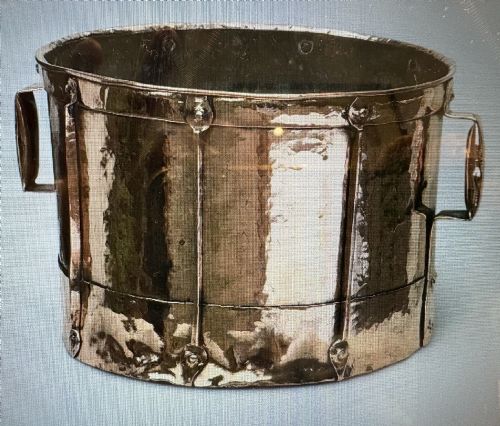
A riveted copper planter brings functional nineteenth-century metalwork into modern interiors and gardens, frequently doubling as a log bin, coal bucket or grain measure. These vessels were originally built for heavy utilitarian tasks in French country homes, Victorian households and Georgian spaces.
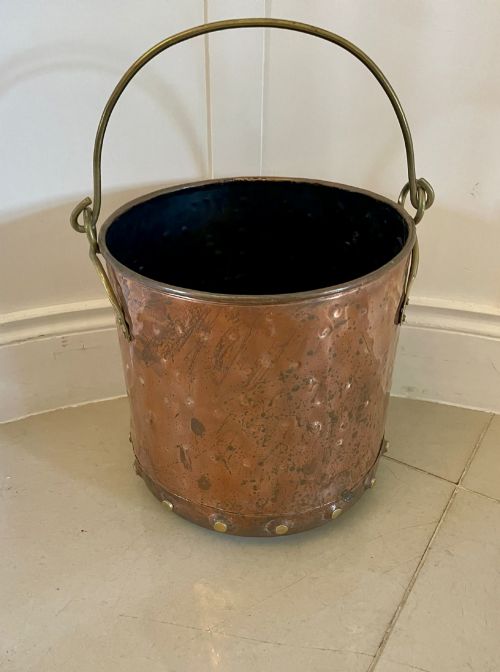
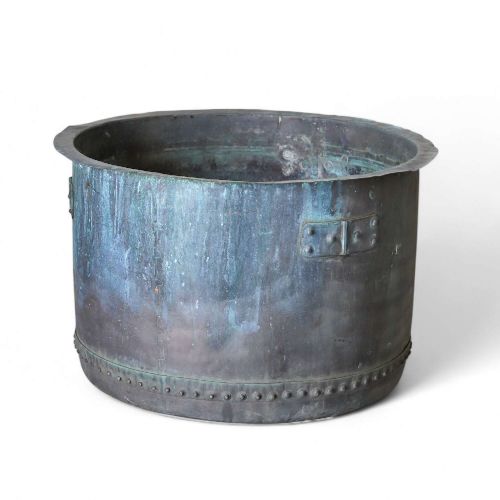
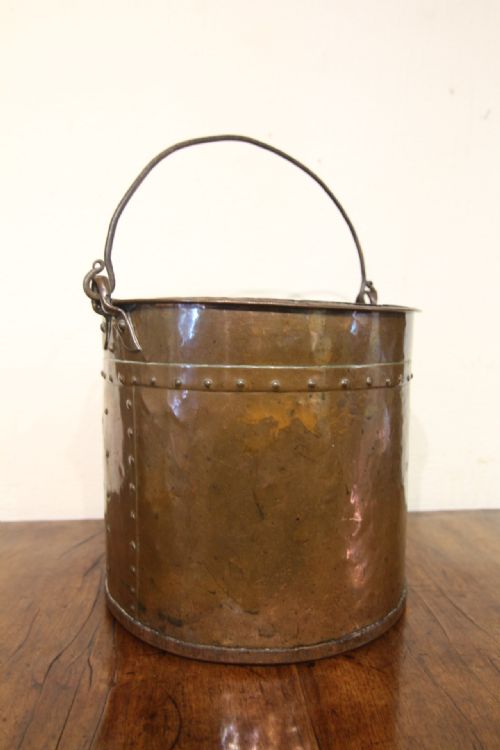
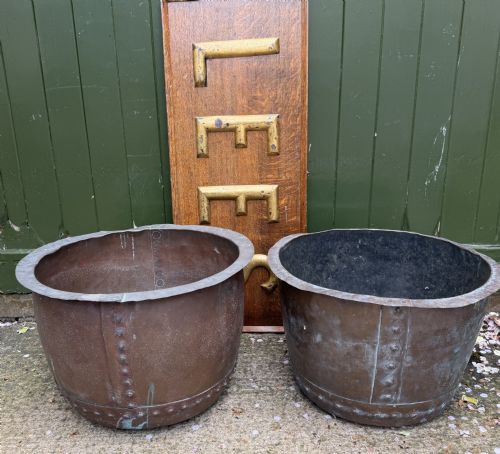
The pieces on this page span the nineteenth century, including Arts and Crafts examples alongside rustic farmhouse and Victorian industrial forms. Buyers encounter large garden display pots, heavy grain measures known as ferrats, and coal buckets fitted with wrought iron handles.
Many items started life as copper boilers, cooking vessels or wash coppers before finding a second life as planters and log bins. Their heavy metal construction allows them to hold earth, water and logs without losing their structural integrity.
How they were made
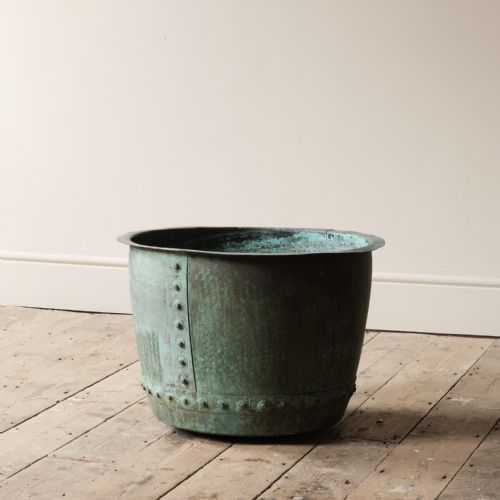
Craftsmen shaped sheets of solid copper by hand, overlapping the metal edges and securing them with visible rows of metal rivets. Wrought iron or brass handles, alongside iron bands, were attached to the main body to support the weight of heavy contents.
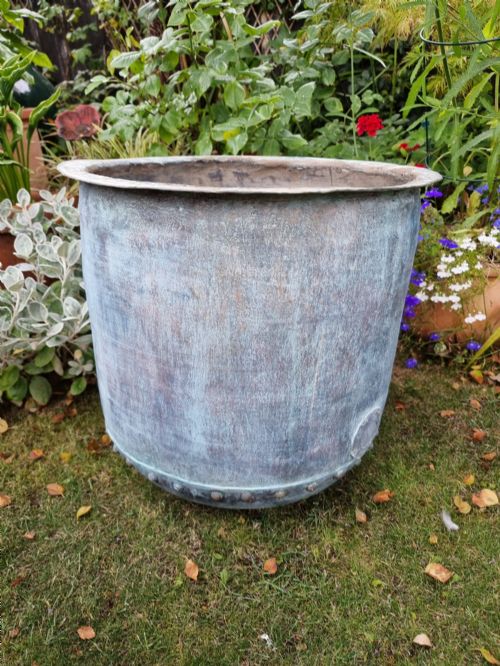
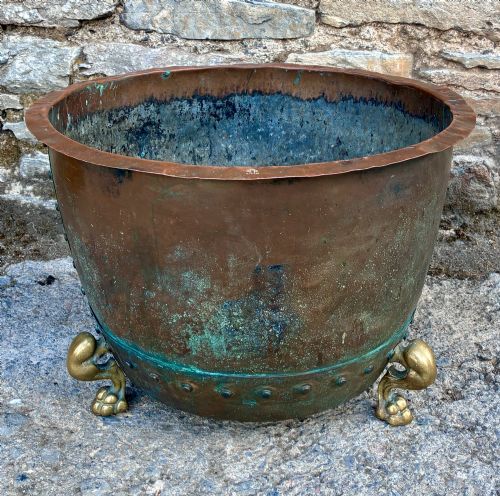
Surfaces developed natural patinas, verdigris and weathering over decades of exposure to moisture, smoke and handling. Some pots show embossed decoration or smooth polished finishes, particularly those from the Arts and Crafts period.
Riveted Copper Planter Retail Price Guide 2026
Typical asking prices for riveted copper planter among the pieces listed under this phrase on Sellingantiques today, from the lower quarter to the upper quarter. They describe what is for sale here now, not the wider market.
Several vessels spent decades holding French grain before retiring to a quiet life as heavy-duty fern pots.
What varies in quality
The integrity of the original joints and the thickness of the metal sheet dictate the substance of the vessel. Heavy-gauge copper retains its shape better under the pressure of soil and water than thinner counterparts.
The character of the surface patina, the presence of original wrought iron hardware, and the crispness of the hand-beating separate standard utilitarian vessels from finer decorative examples.
The Riveted Copper Planter Glossary
- Ferrat
- A traditional French copper measure or container, often heavily riveted and used for grain or dry goods. These deep vessels make ideal tall planters.
- Verdigris
- The green patina that forms naturally on copper and brass surfaces through long-term exposure to the elements. This oxidation layer protects the metal underneath and provides visual depth.
- Jardiniere
- An ornamental pot or stand for holding plants and flowers, frequently raised on feet or designed with decorative embossing. They appear frequently in Arts and Crafts metalwork.
- Log Bin
- A heavy container designed to hold firewood beside a hearth, often adapted from old copper boilers or agricultural vessels. Their robust riveted construction easily withstands heavy logs.
Riveted Copper Planter: Frequently Asked Questions
Can I use these planters outdoors?
Most pieces are naturally weather-resistant due to their solid copper construction and heavy metal framing. They handle outdoor elements well and continue to develop a rich verdigris outdoors.
Some items originally served indoor functions like coal storage or cooking, so checking for drainage holes or adding a plastic liner helps protect the metal from standing moisture.
How do I clean old copper?
Light dusting and occasional wiping with a damp cloth preserve the accumulated patina and natural weathering. Aggressive metal polishes strip away the aged character that collectors value.
Allowing the metal to age naturally maintains the surface history, though gentle washing removes accumulated dust and dirt from garden use.
Were these always used as planters?
Many vessels started life as wash coppers, cooking pots, grain measures or coal buckets before being repurposed. Their generous proportions and durable metal walls make them natural candidates for holding plants.
French ferrats and English coal buckets share the same robust riveted construction, which translates easily from domestic utility to horticulture.
How do I date a copper planter?
Dating relies on construction methods, handle styles, and stylistic markers such as Arts and Crafts embossing or Georgian proportions. Hand-beating marks and heavy ironwork point firmly to nineteenth-century manufacture.
Makers rarely signed utilitarian vessels, so age is determined by the specific form, type of rivet, and the depth of the metal patina.