




Victorian Brass Plant Stand
A victorian brass plant stand brings period metalwork and timber into a room to hold ferns, flowers or lamps.

Victorian Brass Plant Stand
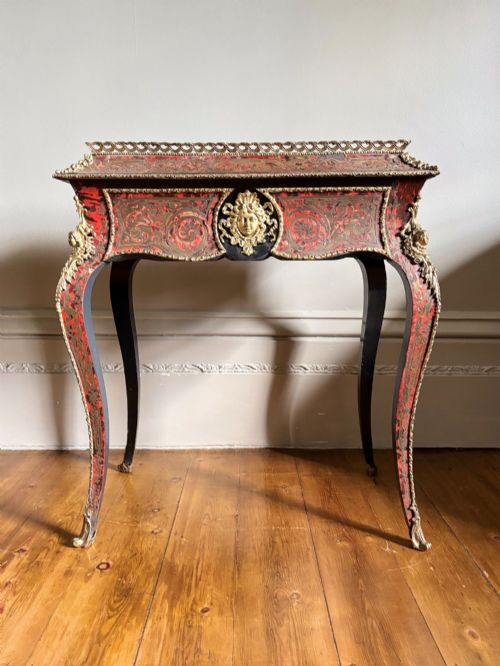
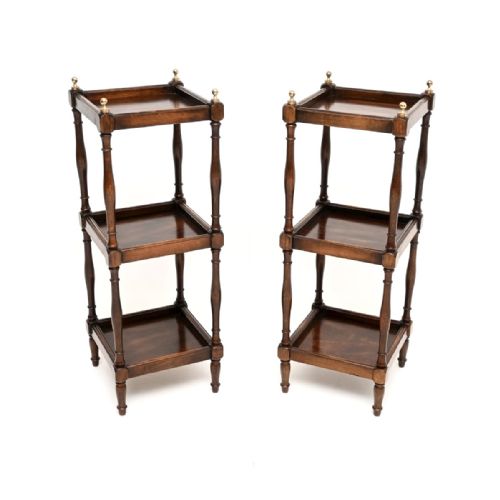
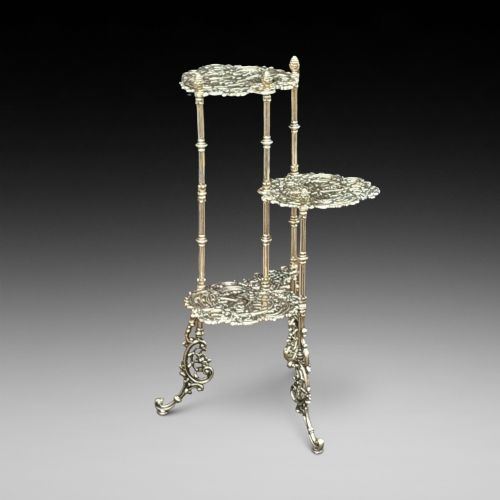
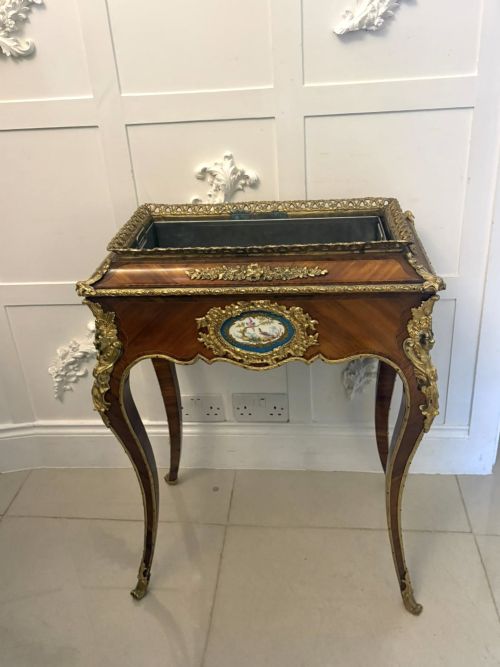
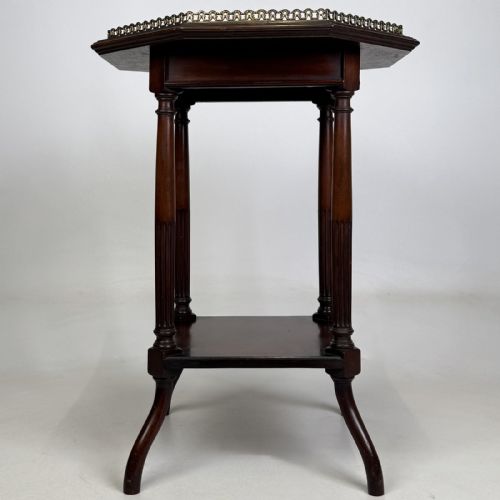
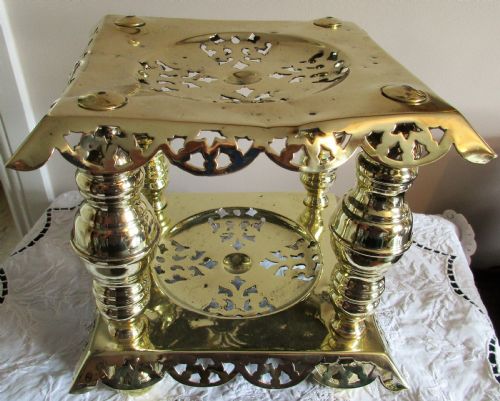
A victorian brass plant stand serves to elevate greenery and decorative vessels in nineteenth-century interiors. These objects appear in various forms, including multitiered display shelves, torchere stands, kettle trivets and jardiniere tables fitted with metal liners.
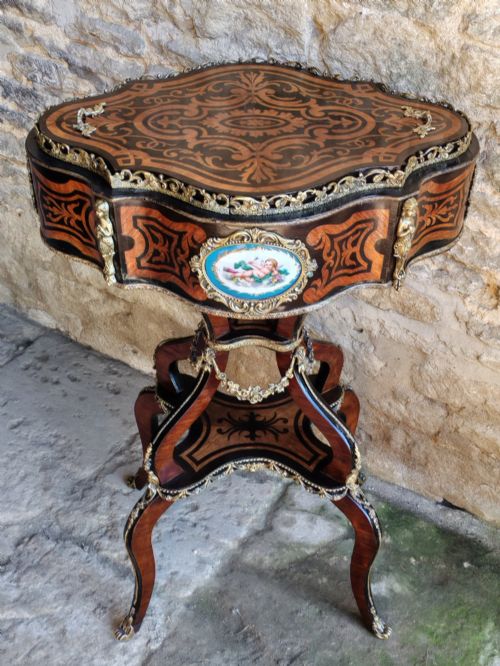
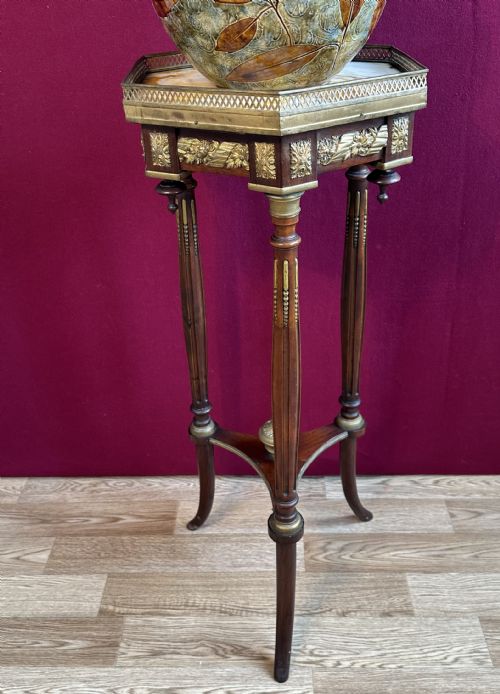
The version most commonly encountered on this page combines brass mounts, galleries or legs with timber bodies such as walnut, mahogany, kingwood, rosewood or ebonised wood. Some examples rely entirely on cast or pressed brass structures combined with marble or onyx tops.
Materials and construction methods
Maker workshops combined heavy cast or sheet brass with dense hardwoods, employing marquetry inlay, gilt metal mounts and ormolu details. Marble and onyx inserts provided stable, water-resistant surfaces designed to support wet planters and heavy jardinieres.
Structural elements frequently incorporated adjustable mechanisms, tiered shelving supported by slender columns, and hand-etched or pressed metal surfaces. Anglo-Indian examples utilised intricate brass wire inlay set directly into dark hardwood bases.
Victorian Brass Plant Stand Retail Price Guide 2026
Typical asking prices for victorian brass plant stand among the pieces listed under this phrase on Sellingantiques today, from the lower quarter to the upper quarter. They describe what is for sale here now, not the wider market.
Several stands doubled as bird cage holders, proving Victorians loved nothing more than stacking nature in every available corner.
Assessing quality and craftsmanship
The distinction between standard utility items and finer studio pieces rests on the weight of the brass castings, the depth of wood carving, and the precision of marquetry inlay. Superior examples integrate cast brass galleries and mounts that fit the timber contours exactly.
Makers working in French revival styles or producing bespoke furniture for affluent homes utilised richer timbers like kingwood and rosewood alongside finely chased ormolu, while simpler pieces relied on pressed sheet brass and straightforward turned supports.
Donald Ross
The Victorian Brass Plant Stand Glossary
- Jardiniere
- An ornamental pot or stand designed specifically to hold live plants or floral arrangements. These often feature removable metal liners to protect the surrounding timber or brass frame from water damage.
- Torchiere
- A tall, slender floor stand originally intended to carry a light source but frequently utilised for displaying plants or figures. They stand on central pedestals or tripod bases.
- Ormolu
- Gilded bronze or brass applied as decorative mounts to furniture frames and plant stands. The technique creates bright metallic accents against dark polished woods like walnut and mahogany.
- Etagere
- A piece of furniture consisting of open shelves for displaying small objects or plants. Many nineteenth-century versions combine brass supports with tiered wooden platforms.
- Trivet
- A low metal stand raised on small feet, historically used near fires but adapted in the period for kettles or small plant displays. They frequently incorporate brass tiers and carrying handles.
Victorian Brass Plant Stand: Frequently Asked Questions
What were victorian brass plant stands used for?
These furnishings accommodated potted palms, ferns and floral arrangements within nineteenth-century reception rooms and parlours. They protected expensive carpets and tables from damp soil while raising greenery toward natural window light.
Beyond holding plants, many variants functioned as torchere stands for lighting, display shelves for ornaments, or multipurpose side tables in drawing rooms.
How do I tell a jardiniere table from a standard side table?
A jardiniere table incorporates a built-in metal liner or waterproof well designed to hold plants directly inside the surface frame. Standard side tables feature solid wood or stone tops without drainage accommodations or metal inserts.
Many examples include removable trays or galleries that mark their primary function as plant holders rather than writing or tea surfaces.
What woods appear most often on these stands?
Walnut and mahogany dominate the timber selection across nineteenth-century pieces, appearing either plain, burr-figured or decorated with marquetry inlay. Finer examples utilise exotic woods such as kingwood, rosewood and ebonised finishes.
Anglo-Indian pieces commonly feature dense tropical hardwoods inlaid with brass wire, while others combine wooden frames entirely with marble or onyx surfaces.
Are these stands suitable for modern plants?
Original pieces accommodate modern potted plants safely provided growers utilise protective saucers inside older metal liners to prevent standing water accumulation. The sturdy marble, onyx and timber tops offer stable platforms for contemporary indoor greenery.
Care should be taken to wipe away moisture promptly from unlined wooden shelves to preserve nineteenth-century polished finishes.