


Copper Plant Holder
These copper plant holders bring warmth and texture to an interior, combining practical utility with the rich tones of hammered metal.
Copper Plant Holder
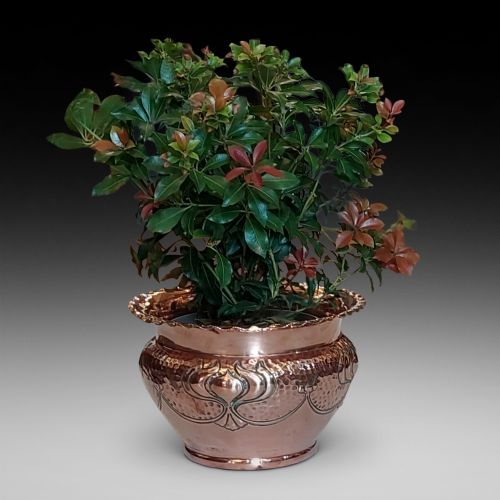
A copper plant holder serves as a decorative vessel for indoor greenery, functioning primarily as a jardiniere to house potted plants. These pieces bridge the gap between utility and display, protecting interior surfaces while framing botanical specimens.
The versions most commonly met on this page span the Victorian and Edwardian eras, alongside pieces from the decades around nineteen hundred. They take the form of jardinières, planters, log bins, and coal boxes.
Makers of these items drew upon distinct design movements, producing objects in Arts and Crafts, Art Nouveau, and French Chateau styles. Each form reflects the domestic priorities of the nineteenth and early twentieth centuries.
How they were made
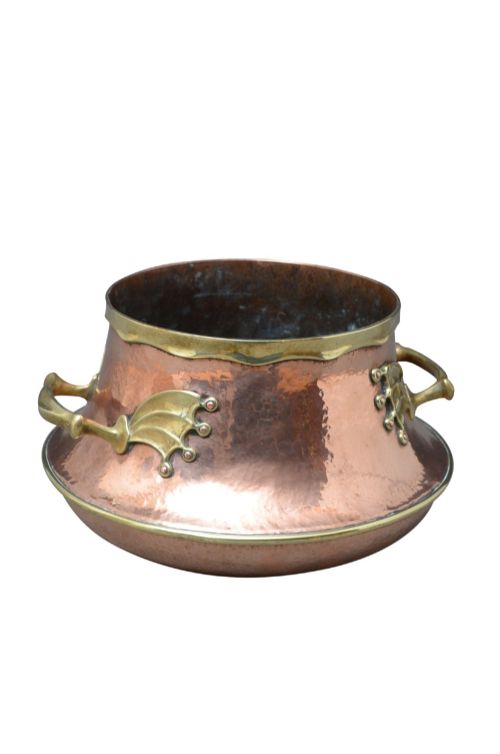
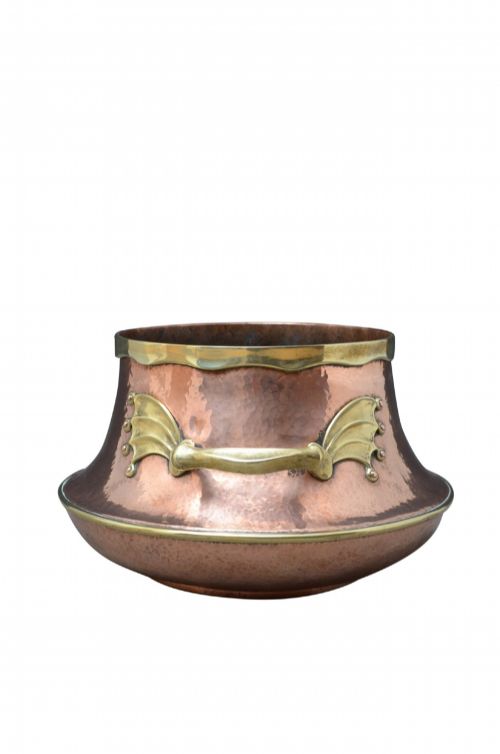
Makers shaped these vessels predominantly from sheet copper, frequently combining the metal with brass for handles, rims, or feet. Wrought iron also appears as a structural element, particularly in plant holders paired with stands or mounts.
Techniques relied heavily on hand-working, seen in the hammered textures and repoussé decoration characteristic of the Arts and Crafts and Art Nouveau periods. These methods produced durable domestic objects that display the direct touch of the artisan.
Listings span the Victorian, Edwardian, and nineteenth-century periods, incorporating Arts and Crafts, Art Nouveau, and French Chateau styles.
What varies in quality
Quality rests on the depth and definition of the hand-worked surface, particularly in repoussé panels and hammered finishes where skilled manipulation creates rigidity and visual interest. Superior vessels display considered proportions and harmonious integration of contrasting brass or wrought iron mounts.
The gauge of the metal and the integrity of construction dictate longevity, separating heavy, solid vessels from lighter commercial alternatives. Finer examples retain crisp detailing around rims and handles, resisting distortion over decades of domestic use.
The Copper Plant Holder Glossary
- Jardiniere
- An ornamental pot or stand for holding plants or flowers. These vessels usually sit directly on the floor or a tabletop.
- Repousse
- A metalworking technique in which a design is hammered into relief from the reverse side. This method creates textured, three-dimensional surface patterns on copper planters.
- Arts and Crafts
- A design movement advocating traditional craftsmanship and simple forms. Objects from this style emphasise the visible qualities of the material.
- Art Nouveau
- An international style characterised by organic, flowing lines and natural motifs. Pieces from this period frequently feature sinuous plant tendril designs.
- Log bin
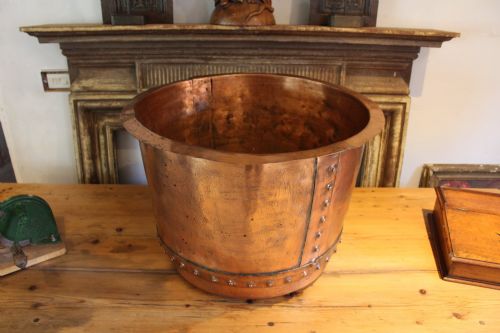
- A large container designed for storing firewood near a hearth. Many such vessels share construction methods with large plant holders.
Copper Plant Holder: Frequently Asked Questions
What is a copper jardiniere?
A copper jardiniere is an ornamental plant pot designed to hold indoor greenery. Unlike standard terracotta pots, these decorative vessels are intended to be seen in principal rooms.
They shield furniture from water and soil while providing a reflective metallic surface that contrasts with foliage.
How do I care for antique copper?
Antique copper requires minimal intervention to preserve its character and protective patina. Dusting with a soft cloth and avoiding harsh abrasives keeps the metal stable.
Polishing should be approached with caution, as many collectors prefer the darker, aged surfaces acquired over a century of existence.
Were these always used for plants?
While primarily manufactured as planters and jardinieres, many vessels possessed dual purposes in period interiors. Large forms were frequently adapted to serve as coal boxes or log bins near the fireplace.
Their robust metal construction made them suitable for holding heavy fuel as well as potted ferns.
How do I date a copper planter?
Dating relies on stylistic clues, construction methods, and material combinations typical of specific periods. Pieces featuring flowing organic motifs often point to the Art Nouveau movement around nineteen hundred.
Stout proportions and heavy brass mounts more commonly suggest Victorian or Edwardian manufacturing origins.