

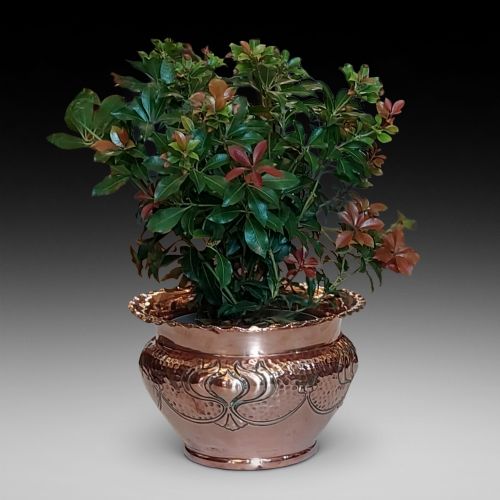
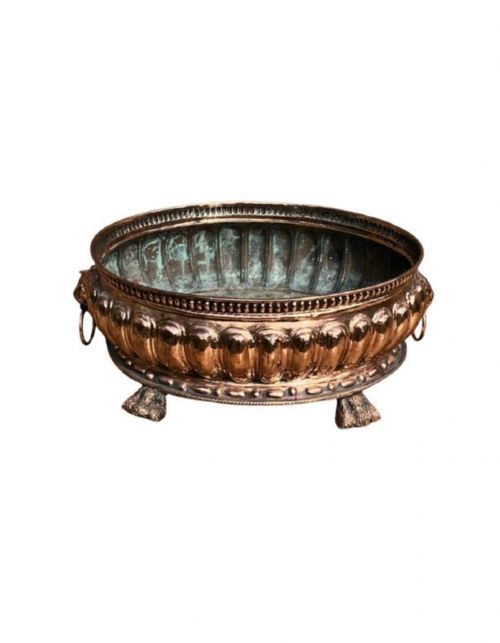


Repousse Copper Planter
These repousse copper planter examples bring tactile warmth to a room, offering heavy metal work shaped by hand for botanical displays.
Repousse Copper Planter
When you search for a repousse copper planter, you are looking at heavy metal vessels designed to hold plants, flowers, or logs inside the home. The selection here spans periods from the eighteenth century through the Victorian, Edwardian, and Arts and Crafts eras, showing how domestic horticulture evolved across generations.
You will most commonly encounter Arts and Crafts pieces and Victorian designs on this page. These take various forms, including traditional jardinieres, twin-handled vases, log bins, wine cisterns, and buckets resting on stands or fitted with wrought iron details.
Origins stretch from British workshops like Keswick to continental examples from France, Italy, and the Netherlands. Each piece reflects the interior tastes of its time, whether that meant stark utility or ornate decorative styling.
How they were made
Makers shaped these objects using sheet copper, frequently combined with brass for banding or wrought iron for stands and handles. The primary technique relies on hammering the metal from behind to push out decorative motifs in relief.
Surface texture comes from hand-beating the metal sheets before or after the main design is raised. Rivets join seams and handle mounts securely, leaving visible construction marks that confirm manual assembly.
Repousse Copper Planter Retail Price Guide 2026
Typical asking prices for repousse copper planter among the pieces listed under this phrase on Sellingantiques today, from the lower quarter to the upper quarter. They describe what is for sale here now, not the wider market.
A few seventeenth and eighteenth-century wine coolers found new life holding ferns instead of vintage Bordeaux.
What varies in quality
Quality rests on the crispness of the hand-beaten relief work and the thickness of the metal sheet used by the maker. Thicker copper holds its shape firmly and allows deep, clean definition without thinning at the edges.
The integration of secondary materials like wrought iron stands or brass bands marks the difference between standard production and superior workshop output. Proportion and balance in the handle placement also separate finer vessels from simpler containers.
Keswick Arts and Crafts
The Repousse Copper Planter Glossary
- Repoussé
- A metalworking technique where the artisan hammers the design from the reverse side to raise relief patterns on the front. This creates a tactile, three-dimensional surface texture.
- Jardiniere
- An ornamental pot or stand designed to hold growing plants indoors. These vessels often sit on table surfaces or directly on the floor.
- Wine cistern
- A large container originally intended for cooling wine bottles in water or ice during dining. In later domestic use, these heavy vessels frequently double as large planters.
- Arts and Crafts
- A design movement valuing manual skill, hand-formed materials, and traditional construction methods over industrial manufacturing. Objects from this tradition display honest construction marks.
- Log bin
- A deep container used to store firewood near a hearth. These items are built with heavier gauge metals to withstand the weight of timber.
Repousse Copper Planter: Frequently Asked Questions
How do I clean a copper planter?
Wash the surface gently with warm water and mild soap to remove dust and dirt. Avoid harsh chemical polishes that strip away the aged patina built up over decades.
Dry the metal thoroughly with a soft cloth to prevent water spots. Leaving a natural, darkened tone preserves the historic character of the piece.
Can I plant directly inside them?
Placing soil and moisture directly against old copper can accelerate internal corrosion and damage the metal over time. Using a separate plastic or ceramic pot inside the vessel protects the historic interior.
Ensure you remove the inner pot when watering to prevent trapped moisture at the base. This simple step keeps the original lining intact for the future.
How do I date an Arts and Crafts planter?
Look for visible hammer marks, riveted seams, and distinctive plant motifs characteristic of the late nineteenth and early twentieth centuries. Maker stamps or workshop signatures near the base provide the most reliable chronological markers.
Compare the weight and thickness of the copper with documented regional guilds. Stylistic cues often point directly to specific decades of production.