




Pink Enamel Ceramic Vase
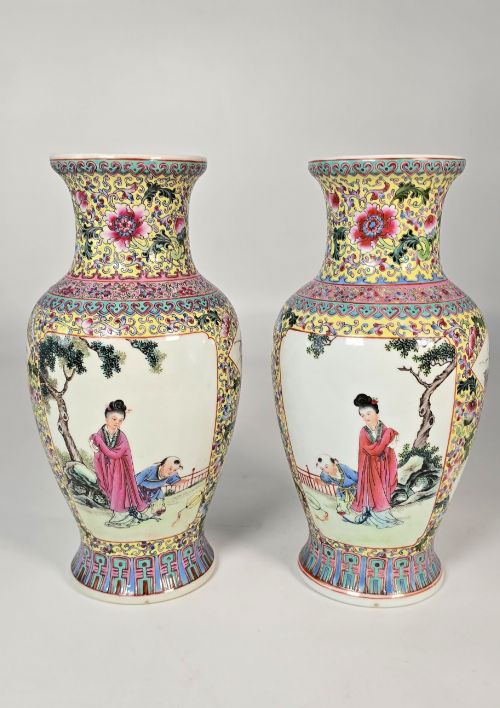
A pink enamel ceramic vase brings hand-painted floral panels and rich pink grounds into a room.
Pink Enamel Ceramic Vase
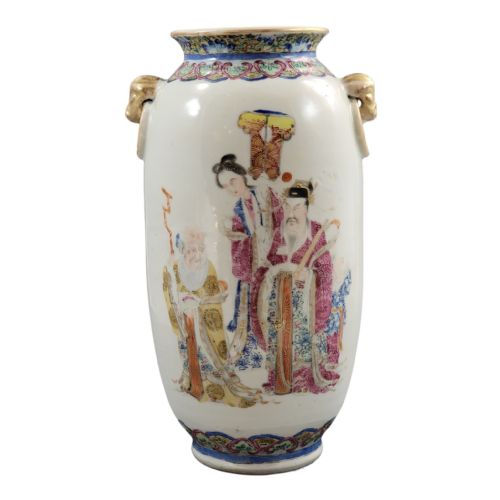
When you search for a pink enamel ceramic vase, you find Chinese export and Cantonese porcelain produced during the nineteenth century and the Chinese Republic period. These pieces span monumental floor vases, baluster forms, and pairs adapted into table lamps.
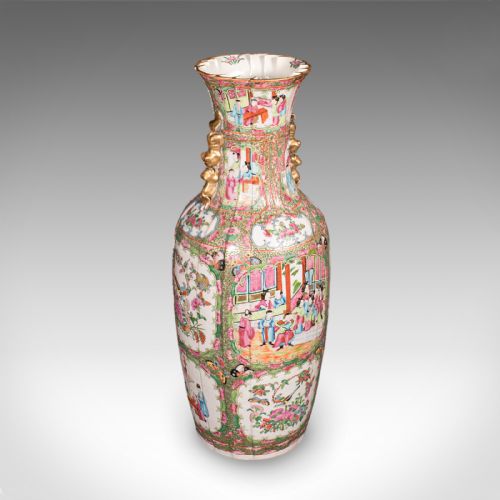
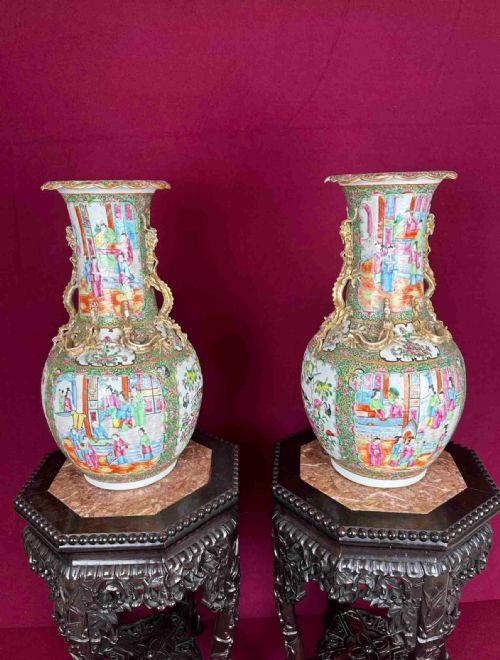
The most common version met on this page is the nineteenth-century Canton or Rose Medallion vase, featuring detailed figural scenes and dense floral panels on a pink ground. Collectors also encounter earlier Qing dynasty examples bearing imperial marks and taller centrepiece vessels.
The forms range from compact mantel ornaments to massive floor vases standing near a metre tall. Many of these ceramic vessels have been converted for electrical use while retaining their original hand-painted porcelain bodies.
Materials and Techniques
The makers utilised porcelain bodies finished with overglaze enamel pigments to build the characteristic pink grounds and vibrant multi-coloured motifs. Artisans applied these ceramic colours by hand before firing the pieces in kilns to fix the decoration.
Gilt highlights and gold leaf frequently accent the rims, handles, and borders of the painted panels, adding metallic depth to the surface. Selected examples incorporate brass mounts or fabric components where the vessels function as wired lamps.
Several monumental floor vases spent generations guarding grand staircase landings before finding new life as towering reading lamps.
Distinctions in Quality
The fineness of the hand-painted brushwork separates standard production pieces from the finest workshop output. Superior examples display meticulously rendered facial expressions on figures and precise geometric borders framing the floral panels.
The richness and even distribution of the pink enamel ground dictate visual balance across the piece. Heavier, more monumental ceramic bodies with crisp overglaze colours and well-preserved gold leaf represent the peak of nineteenth-century manufacture.
The Pink Enamel Ceramic Vase Glossary
- Famille rose
- A palette of opaque overglaze enamels dominated by pink, introduced to Chinese porcelain during the Qing dynasty. This grouping includes the vibrant pink grounds seen on nineteenth-century export wares.
- Rose medallion
- A distinctive style of Chinese export porcelain featuring alternating panels of figures and birds or flowers, densely arranged around a central medallion. These designs typically sit upon a pink enamel background filled with butterflies and foliage.
- Canton porcelain
- Wares decorated in Guangzhou for the Western export market during the nineteenth century. These vessels often combine rich pink enamels with extensive gilding and narrative scenes.
- Baluster vase
- A tall vessel form characterised by a bulbous lower body tapering to a narrower neck and flared rim. This shape provides a broad canvas for elaborate enamel painting.
- Overglaze enamel
- Pigments applied to a previously fired and glazed ceramic surface, requiring a second, lower-temperature kiln firing to bond the colours. This technique allows for a wide spectrum of bright pinks and greens.
Pink Enamel Ceramic Vase: Frequently Asked Questions
How are Canton and Rose Medallion vases different?
Canton porcelain encompasses a broader range of nineteenth-century export decoration produced in Guangzhou, including landscape and floral schemes.
Rose medallion specifically refers to the panelled layout featuring distinct alternating scenes of people and birds surrounding a central painted circle.
Were these vases made for export?
The majority of nineteenth-century pink enamel pieces found here were created specifically for Western markets, arriving through trade ports.
This export focus explains the popularity of large floor vases and pairs suited to European and American drawing rooms.
How should I care for an antique enamel vase?
Keep these porcelain vessels away from direct sunlight to protect the stability of the overglaze enamels and applied gold leaf.
Dust them gently with a dry, soft cloth and avoid chemical cleaners that can damage the painted surface.
Can I use a converted lamp safely?
Many nineteenth-century vases were fitted as table lamps later in their history to suit modern interiors.
Have a qualified professional inspect the wiring and brass fittings before regular domestic use.