



Famille Rose Jar
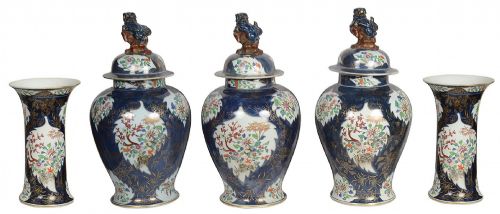
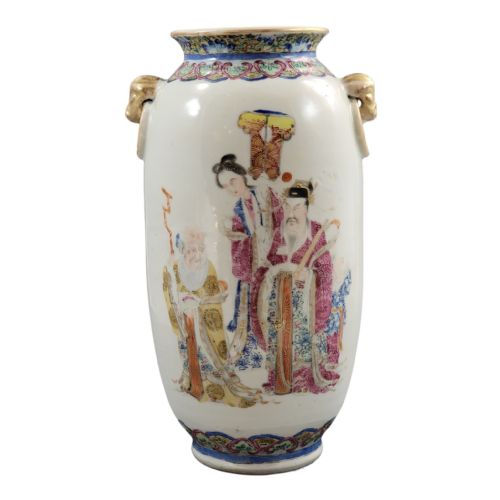
These famille rose jar selections bring vibrant overglaze enamel palettes and intricate floral or figural motifs straight into a room.
Famille Rose Jar
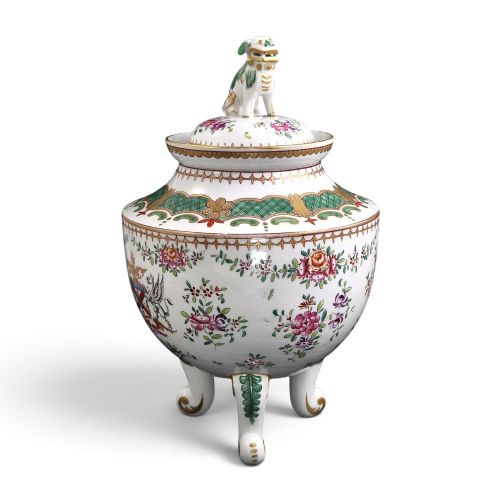
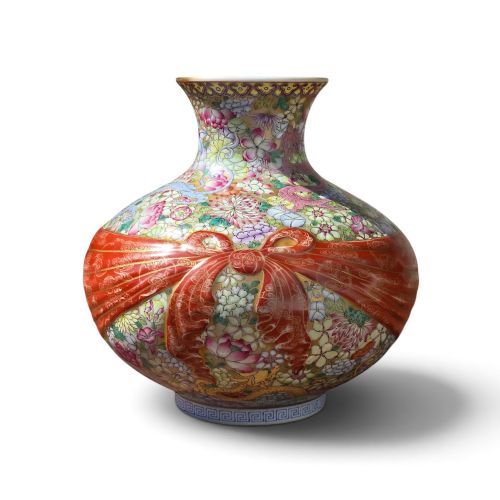
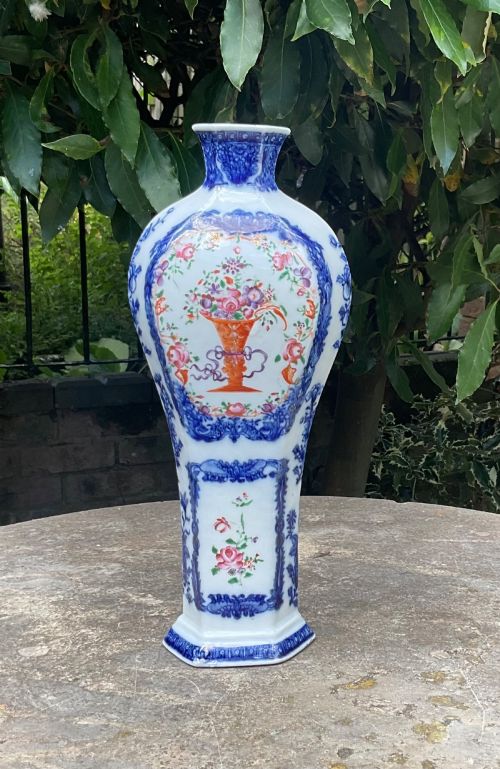
A famille rose jar represents a distinct tradition of Chinese ceramic decoration that employs a characteristic opaque pink enamel alongside a rich polychrome palette. These vessels range from lidded ginger jars and temple jars to large jardinières and pieces adapted as table lamps. When searching for a famille rose jar, a buyer encounters examples spanning the eighteenth century through the nineteenth and twentieth centuries, with nineteenth-century Canton and Qing Dynasty pieces appearing frequently.
The selection includes traditional Chinese export porcelain alongside European interpretations, such as nineteenth-century French porcelain produced in imitation of the Chinese aesthetic. Forms vary from compact ginger jars with covers to monumental floor vases and jardinières designed for botanical displays. Many of these ceramic vessels have been fitted as table lamps over time, integrating traditional craftsmanship into domestic lighting.
How They Were Made
Makers shaped these vessels from white porcelain clay before applying initial underglaze cobalt details where required and firing the body. Artisans then hand-painted the surfaces using overglaze enamels, incorporating gold leaf and iron-red pigments to build up complex pictorial scenes of birds, flowers, and figures. A subsequent lower-temperature firing fixed the enamel palette securely to the glazed porcelain surface.
Mounting elements incorporated brass, ormolu, and wood to support converted table lamps or to accent decorative covers and stands. Padouk wood tables and fitted bases frequently accompany the porcelain jars to create cohesive display arrangements.
Listings feature eighteenth-century and nineteenth-century pieces alongside twentieth-century Chinese porcelain, incorporating materials such as enamel, gold leaf, and brass.
What Varies in Quality
Quality in these pieces rests upon the precision of the hand-painting and the depth of the enamel palette used across the ceramic surface. Superior examples display crisp definition in figural motifs and floral panels, whereas standard production relies on more repetitive stencil work or looser brushwork.
The richness of the gilding and the preservation of the overglaze enamels differentiate exceptional examples from heavily worn pieces. Additionally, the survival of matching covers and original wooden stands elevates the status of a jar within a collection.
Samson Paris·Jingdezhen
The Famille Rose Jar Glossary
- Famille Rose
- A major palette of Chinese ceramic enamels introduced in the eighteenth century, distinguished by the use of an opaque pink colour derived from colloidal gold. This palette allowed for nuanced shading and intricate rendering of botanical and figural subjects.
- Canton
- A style of Chinese export porcelain decorated in the southern port city using vibrant famille rose enamels, often featuring alternating panels of birds, flowers, and court figures. The bustling workshops produced extensive ranges for Western export markets during the nineteenth century.
- Ginger Jar
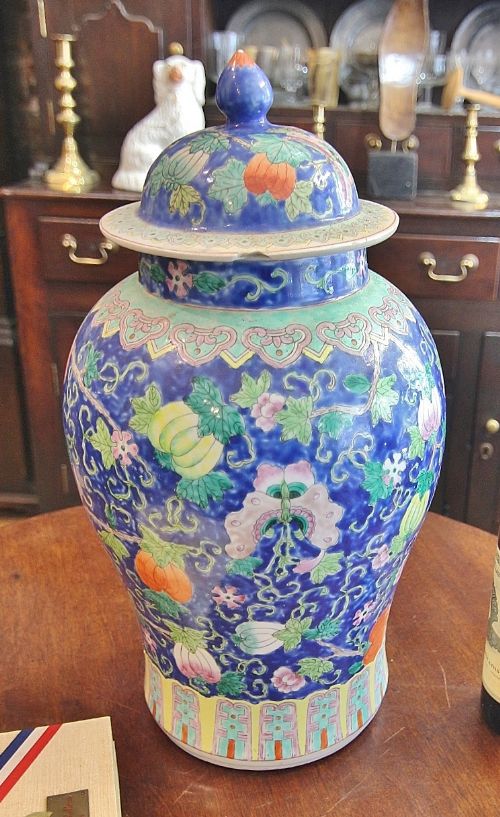
- A high-shouldered, wide-mouthed ceramic vessel originally designed to store spices and herbs, frequently fitted with a matching domed lid. These symmetrical jars became decorative staples in Western interiors, particularly when rendered in vibrant enamel palettes.
- Jardiniere
- A large ceramic bowl or pot intended to hold live plants or floral arrangements, often heavily decorated around the exterior body. In this selection, jardinières display the same rich overglaze enamel techniques found on lidded jars and vases.
- Chinoiserie
- European artistic styles that reflect Chinese decorative motifs, popularised across decorative arts and furniture during the eighteenth and nineteenth centuries. European factories occasionally imitated Asian porcelain forms and enamel palettes under this aesthetic.
Famille Rose Jar: Frequently Asked Questions
What is a famille rose jar?
A famille rose jar is a ceramic vessel decorated with an overglaze enamel palette notable for its opaque pink colour and detailed pictorial scenes.
These jars were produced primarily in China for export and domestic use, taking forms such as ginger jars, temple jars, and lidded vases.
How do I identify nineteenth-century pieces?
Nineteenth-century pieces often exhibit the dense, colourful enamel work associated with Canton production and the Qing Dynasty.
Examining the foot rim, the weight of the porcelain body, and the style of the hand-painted panels helps distinguish these nineteenth-century creations from later twentieth-century iterations.
Were these jars used for ginger?
While originally designed to store and transport spices such as ginger, many of these jars served primarily decorative functions in export markets.
Over the centuries, numerous lidded jars transitioned into ornamental display items, and some were later adapted into table lamps for domestic lighting.
How should I clean porcelain enamels?
Porcelain with overglaze enamels requires gentle maintenance to protect the painted surface and any applied gold leaf.
Dusting with a soft, dry cloth is recommended, avoiding harsh chemical cleaners or submersion in water, particularly for pieces that have been fitted with electrical lamp components.