
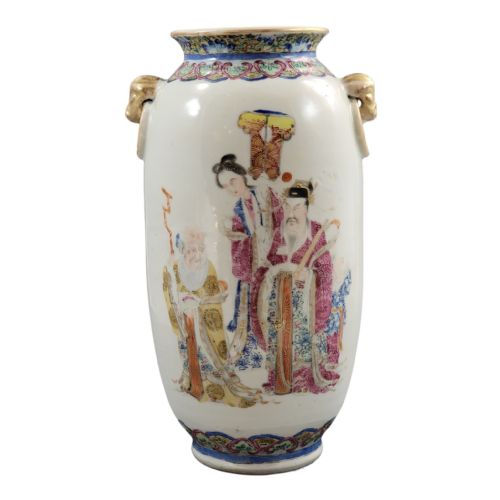


Chinese Figural Vase
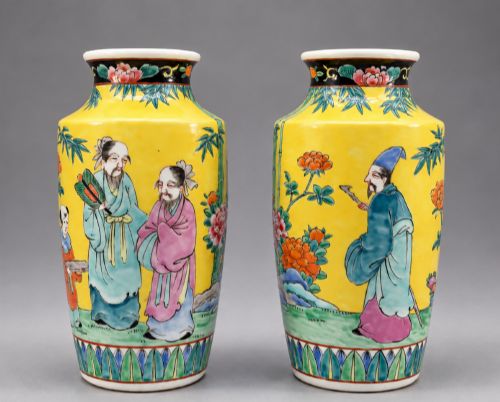
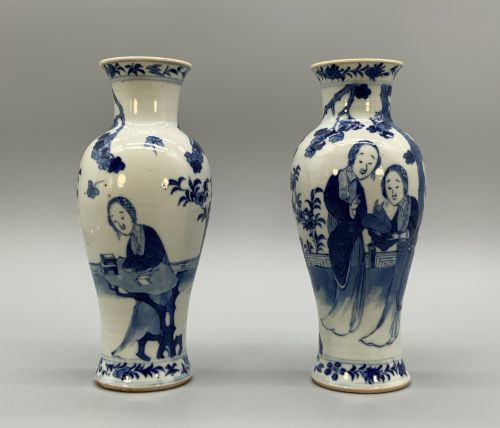
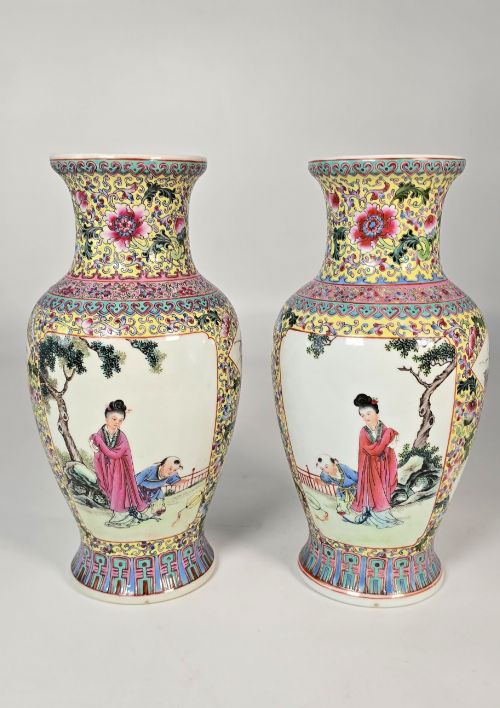
A chinese figural vase brings painted narratives of scholars, officials and ladies into a room through rich enamel and cobalt blue glaze.
Chinese Figural Vase
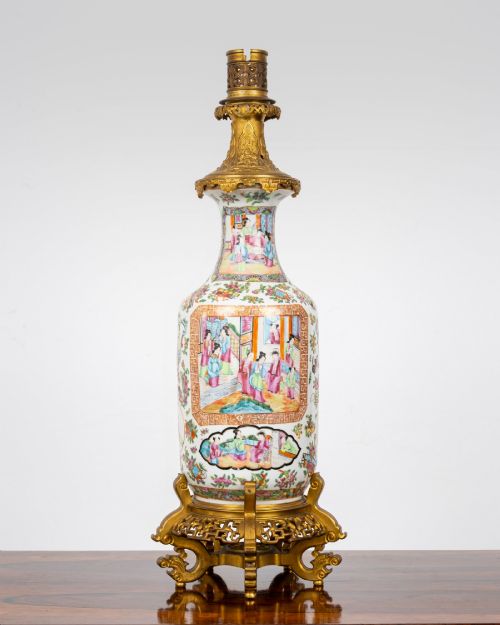
A chinese figural vase displays hand-painted human scenes from the Qing dynasty through to the Republic period, often depicting legendary figures, court ladies or scholarly retreats. The examples found here span the nineteenth century and the early twentieth century, taking the form of baluster vessels, ginger jars and converted table lamps.
Beyond standard vessels, the category broadens to include brush pots and decorative jars sharing the same narrative focus on figures. These objects emerge from periods such as the late nineteenth century, capturing traditional stories in porcelain, ceramic and carved bamboo.
Materials and construction methods
Potters shaped these pieces primarily from porcelain and stoneware, applying cobalt blue glaze or polychrome enamels to build the detailed surfaces. Skilled hands painted courtly scenes directly onto the body before firing, occasionally mounting completed vessels in brass or gilt bronze.
Carved bamboo serves as an alternative medium for scholar objects on this page, utilising deep relief work to depict figures within natural landscapes. Artisans combined these organic textures with traditional ceramic techniques to create functional containers and decorative items.
Several scholars apparently spent all their time retreating into porcelain vases.
Evaluating the craftsmanship
The weight and finish of the base material, whether fine porcelain or deeply carved bamboo, dictates the overall execution. Stronger examples maintain balanced proportions and crisp definition in every narrative element across the body.
The Chinese Figural Vase Glossary
- Famille rose
- A palette of opaque overglaze enamels dominated by pink or rose colours, introduced in the Qing dynasty. This technique allowed painters to achieve subtle tonal gradations in robes and floral motifs.
- Baluster
- A tall vase form with a rounded body that tapers toward a flared neck and foot. This classic silhouette provides an expansive surface for narrative figure scenes.
- Bitong
- A cylindrical brush pot used on a scholar's desk for holding writing brushes. These items often feature carved figural scenes in bamboo or painted porcelain.
- Ginger jar
- A storage jar with a wide shoulders and a domed lid, frequently adapted into a lamp base in later periods. They often carry blue and white or famille rose decoration depicting court figures.
Chinese Figural Vase: Frequently Asked Questions
How are these vases dated?
Dating relies on stylistic clues, glaze characteristics and reign marks found on the base of the vessel. Comparing the painting technique to known nineteenth century and Republican period examples helps establish the correct timeframe.
Changes in enamel saturation and potting styles also guide the attribution. Experts look at the wear on the foot rim alongside the handling of the narrative scenes.
Can I use them as lamps?
Many pieces in this category arrive already converted into table lamps with metal mounts. This practice has a long history, particularly for pairs of ginger jars or baluster vases.
Retaining the original porcelain body while adding electrical fittings allows these decorative objects to function safely in modern interiors.
What do the figural scenes represent?
The painted figures typically illustrate traditional Chinese stories, Daoist immortals, or scenes from scholar retreats. Characters like Magu and Shoulao appear frequently to symbolize longevity and good fortune.
Recognising these narrative motifs helps identify the cultural context behind the decoration on each individual vessel.
What is crackleware?
Crackleware refers to pottery featuring a deliberate network of fine cracks within the glaze layer. This aesthetic effect results from the cooling process during firing, where the glaze contracts at a different rate than the clay body.
Collectors prize the subtle texture and depth this finish adds to the surface of the vase.