

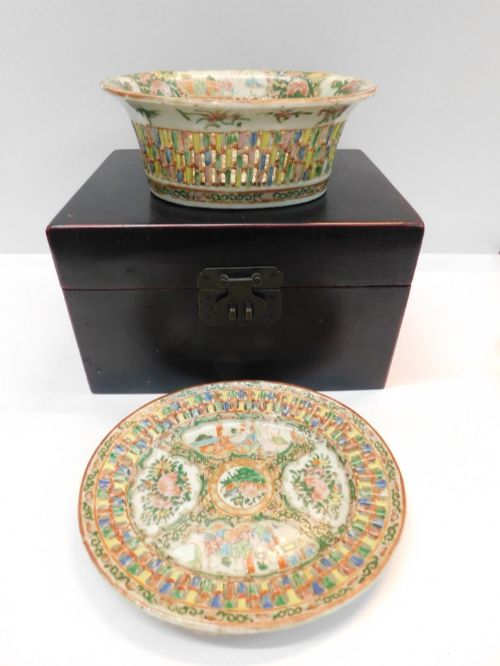
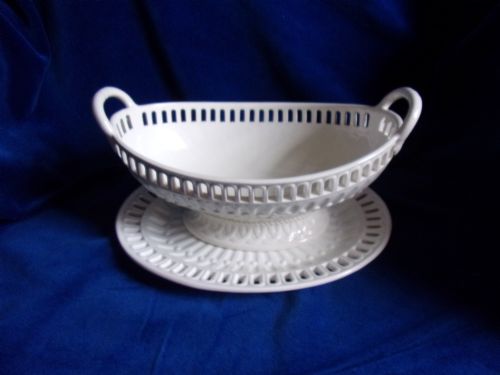
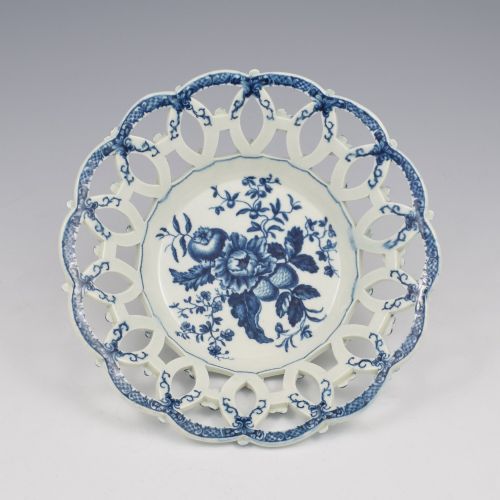


Pierced Porcelain Fruit Bowl
These pierced porcelain fruit bowl examples bring openwork ceramic design to the table, offering classic form combined with intricate pierced walls.
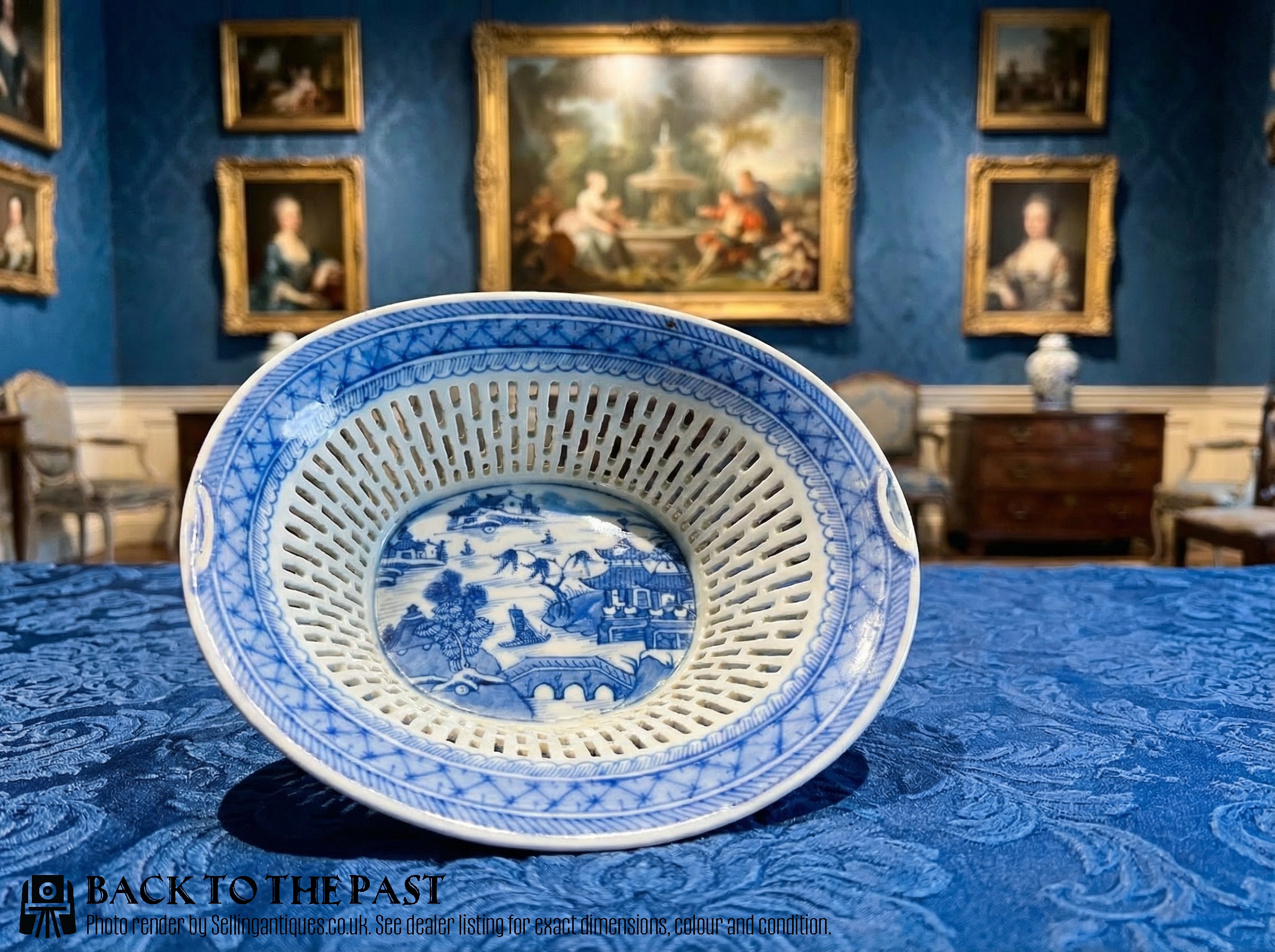
Pierced Porcelain Fruit Bowl
A pierced porcelain fruit bowl combines openwork ceramic design with traditional vessel forms, appearing across eighteenth and nineteenth century periods. These pieces serve as decorative centrepieces, chestnut baskets, and comports on dining tables.
The selection on this page includes English factories like Worcester alongside continental European works, Chinese export wares, and French porcelain pieces. Forms range from simple circular bowls to elaborate sets featuring stands and applied figures.
Buyers encounter eighteenth century Georgian items, Victorian interpretations, and Edwardian creations. Many feature lattice work, basketweave textures, and reticulated borders designed to display fruit or hold sweetmeats.
Materials and construction
Potters constructed these vessels using hard-paste or soft-paste porcelain, shaping the clay by hand or moulding it before cutting the openwork sections. Piercing the walls required skill to remove portions of the wet clay without distorting the overall basket or bowl shape.
Makers applied cobalt blue glaze, enamel colours, and gold leaf gilding to decorate the surfaces, often using transfer printing for patterns like the willow design. Firing the pierced bodies called for precise temperature control to prevent the delicate reticulated lattice from sagging in the kiln.
Pierced Porcelain Fruit Bowl Retail Price Guide 2026
Typical asking prices for pierced porcelain fruit bowl among the pieces listed under this phrase on Sellingantiques today, from the lower quarter to the upper quarter. They describe what is for sale here now, not the wider market.
Listings feature porcelain pieces spanning from the eighteenth century through the Edwardian era, incorporating English, French, German, and Chinese export origins.
Factors determining quality
Quality rests on the crispness of the openwork cutting and the fineness of the porcelain body, where cleanly pierced lattice edges show superior craftsmanship. Early English and continental pieces display hand-modelled details, such as applied roses and putti, executed with greater depth and precision.
The preservation of hand-painted enamel decoration and gilding influences the character of each piece, alongside the presence of matching original stands. Well-balanced proportions and undamaged reticulated galleries separate standard utility vessels from high-tier decorative centrepieces.
Schierholz Plaue·Mason·Sevres
The Pierced Porcelain Fruit Bowl Glossary
- Reticulation
- A network of interconnected openings forming an openwork or lattice pattern across the porcelain wall. This technique requires cutting through the unbaked clay body.
- Chestnut basket
- A specialised deep vessel with a pierced gallery, traditionally used for serving chestnuts at the table. These often include a matching saucer or tray.
- Soft-paste porcelain
- An artificial porcelain composition fired at lower temperatures than true hard-paste porcelain. It produces a warm, creamy glaze appearance typical of eighteenth century English factories.
- Comport
- A raised dish or bowl mounted on a pedestal, used for serving fruit or sweetmeats. These pieces occupy a central position on dining tables.
- Famille rose
- A palette of opaque enamel colours dominated by pink or rose hues, introduced to Chinese export porcelain during the eighteenth century.
Pierced Porcelain Fruit Bowl: Frequently Asked Questions
What were pierced porcelain fruit bowls used for?
These vessels held fruit, chestnuts, or sweetmeats on formal dining tables during the eighteenth and nineteenth centuries.
The openwork lattice allowed air circulation around fresh produce while presenting an ornamental display for guests.
How do I care for a pierced porcelain bowl?
Wash the piece gently by hand using mild soap and warm water, avoiding abrasive sponges that might scratch the glaze or wear away the gilding.
Keep the vessel away from extreme temperature shifts and display it on a stable surface where the delicate reticulated rim remains safe from knocks.
How can I tell an eighteenth century piece from a nineteenth century one?
Examine the base, glaze texture, and painting style, as eighteenth century examples often feature soft-paste bodies with hand-painted underglaze blue or early enamel palettes.
Nineteenth century revivals tend to display brighter transfer-printed elements, heavier hard-paste porcelain, or moulded details characteristic of Victorian and Edwardian production methods.
Why do some bowls come with stands?
Many chestnut baskets and centrepieces included matching trays or stands to catch drips from fruit or to provide a stable base for the openwork body.
Keeping the basket and stand together preserves the intended decorative unit created by the original factory.