

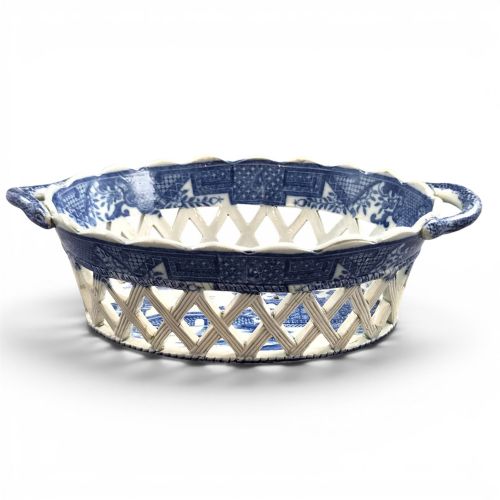
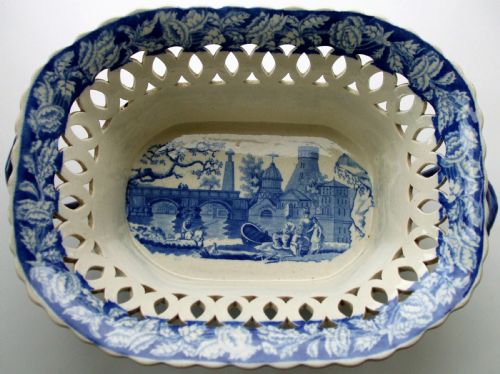
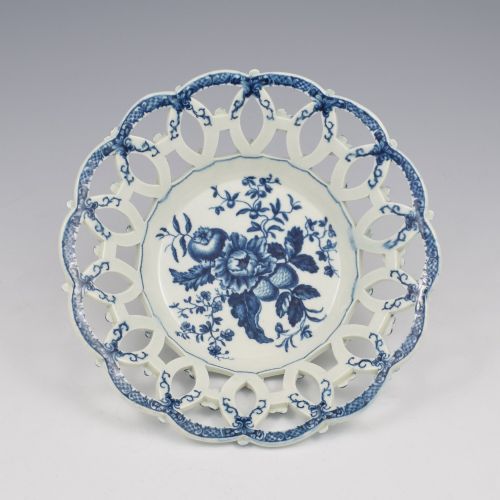


Blue and White Chestnut Basket
A blue and white chestnut basket brings crisp cobalt decoration and pierced openwork to the table, and you are looking at fine examples from the Georgian and 19th-century periods.
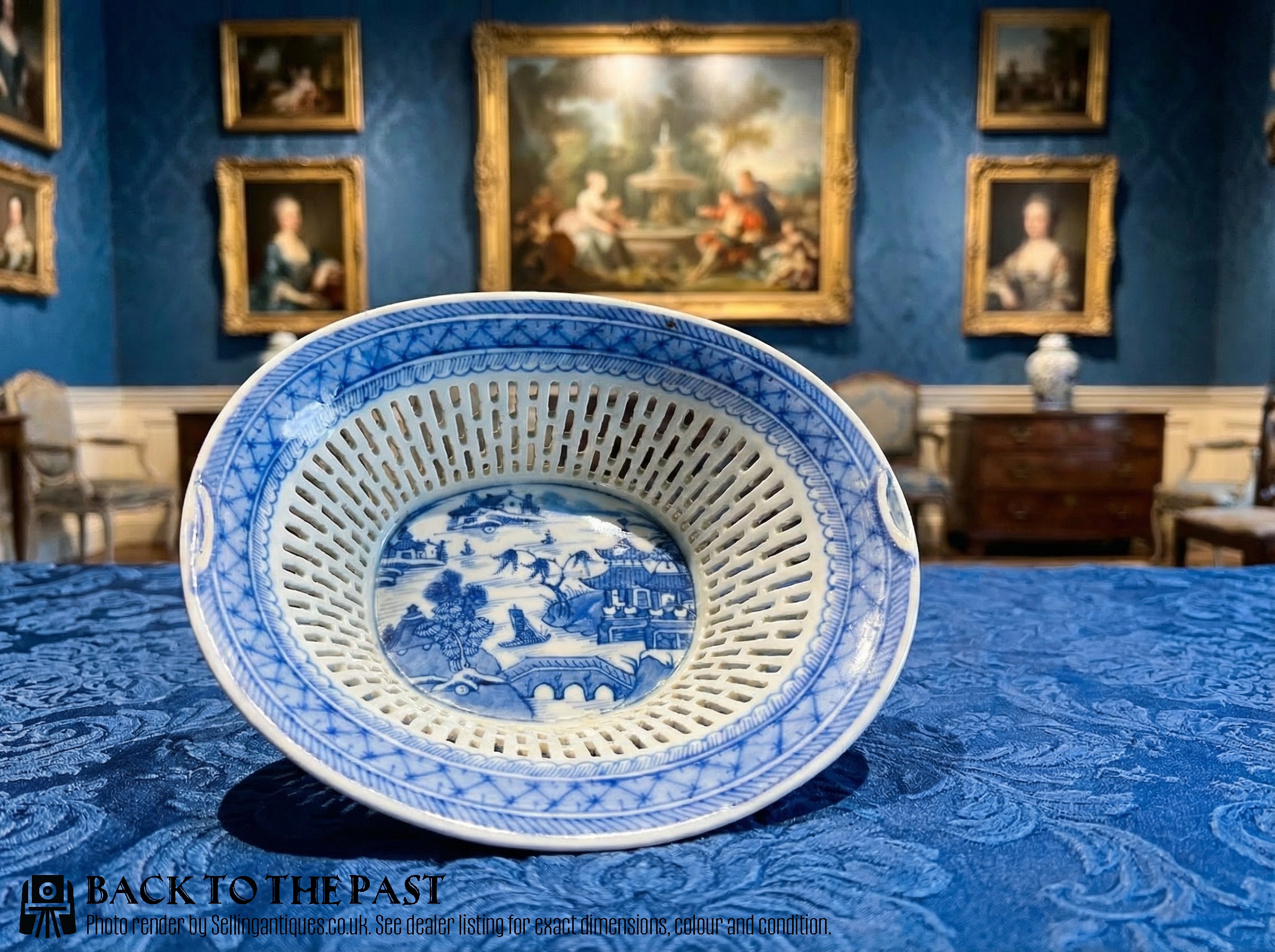
Blue and White Chestnut Basket
A blue and white chestnut basket is a pierced ceramic vessel made to hold roasted chestnuts or fruit for dessert, typically paired with a matching stand or lid. These pieces appear in forms ranging from circular bowls to reticulated shapes designed for ventilation.
The versions you meet most often on this page date from the 18th century and the 19th century, reflecting Georgian, Regency, and Chinese Export aesthetics. Makers applied familiar motifs like transfer-printed river scenes, willow patterns, and pine cones to earthenware, pearlware, and porcelain.
Many items function equally well as decorative bowls or dessert stands, carrying the characteristic cobalt blue glaze over white ceramic bodies. The inventory shifts between English pottery works and soft-paste porcelain productions.
Materials and methods
Potters shaped these vessels from earthenware, pearlware, and soft-paste porcelain, applying a cobalt blue glaze before firing. Transfer printing allowed workshops to repeat detailed patterns such as the Long Bridge or River Scene with Fort with precision.
Reticulation involved cutting openwork patterns into the damp clay wall by hand or pressing it through moulds. Artisans then fitted handles, applied underglaze blue painting, and glazed the surface to achieve a glossy finish.
Blue and White Chestnut Basket Retail Price Guide 2026
Typical asking prices for blue and white chestnut basket among the pieces listed under this phrase on Sellingantiques today, from the lower quarter to the upper quarter. They describe what is for sale here now, not the wider market.
Chestnut baskets doubled as decorative dessert pieces, proving that Georgian diners took their roasted nuts very seriously indeed.
Judging quality in blue and white ceramics
Quality rests in the sharpness of the reticulation and the crispness of the cobalt blue transfer printing. Cleanly cut piercing without distortion separates finer porcelain and pottery pieces from heavier utilitarian wares.
The depth of the glaze and the clarity of the underglaze painting define the visual appeal of a chestnut basket. Smooth handles and well-matched stands indicate greater care in the original workshop.
Spode·J. & R. Clews·Mason’s Ironstone China
The Blue and White Chestnut Basket Glossary
- Reticulation
- Net-like openwork pierced through the clay body before firing. This technique allowed air to circulate around the chestnuts kept inside.
- Pearlware
- A refined earthenware developed in the late 18th century with a bluish glaze that pooled in recesses. It bridged the gap between creamware and true porcelain.
- Soft-paste porcelain
- A ceramic composition made from white clay and glass frit rather than hard-paste materials. It matured at lower temperatures and produced a warm, creamy body under the glaze.
- Transfer printing
- A method of applying engraved designs to ceramics using paper pulled from a copper plate. This technique mechanized the reproduction of complex pictorial scenes.
- Cobalt blue glaze
- A metallic oxide colourant applied under the glaze to withstand high kiln temperatures without fading. It produced the intense blue tones characteristic of these wares.
Blue and White Chestnut Basket: Frequently Asked Questions
What were chestnut baskets used for?
These vessels held roasted chestnuts served warm at the conclusion of a formal meal. The pierced sides permitted ventilation to keep the contents fresh.
They also served as dessert baskets or fruit bowls, often resting on a matching tray to catch crumbs or moisture during dining.
How do I date an 18th-century piece?
Examinations focus on the ceramic body, glaze pooling, and painting style. Soft-paste porcelain and hand-painted pine cone motifs typically point to the 18th century.
Transfer printing and pearlware glazes generally indicate the transition into the 19th century and the Regency period.
Are lids and stands essential?
Many surviving examples lack their original lids or matching stands due to breakage over centuries of use. Complete sets with matching components are less common.
Pieces offered as single bowls or paired only with stands remain entirely correct for display and collection.
How should I clean my ceramic basket?
Dusting with a dry, soft cloth is sufficient for routine maintenance of display items. Moisture can damage old bodies or historical repairs.
Submersion in water or using abrasive cleaners should be avoided to protect the historic glaze and ceramic structure.