


Hand Painted Porcelain Basket
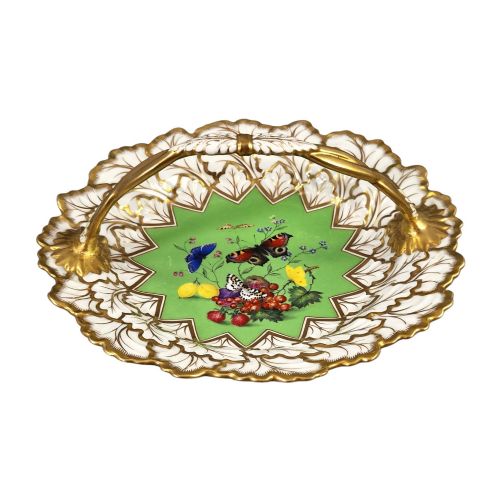
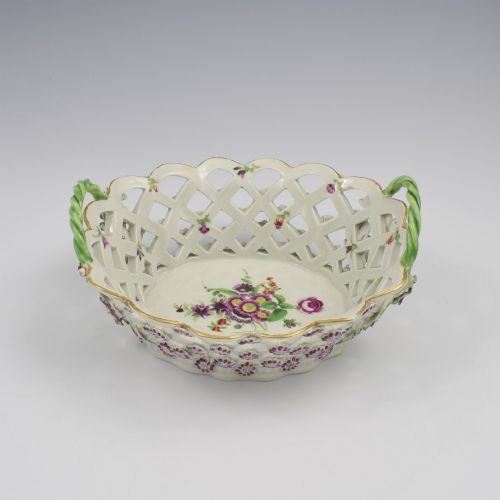
A hand painted porcelain basket brings tactile painted colour and modelled form to a room, drawing the eye with delicate floral scenes and gilded handles.
Hand Painted Porcelain Basket
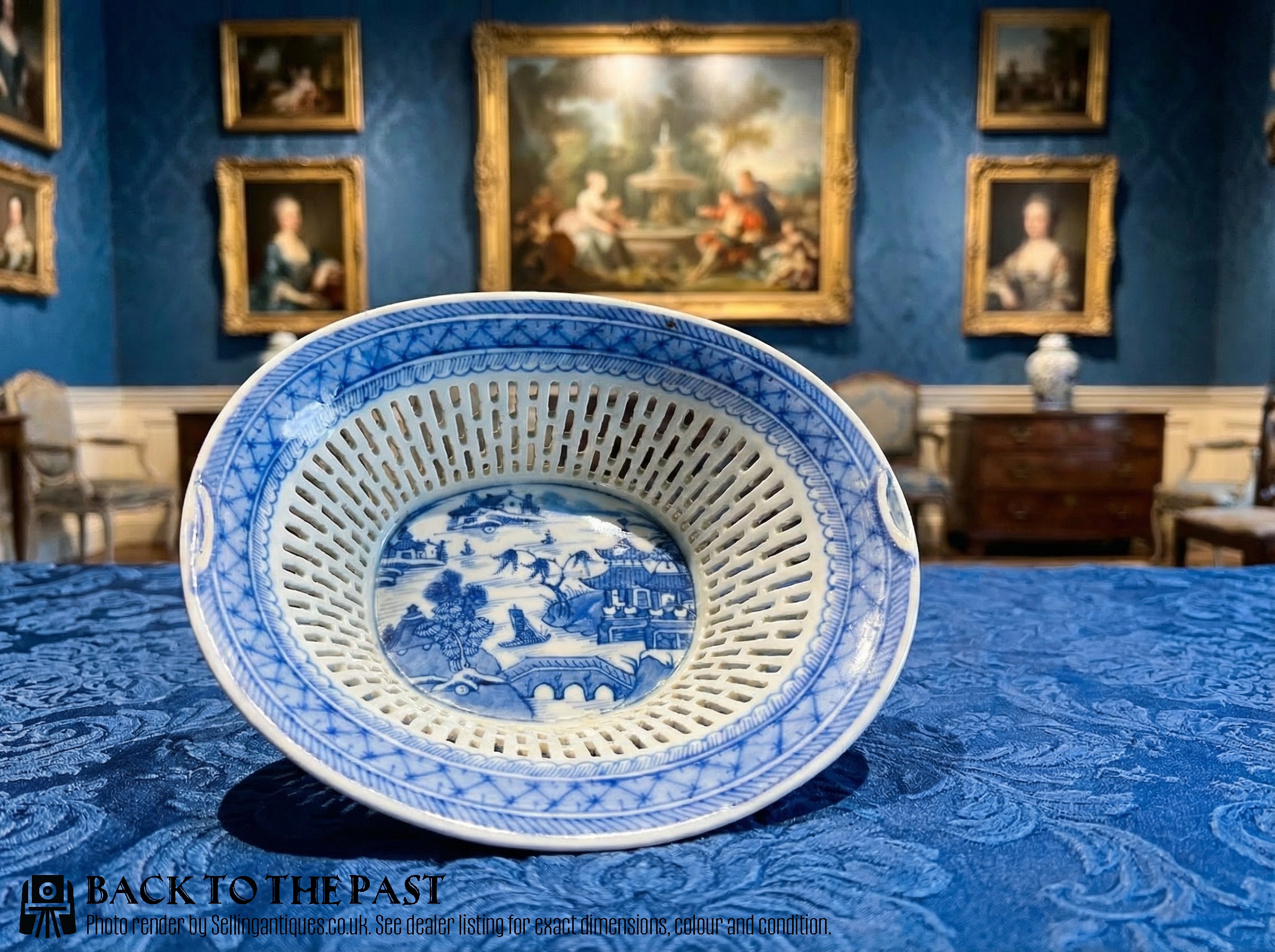
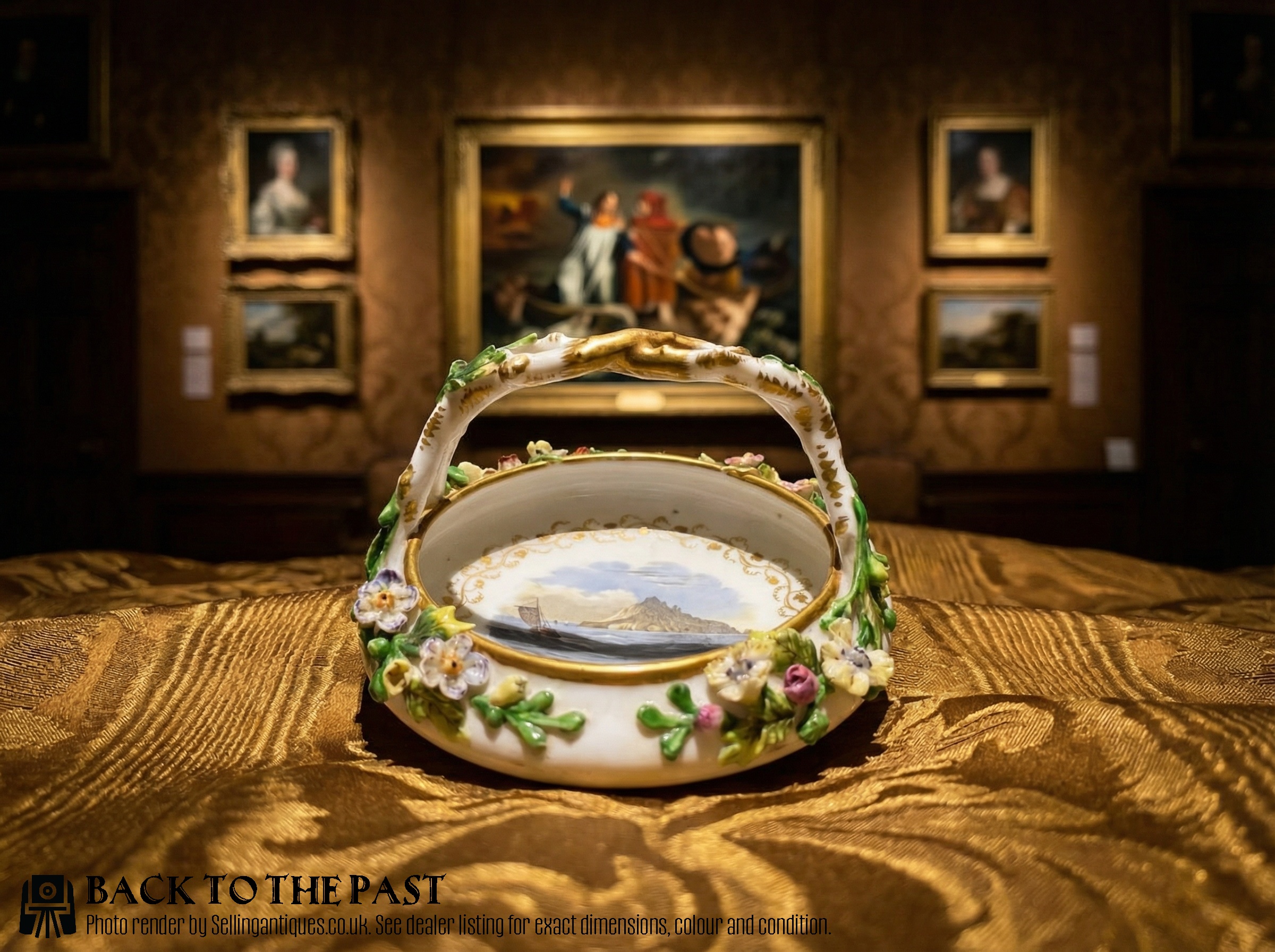
A hand painted porcelain basket takes many expressive forms across the inventory, ranging from dedicated ceramic containers and dessert carriers to figurative pieces where a ceramic basket is held by a modelled woman or street seller.
Buyers meet examples spanning the eighteenth and nineteenth centuries into the twentieth century, with English factories like Worcester and Rockingham sitting alongside continental makers from Germany, France and Japan.
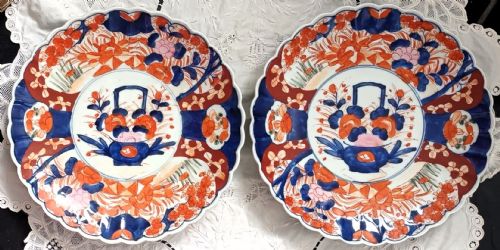
The styles shift from Rococo Revival and Regency to Japanese Imari and Meiji Period pieces, offering everything from scenic landscape views of the Isle of Wight to flower-encrusted surfaces.
How they were made
Makers shaped soft-paste and hard-paste porcelain into woven or pierced forms, sometimes incorporating wicker or metal elements.
Artisans applied enamel colours by hand alongside rich gilding and gold leaf over an underlying glaze.
Many ceramic baskets also received applied floral details, requiring meticulous hand-modelling before firing.
Hand Painted Porcelain Basket Retail Price Guide 2026
Typical asking prices for hand painted porcelain basket among the pieces listed under this phrase on Sellingantiques today, from the lower quarter to the upper quarter. They describe what is for sale here now, not the wider market.
Several porcelain figures bravely balance flower baskets while remaining entirely unbothered by gravity.
What varies in quality
The fineness of the hand-painted detail defines the upper tier, especially where named landscape views or delicate botanical studies show exceptional brushwork.
Relief work such as applied flower encrustations and modelled figures demonstrates the modeller's skill, where crisp definition separates finer work from softer casting.
The application of gold leaf and gilding varies from simple edge lines to elaborate rich embellishments that frame the painted scenes.
Flight Barr And Barr·Rockingham Porcelain·Samson Of Paris·Royal Doulton
The Hand Painted Porcelain Basket Glossary
- Soft-Paste Porcelain
- An artificial porcelain body fired at lower temperatures than true hard-paste porcelain. It gained popularity in eighteenth-century English factories for its warm tone and vitreous texture.
- Imari
- A Japanese export style known for rich blue and iron-red palettes enriched with gold. It influenced European ceramic decoration significantly.
- Gilding
- The application of gold leaf or gold paint to ceramic surfaces. It highlights rims, handles, and painted borders.
- Glaze
- A glassy coating fused to ceramic ware during firing. It provides a smooth, impervious finish that protects the painted decoration beneath.
Hand Painted Porcelain Basket: Frequently Asked Questions
What were porcelain baskets used for?
These pieces served as decorative centrepieces, dessert carriers, and sweetmeat dishes on formal dining tables.
Over time their function shifted toward purely ornamental displays on sideboards and mantelpieces.
How do I date a porcelain basket?
Dating relies on factory marks, paste composition, and the stylistic cues of periods like the Regency or Rococo Revival.
Hand-painted details and colour palettes also help narrow down the decade of production.
Where were most of these pieces made?
Production centres include notable English factories such as Worcester and Rockingham, alongside continental European workshops in Germany and France.
Japanese export kilns also produced distinctive Imari style pieces found in the same category.
How should I display a porcelain basket?
Place them on stable surfaces away from direct sunlight to preserve the enamel colours and delicate gilding.
Centrepieces and figurative baskets work well as focal points on dining tables or open shelving.