


19th Century Sevres Dish
A 19th century sevres dish brings painted French porcelain and gilt bronze into a room, offering rich cobalt grounds and detailed scenes.
19th Century Sevres Dish
When you search for a 19th century sevres dish, you encounter cabinet plates, decorative trays, comports, and centrepieces originating from France. These items emerge from periods such as the 19th century, 1880, the Victorian era, and 1900.
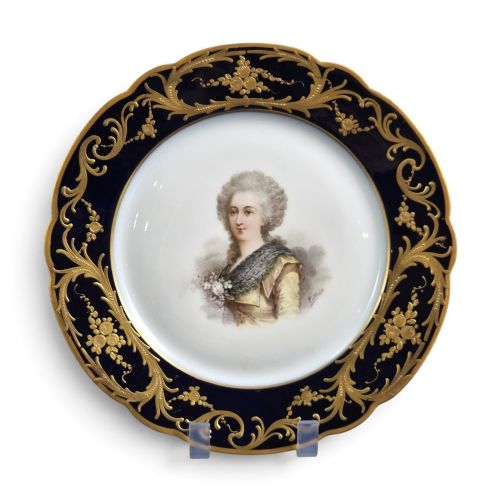
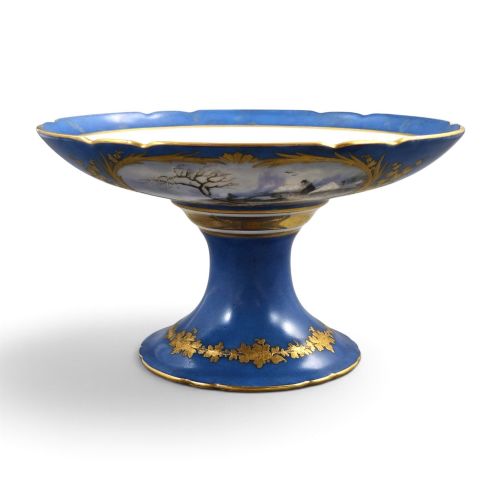
The forms span round boxes, pedestal bowls, oval dishes, and soup tureens, alongside plates featuring portraits and battle scenes. Many pieces appear in the Sevres manner or are produced by makers like Samson of Paris.
Styles lean heavily towards French Rococo Revival, Louis XVI Revival, and French Restauration. Buyers generally find items that combine painted ceramic surfaces with elaborate metal mounts.
How they were made
The construction relies on porcelain bodies finished with blue grounds, enamel, and hand-painted figural scenes. Potters and painters applied cobalt pigments and detailed depictions of figures, landscapes, and historical subjects.
Metalwork plays a structural role through gilt bronze, ormolu, and champlevé enamel mounts. Artisans utilised gold leaf and gilding to accentuate rims, borders, and structural supports.
Medieval battle scenes occasionally share shelf space with delicate portraits of French nobility.
What varies in quality
The standard of painting dictates the distinction between ordinary production and finer examples. Hand-painted portraits and battle scenes executed with precision outshine simpler decorative patterns.
The integration of mounts influences the overall character of the piece. Heavy cast ormolu, gilt bronze, and champlevé enamel elements demand high technical skill in assembly.
Edm e Samson·Samson Paris
The 19th Century Sevres Dish Glossary
- Ormolu
- Gilded bronze used for mounts and decorative fittings. This technique gives metal a rich gold appearance.
- Bleu Céleste
- A bright sky blue ground colour associated with French porcelain. It forms a vibrant backdrop for painted scenes.
- Champlevé
- An enamelling technique where troughs are carved into metal and filled with vitreous enamel. These filled areas are then fired and polished flush.
- Comport
- A raised dish or bowl used for serving fruit or display. They often stand on a central pedestal.
- Tazza
- A shallow bowl or cup elevated on a standard and foot. It functions primarily as a decorative centrepiece.
19th Century Sevres Dish: Frequently Asked Questions
How are they displayed?
These dishes and plates sit well on cabinets, sideboards, and open shelving where their painted surfaces catch the light. Many incorporate stands or mounts designed specifically for tabletop presentation.
Larger centrepieces and comports function as standalone focal points on dining tables or large consoles, while smaller boxes and trays suit smaller surfaces.
What styles dominate?
French Rococo Revival and Louis XVI Revival dominate the aesthetic of these pieces, reflecting historical 18th-century French design tastes. This involves curving lines, naturalistic motifs, and ornate metal mounts.
Other items align with the French Restauration period, offering distinct decorative borders and classical proportions.
How do I identify the period?
Dating relies on stylistic markers, mounting techniques, and the character of the porcelain body. Pieces often carry specific stylistic cues from the 19th century, 1880, or the Victorian era.
Examining the underside for marks, Samson attributions, or specific colour palettes helps narrow down the decade of production.
What subjects appear on the porcelain?
Painted scenes frequently depict historical battles, classical figures, portraits like Mme Elisabeth, and romantic Watteau-style landscapes. These subjects are typically framed by cobalt blue grounds and gilt detailing.
Some pieces focus purely on decorative patterns and floral motifs rather than narrative scenes.