

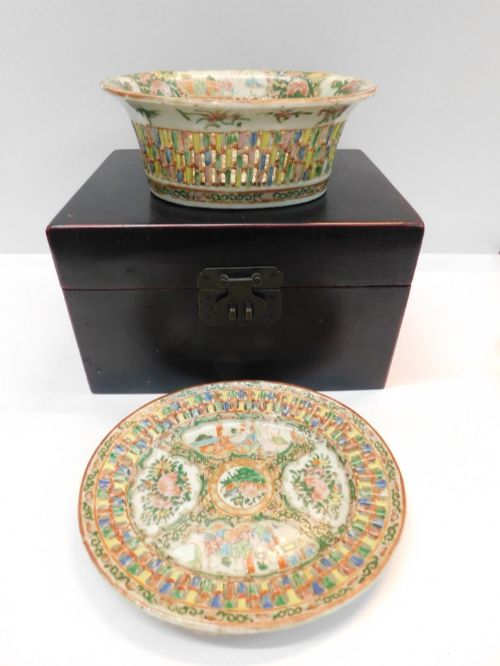
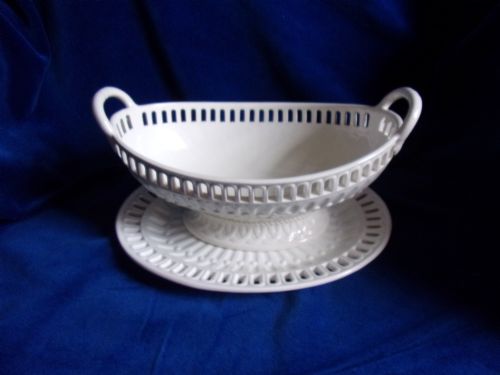
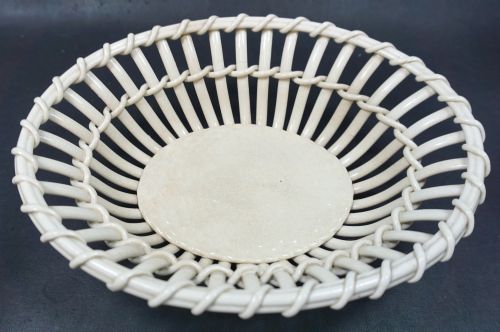
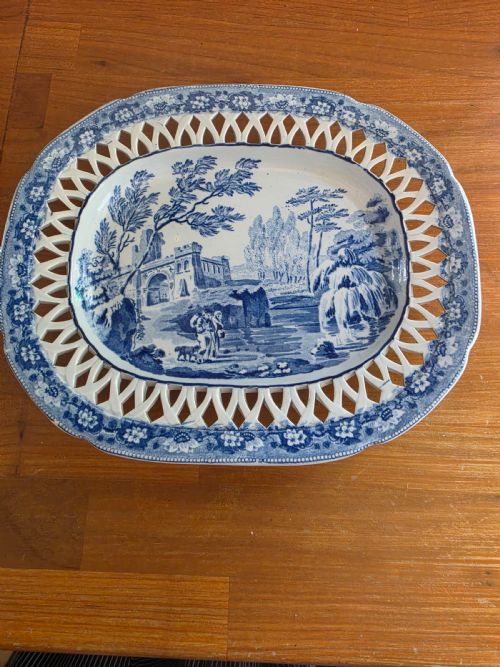


Reticulated Ceramic Basket Dish
A reticulated ceramic basket dish brings intricate pierced design and delicate porcelain or earthenware craftsmanship straight to the table.
Reticulated Ceramic Basket Dish
A reticulated ceramic basket dish combines pierced openwork with traditional pottery forms, serving historically as a centrepiece, sweetmeat dish, or chestnut basket.
The selections available here range from eighteenth-century English porcelain and pearlware to nineteenth-century continental figures and Chinese export wares.
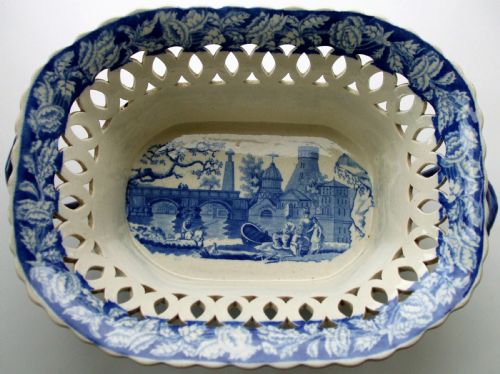
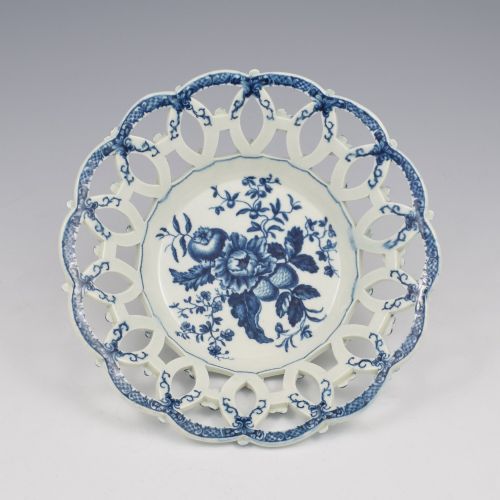
Makers fashioned these decorative vessels in Georgian, Regency, and Victorian styles, often employing blue and white transfer printing or hand-painted famille rose enamels.
How they were made
Potters utilised materials such as porcelain, creamware, earthenware, and ironstone, shaping openwork lattices by hand or moulding the clay before firing.
Artisans applied delicate glazes, cobalt blue pigments, enamel colours, and occasional gold leaf or gilding to enhance the detailed relief and pierced borders.
Reticulated Ceramic Basket Dish Retail Price Guide 2026
Typical asking prices for reticulated ceramic basket dish among the pieces listed under this phrase on Sellingantiques today, from the lower quarter to the upper quarter. They describe what is for sale here now, not the wider market.
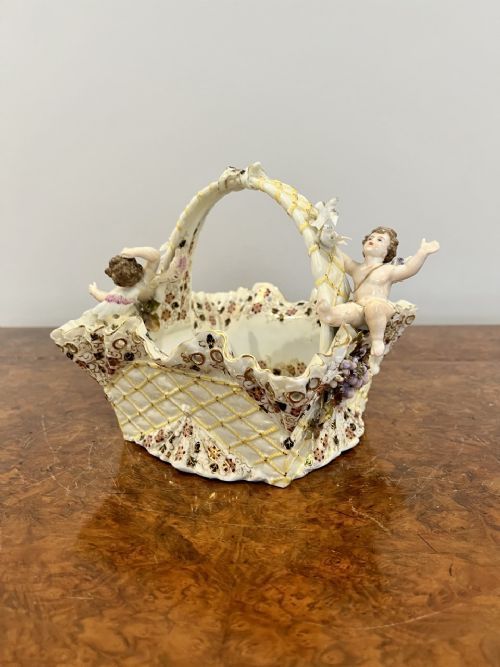
German porcelain modellers occasionally populated these delicate openwork baskets with cherubs clambering over the rims.
What varies in quality
The crispness of the pierced reticulation and the precision of the hand-painted or transfer-printed decoration define the upper tiers of production.
Fine porcelain bodies and sophisticated figural or botanical modelling separate standard utilitarian wares from exceptional cabinet pieces.
J. and R. Clews·Mason·Schierholz·Sevres·Wedgwood·Worcester
The Reticulated Ceramic Basket Dish Glossary
- Reticulated
- Pierced or netted work resembling a network or lattice. This decorative openwork forms the signature characteristic of basket dishes.
- Chestnut basket
- A specialised vessel designed for serving chestnuts at the table. These often include a matching stand or tray.
- Pearlware
- An improved earthenware introduced late in the eighteenth century. A faint bluish tint in the glaze distinguishes it from creamware.
Reticulated Ceramic Basket Dish: Frequently Asked Questions
What were reticulated ceramic basket dishes used for?
These vessels historically served fresh fruit, sweetmeats, or roasted chestnuts at formal dining tables. Their openwork sides allowed air circulation for specific foods.
Over time, they transitioned into purely decorative centrepieces or work baskets displayed on side tables and consoles.
How do I care for an antique basket dish?
Display these delicate ceramic and porcelain items away from direct sunlight and high traffic areas to prevent accidental impact. Dust them gently with a soft, dry brush.
Avoid immersing antique gilded or enamelled pieces in water, as moisture can damage fragile nineteenth-century glazes and gold leaf.
How can I tell eighteenth-century pieces apart?
Examine the paste, glaze characteristics, and underglaze blue painting styles to differentiate between English factories and continental porcelain works. First Period Worcester often shows specific potting traits and crescent marks.
Chinese export pieces from the same era display distinct famille rose palettes and porcelain body textures compared to European equivalents.
Did these baskets always come with stands?
Many chestnut baskets and sweetmeat dishes were manufactured as a paired set with an under-tray or stand to catch crumbs or moisture. Surviving pairs or complete sets remain particularly desirable for collections.
Individual baskets often became separated from their original stands over centuries of handling and movement.