
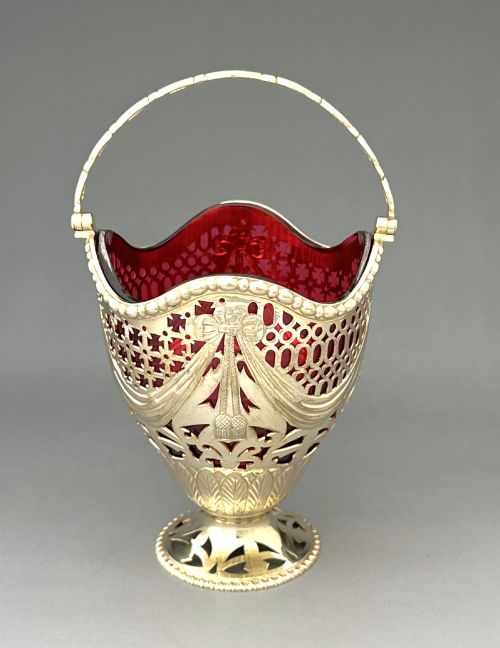


Pierced Gilt Bowl
These pierced gilt bowl pieces combine openwork metal or ceramic with brilliant metallic surfaces, prized for their decorative presence on any table.
Pierced Gilt Bowl
A pierced gilt bowl brings together intricate openwork forms and metallic finishes across several eras. When you search for a pierced gilt bowl, you encounter centrepieces, sugar baskets, and tazzas designed for visual impact.
The selections span the Georgian, Victorian, Edwardian, and later periods, capturing styles from Rococo Revival and French Empire to Art Nouveau and Chinese Export. Most examples lean towards decorative vessels in porcelain, silver-gilt, and bronze.
Makers and manufacturers represented include firms such as Schierholz Plaue, Moorcroft Macintyre and Co, and silversmiths like George Fox. These works frequently arrive with companion liners or stands, particularly in cranberry glass or famille rose porcelain.
Materials and construction
These items utilise sterling silver, silver-gilt, and gilt bronze alongside hard-paste porcelain and cranberry glass. Artisans applied gold leaf through fire gilding or electroplating onto metal bases to achieve durable metallic radiance.
Piercing required careful hand-sawing or piercing of sheet metal, or intricate moulding and lattice cutting in soft and hard paste porcelain before firing. Applied details such as roses, putti, and enamel work were then hand-modelled and fixed before final glazing and gilding.
Some centrepieces include tiny applied porcelain putti seemingly leaning against the openwork walls to hold up the fruit.
Assessing quality and execution
Quality rests upon the crispness of the pierced lattice work and the completeness of the original gilding. Finer pieces retain sharp details in cast bronze and porcelain modelling without softening from excessive wear or later over-gilding.
The weight of the silver or bronze and the depth of the porcelain glaze distinguish workshop tiers. Integrated components, such as matching cranberry glass liners or original stands, elevate the integrity of the piece.
Schierholz Plaue·Moorcroft Macintyre and Co·George Fox·Meissen
The Pierced Gilt Bowl Glossary
- Silver-gilt
- Silver objects coated with a thin layer of gold, combining the strength of silver with a golden finish. This technique is also known as vermeil.
- Tazza
- A shallow bowl or cup mounted on a stem and foot, used historically for serving fruit or sweets. They often feature decorative openwork rims.
- Pot pourri
- A vessel with a pierced or perforated lid designed to hold dried scented plant material. The openings allow the fragrance to diffuse into a room.
- Famille rose
- A palette of Chinese porcelain enamels dominated by opaque pink, introduced in the eighteenth century. It appears on exported basketware and bowls.
- Comport
- A large ornamental dish or stand placed in the centre of a dining table for fruit or confections. They mirror the scale of grand centrepieces.
Pierced Gilt Bowl: Frequently Asked Questions
What were pierced gilt bowls used for?
These vessels served primarily as decorative centrepieces, sugar baskets, or comports on formal dining tables. They held fruit, confectionary, or scented mixtures for guests.
Their openwork designs allowed coloured glass liners or contrasting interiors to show through, creating visual interest during formal meals.
How do I care for silver-gilt and porcelain?
Silver-gilt requires gentle cleaning with non-abrasive cloths to preserve the delicate gold layer over the silver. Avoid harsh dips that strip the gilding.
Porcelain and glass liners need warm water and mild soap, keeping abrasive pads away from any hand-painted enamels or applied roses.
How do I date these pieces?
Dating relies on hallmarks on silver pieces, factory marks on porcelain bases, and the prevailing artistic style of the period. Georgian and Victorian items display different casting techniques and aesthetic movements.
Art Nouveau pieces show organic, flowing lines distinct from the rigid symmetry of French Empire or Rococo Revival designs.
Are liners and stands original?
Many sugar baskets and bowls were designed with fitted glass liners or matching stands to protect the metal or ceramic body. Cranberry glass liners and porcelain stands are specific to certain makers and eras.
Matching liners significantly enhance the completeness of a piece, though replacements are common in older utilitarian objects.