


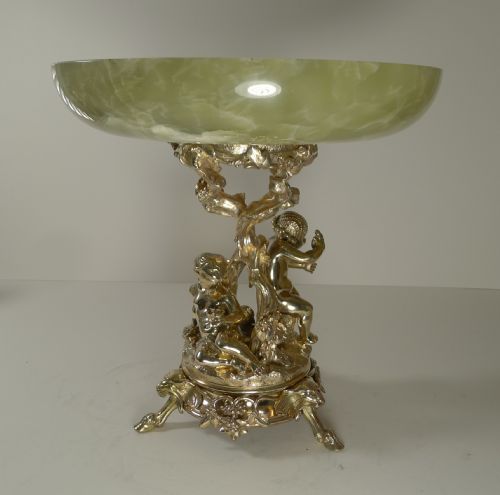
French Empire Compotes
French empire compotes bring classical dignity to a room, combining rich metals and stone in commanding decorative centrepieces.
French Empire Compotes
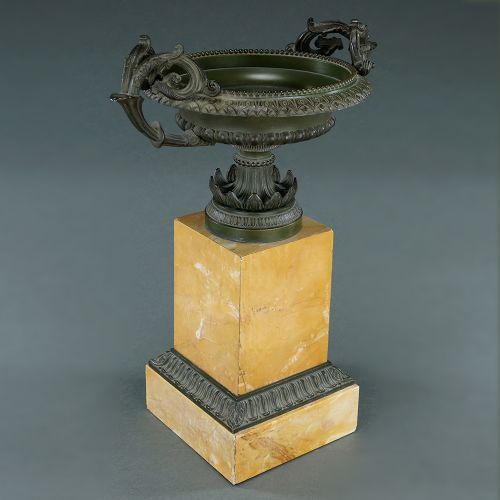
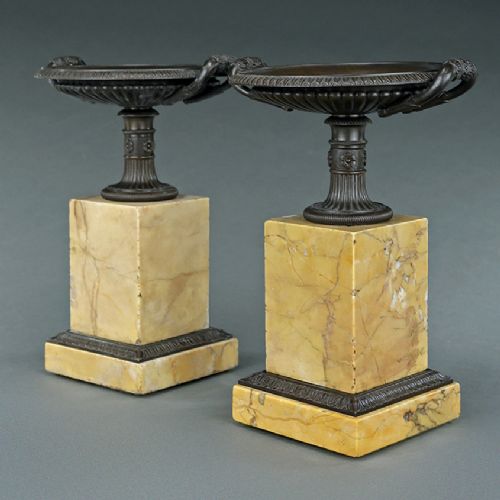
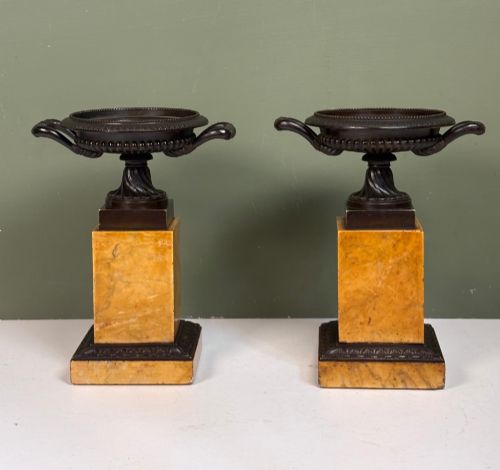
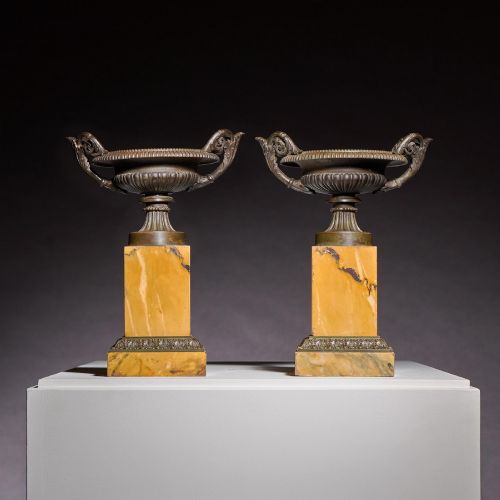
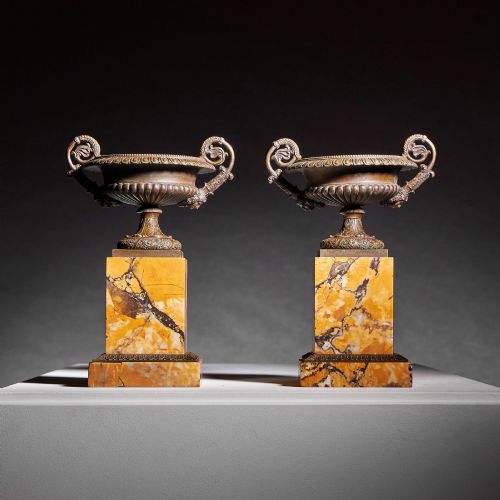
These pieces are ornamental vessels and tazzas created during the nineteenth century, drawing heavily on French Empire, Regency, and Neoclassical styles. When searching for French empire compotes, buyers encounter decorative bowls, centrepieces, and tazza vases designed to elevate a table or mantelpiece.
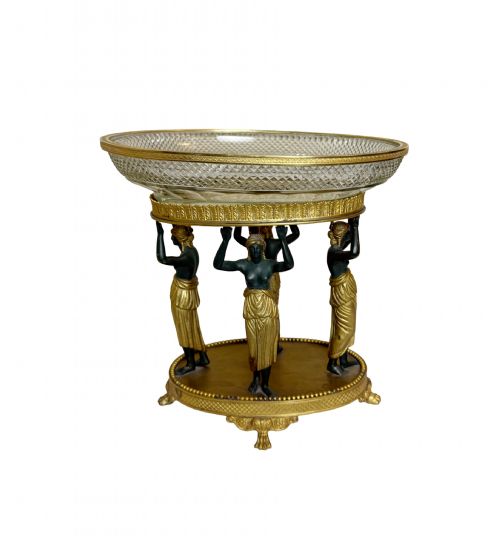
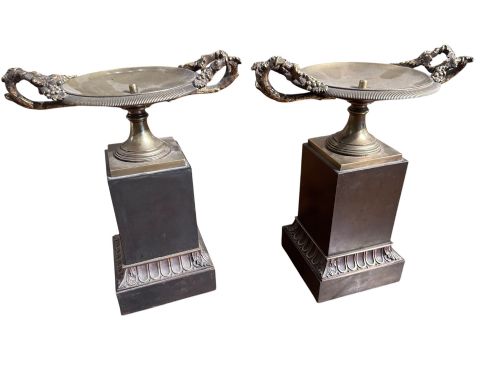
The selection here encompasses matched pairs and single centrepieces originating from the nineteenth century, including specific periods like 1800, 1850, 1880, and the Regency era. Formats range from grand tour bronze and marble tazzas to porcelain basket bowls and gilded bronze centrepieces.
Makers and origins include French workshops and Parisian houses such as Christofle, alongside Regency iterations like Au Bon Sauvage compotes. Buyers typically find these objects functioning as striking decorative centrepieces or ornamental urns within classical interiors.
How they were made
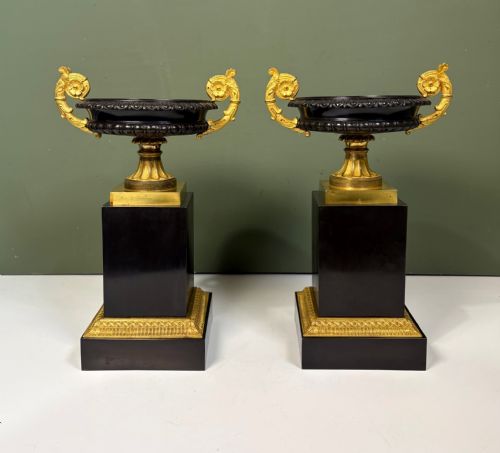
The construction relies heavily on the combination of cast metals and dense natural stone, using bronze, ormolu, and gilt bronze paired with black marble and Siena marble. Artisans cast the metal elements with crisp classical detail, finishing them with fire gilding or patination.
Cut crystal and porcelain also appear as primary bodies, held within metal mounts or combined with bronze detailing. These varied materials require precise joining techniques to secure heavy stone bases to metal stems and bowls.
Listings feature 19th-century periods including 1800, 1850, 1880, and the Regency era, constructed from bronze, ormolu, marble, and cut crystal.
What varies in quality
Quality reveals itself in the crispness of the metal chasing and the depth of the gilding, where superior examples exhibit sharp, well-defined classical motifs rather than soft, worn casting. The selection of the marble base also marks distinction, with richly veined Siena marble commanding particular regard.
Proportion and scale dictate the visual impact of the piece, with larger pairs demonstrating superior ambition in design and execution. The integration between different mediums, such as the fit of cut crystal within bronze mounts, separates standard production from exceptional examples.
Christofle Paris
The French Empire Compotes Glossary
- Compote
- An elevated bowl used for serving fruit or sweets, or simply displayed as an ornamental centrepiece. These vessels stand on a stem and foot.
- Tazza
- A wide, shallow saucer-like dish mounted on a stem and foot, frequently utilised in nineteenth-century decorative schemes. They derive from ancient classical forms.
- Ormolu
- Finely chopped gold ground and amalgamated with mercury, applied to a bronze object and heated to drive off the mercury. This leaves a rich golden coating characteristic of empire metalwork.
- Grand Tour
- A cultural trip undertaken by wealthy young Europeans in the nineteenth century to absorb classical art and antiquity. Pieces from this context often incorporate classical architectural marbles and bronzes.
- Patinated bronze
- Bronze treated with chemical solutions to produce a specific surface colour, typically deep brown or dark green. This finish contrasts sharply with bright gilt bronze mounts.
French Empire Compotes: Frequently Asked Questions
What are French empire compotes made of?
These pieces combine cast metals such as bronze, ormolu, and gilt bronze with heavy stones like black marble and Siena marble. Cut crystal and porcelain also feature as primary vessel materials.
Artisans paired these contrasting elements to create structured, classical decorative objects designed for prominent display in nineteenth-century interiors.
Where were these compotes made?
The pieces originate primarily from French workshops and Parisian makers working during the nineteenth century. Regency and grand tour examples reflect broader European tastes for classical antiquity.
Parisian firms such as Christofle produced significant gilded bronze centrepieces within this overarching aesthetic tradition.
How do I style a compote at home?
Compotes function naturally as centrepieces on dining tables, sideboards, or large mantelpieces where their height and classical proportions draw the eye. Paired tazzas work well arranged symmetrically to anchor a display.
Their substantial stone and metal composition allows them to stand alone as sculptural objects without needing additional contents.
How do I tell Regency from Empire styles?
Regency designs often reflect English interpretations of classical motifs, occasionally incorporating thematic variations like the abolitionist compotes seen in this period. French Empire work adheres strictly to Napoleonic classical iconography, utilising heavy ormolu and dark patinated bronze.
Both styles share a Neoclassical foundation, but French pieces tend toward stricter symmetry and richer gilding.