


Ormolu Pedestal Bowls
These ormolu pedestal bowls combine gilt metal mounts with stone, glass, and ceramic bodies to anchor a room with distinct historical weight.
Ormolu Pedestal Bowls
When you search for ormolu pedestal bowls, you encounter tazzas, centrepieces, and ornamental urns that elevate decorative displays. These pieces primarily date from the nineteenth century, ranging from the Regency period through to eighteen-hundreds revivals.
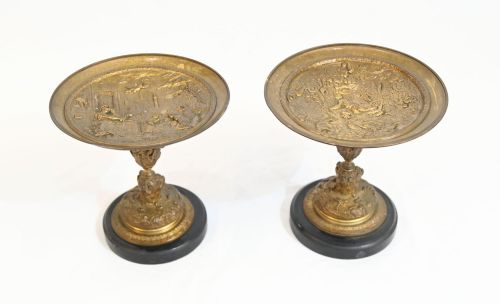
The objects frequently take the form of raised dishes supported by classical columns or decorative stems. Pairs and single showpieces appear alongside garniture sets designed for mantelpieces and large tables.
Continental workshops produced these items using rich materials to catch the light in formal reception rooms. The forms lean heavily on French Empire, Rococo, and Second Empire design vocabulary.
How they were made
Makers formed the structural mounts from cast brass and gilt bronze, often referred to as ormolu. This metalwork was combined with carved black marble, banded agate, malachite, and Blue John.
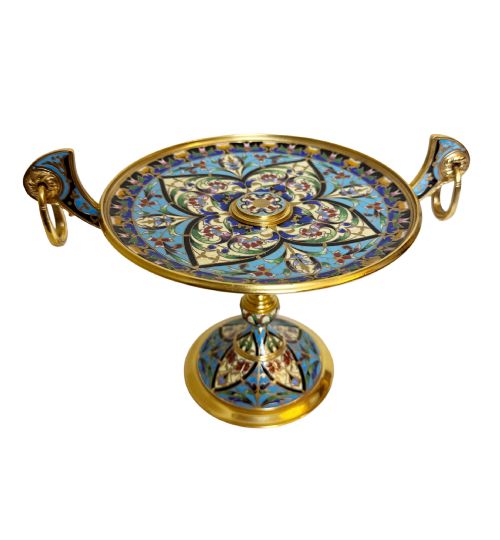
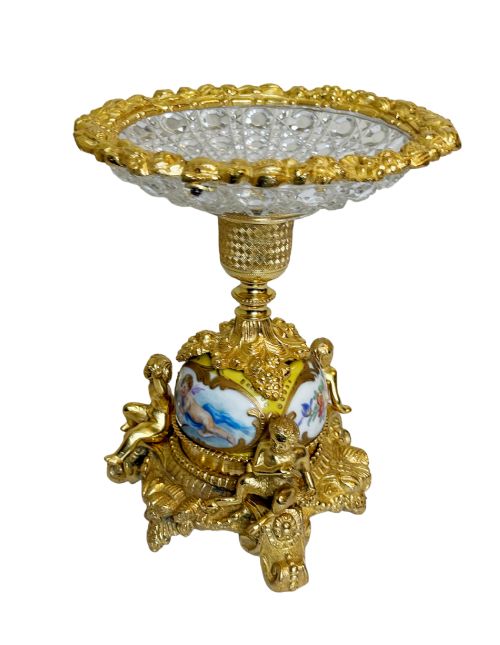
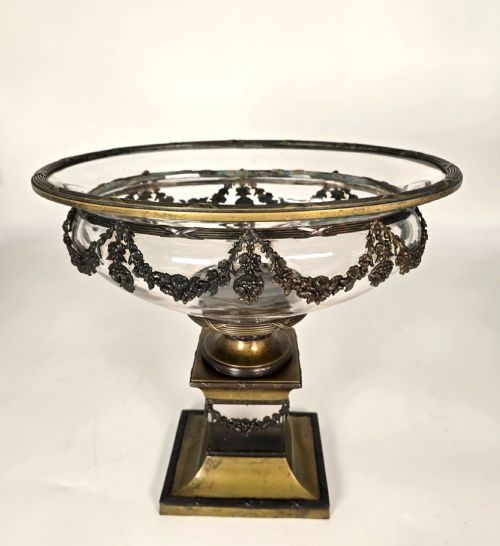
Vessels incorporated blown and cut crystal, French glass, and Paris porcelain bodies secured within metal mounts. Champleve and Limoges enamel plaques added further colour and surface detail to the gilded frames.
The selection includes Bohemian Czech glass alongside French porcelain and cut crystal bodies.
What varies in quality
The crispness of the metal casting dictates the refinement of each piece, distinguishing sharp chisel work from softer secondary production. Heavy gilding and patination hold up better over time than thin finishes.
The choice of body material separates standard production from exceptional work, with hardstones like malachite and banded agate commanding greater presence than standard glass. Integrated figural elements such as cherubs demand high sculptural skill.
The Ormolu Pedestal Bowls Glossary
- Ormolu
- Gilded bronze produced through a mercury-gilding process on decorative metal objects. This finish provides a warm, golden tone characteristic of luxury goods.
- Tazza
- A shallow bowl mounted on a stem and foot, designed for display. These pieces serve as focal points on sideboards and centre tables.
- Centrepiece
- A large decorative vessel placed in the middle of a dining table or serving surface. They often feature elaborate mounted handles and figures.
- Champleve
- An enamelling technique where troughs are dug into metal and filled with vitreous paste before firing. This creates colourful geometric or floral patterns within the brass frame.
- Garniture
- A matching set of three or more decorative objects displayed together on a mantelpiece. They typically consist of a central urn flanked by two smaller matching vessels.
Ormolu Pedestal Bowls: Frequently Asked Questions
What is an ormolu pedestal bowl?
An ormolu pedestal bowl is a decorative vessel raised on a foot or stem, featuring finely cast and gilded bronze mounts. These objects were created primarily as ornamental display pieces rather than for practical dining use.
They often incorporate materials such as marble, porcelain, cut crystal, and semi-precious stones within the metal framework.
Where were these pedestal bowls made?
The majority of these pieces originate from French workshops spanning the nineteenth century. Makers drew upon established design movements like French Empire, Rococo Revival, and Second Empire.
Continental makers also produced comparable tazzas and centrepieces using similar gilded bronze techniques.
How do I style an ormolu pedestal bowl?
These bowls work best as standalone centrepieces on dining tables, sideboards, or large chest tops. Their strong gilding and coloured stone bodies require space to reflect light and command attention.
Pairs can be arranged symmetrically on either side of a room or utilised as part of a three-piece garniture set on a mantel.
How do you date nineteenth century ormolu pieces?
Dating relies on identifying the stylistic markers of the period, such as Regency classical restraint or elaborate Rococo Revival asymmetry. The combination of materials, from black marble to Paris porcelain, also points to specific decades.
Cast quality, patination, and mounting techniques help separate early nineteenth-century work from later Victorian revivals.