


Pedestal Compote Pair
A pedestal compote pair brings symmetrical elegance to a table, combining raised display bowls with classical proportion.
Pedestal Compote Pair
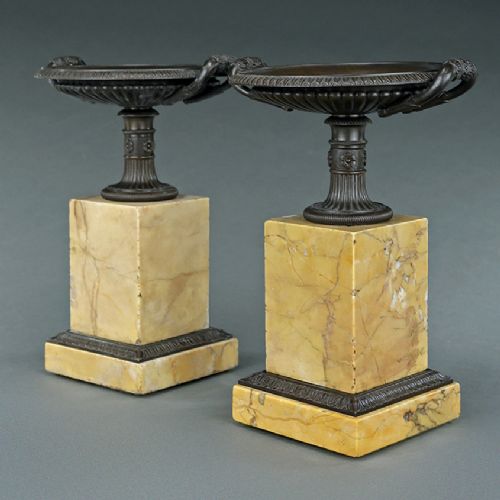
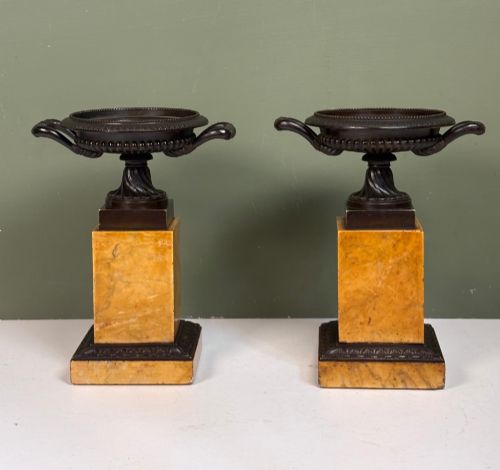
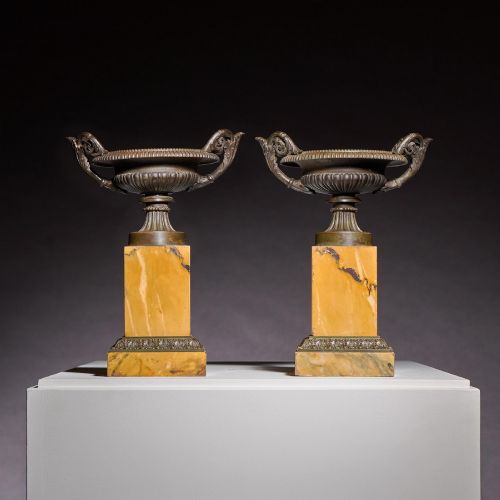
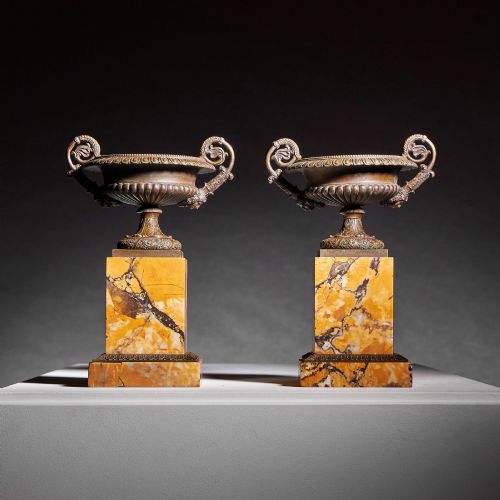
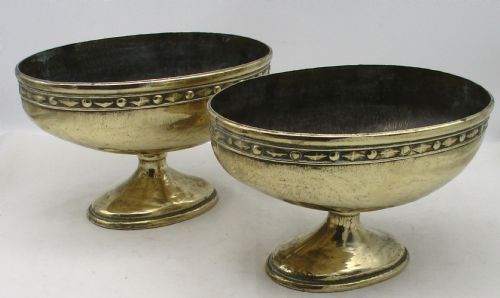
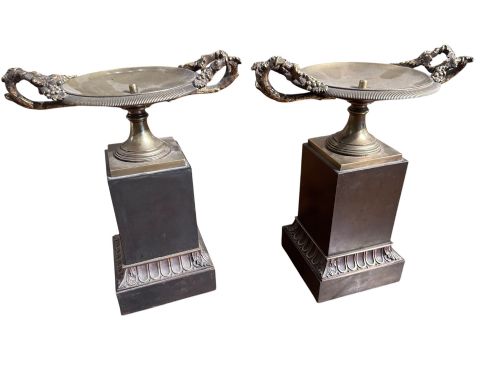
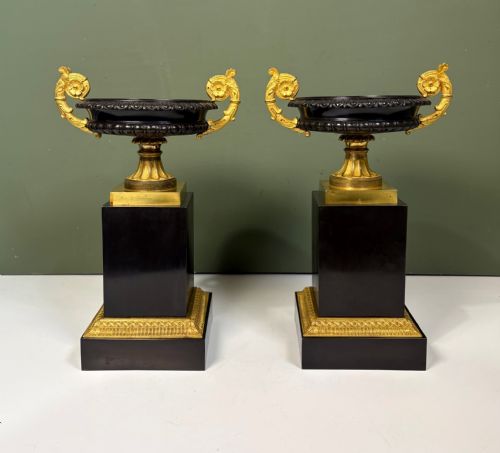
A pedestal compote pair consists of matched raised bowls or tazzas designed to present fruit, flowers or decorative objects symmetrically upon a surface. When searching for a pedestal compote pair, buyers encounter works spanning the eighteenth to early twentieth centuries, with nineteenth-century examples appearing most frequently.
The selections on this page draw from French Empire, Regency, Georgian and Victorian aesthetics, often reflecting grand tour influences or ecclesiastical uses. Forms range from classical marble and bronze tazzas to silver-plated centrepieces, cut glass bowls, and cloisonné enamel.
Makers and materials cross multiple continents and traditions, including English silver and glass, French ormolu and marble, and Chinese cloisonné. These matched vessels served formal dining rooms, altars and libraries as centrepieces and garniture sets.
Materials and construction methods
Metalwork forms a core component of these pieces, utilising cast bronze, patinated bronze, gilt bronze, ormolu, brass and sterling silver. Founders shaped these metals through casting and chasing, often mounting them with contrasting plinths.
Stonework and glass provide the primary vessel bodies, featuring white and black marble, richly veined sienna marble, inlaid rosewood, cut crystal, and Paris porcelain. Craftsmen turned stone on lathes and mouth-blown or cut glass to achieve the desired dish contours.
Object forms span tazzas, centrepieces, church vases, and porcelain garnitures reflecting Neoclassical, Regency, Victorian and Arts & Crafts styles.
Factors of distinction
Quality rests heavily upon the crispness of the casting in bronze or ormolu mounts, where sharp relief and detailed chasing elevate the object. The selection of stone matters equally, with deeply figured sienna or black marble marking finer examples.
Proportion and harmony between the raised bowl and its pedestal dictate visual success. Superior pairs display balanced weight, precise symmetry, and integration of mixed materials such as mother-of-pearl or hand-cut crystal.
Minton
The Pedestal Compote Pair Glossary
- Tazza
- A shallow bowl or cup mounted on a stem and foot, often used for serving fruit or displaying items. This form dominates the available pieces.
- Ormolu
- Gilt bronze, typically produced by applying a mercury-gilding technique to cast bronze objects during the eighteenth and nineteenth centuries. It provides a bright gold finish on decorative mounts.
- Grand Tour
- A traditional cultural excursion of Europe undertaken by wealthy young men in the eighteenth and nineteenth centuries. Souvenirs from these travels frequently included classical marble and bronze antiquities.
- Garniture
- A set of ornamental objects designed to be displayed together on a mantelpiece, sideboard, or table. They usually comprise three or more matched pieces such as vases and urns.
- Cloisonné
- An enamelwork technique where thin metal wires form compartments on a metal surface to hold coloured glass paste. Firing fuses the design into a hard decorative finish.
Pedestal Compote Pair: Frequently Asked Questions
What is a pedestal compote pair used for?
These matched vessels serve primarily as decorative centrepieces for dining tables, sideboards and mantel displays. Historically, they held fruit, sweetmeats or floral arrangements during formal entertaining.
Today, collectors use them to anchor symmetrical room displays or to add height and classical proportion to interior surfaces.
How do I identify a Regency period piece?
Regency items date roughly from the early nineteenth century and lean heavily on classical Greek and Roman motifs. Look for patinated bronze combined with rich ormolu mounts and sienna marble.
Proportions during this era tend to be architectural and disciplined, echoing archaeological discoveries of the period.
Are these pieces made of solid bronze?
Many items combine cast bronze with other materials such as marble bases, gilt bronze ormolu, and glass dishes. Bronze serves as the structural frame or decorative mount rather than the sole component.
Mixed media constructions were standard practice for nineteenth-century makers seeking textural contrast.
How should I clean marble and bronze tazzas?
Dust bronze and marble gently with a soft, dry cloth to prevent accumulation in recessed chasing or carved details. Avoid commercial metal cleaners or water on patinated surfaces.
Harsh liquids can strip historic patinas or stain porous marbles, so professional conservation advice should be sought for deep cleaning.