
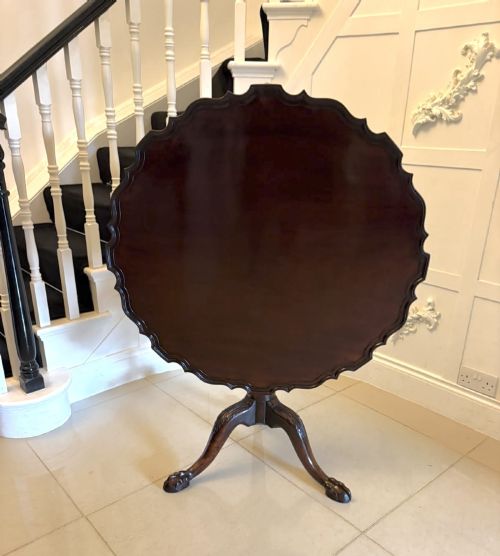
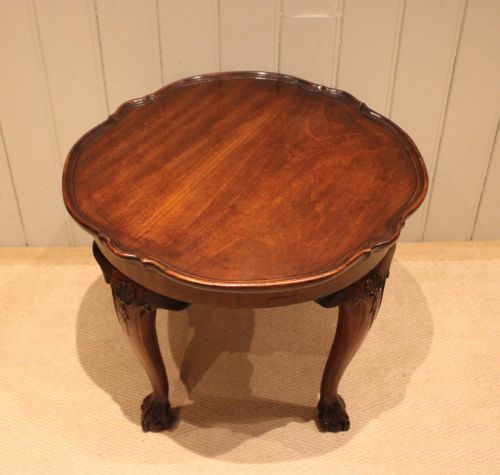
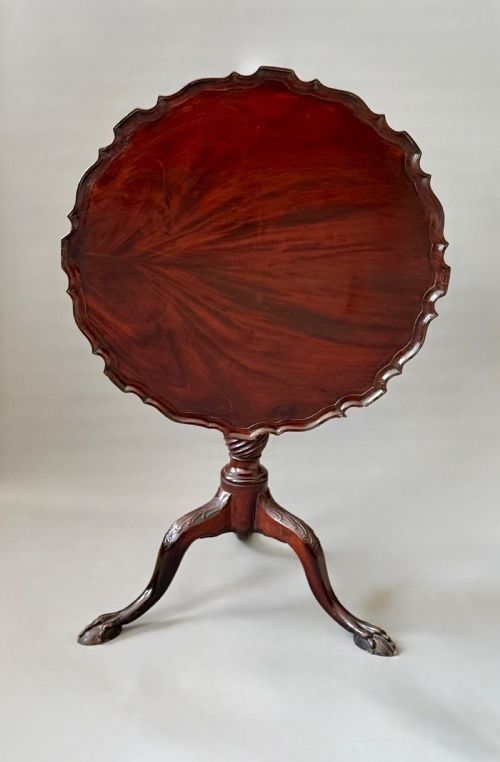
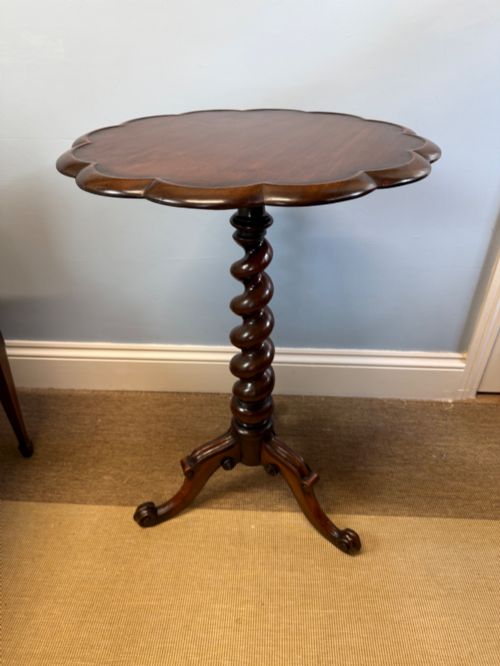

Piecrust Edge Table
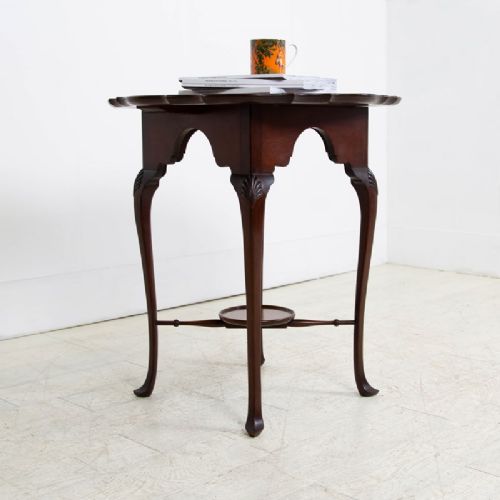
A piecrust edge table brings carved moulding and tripod proportions to an interior, offering a surface suited to serving wine or displaying small objects.
Piecrust Edge Table
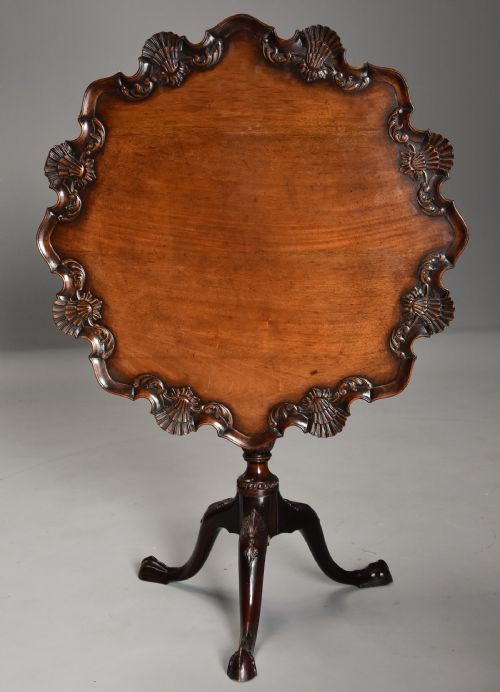
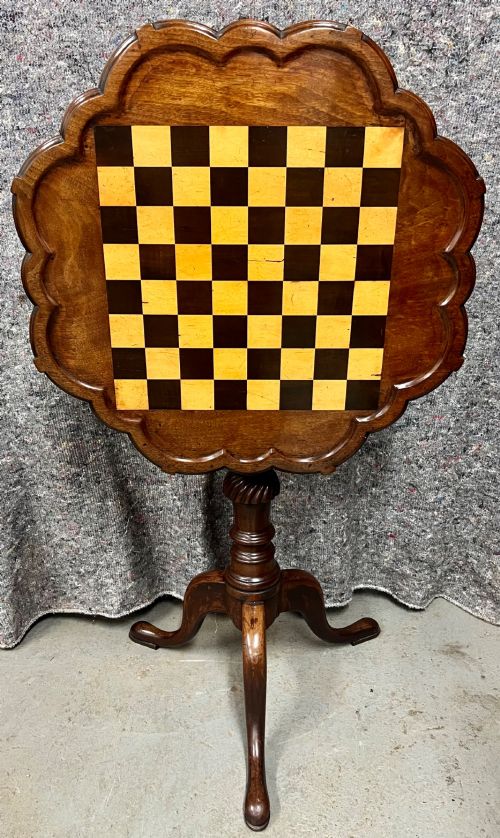
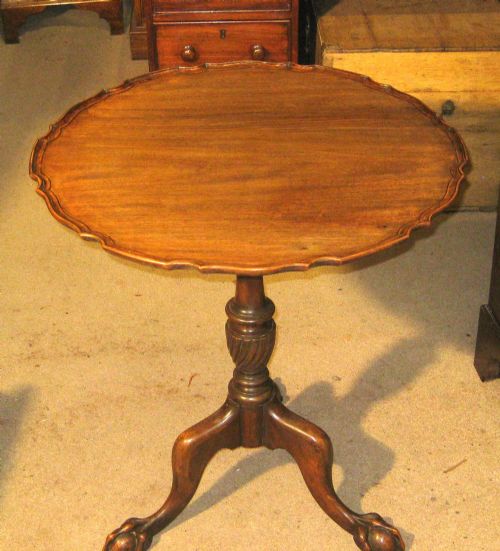
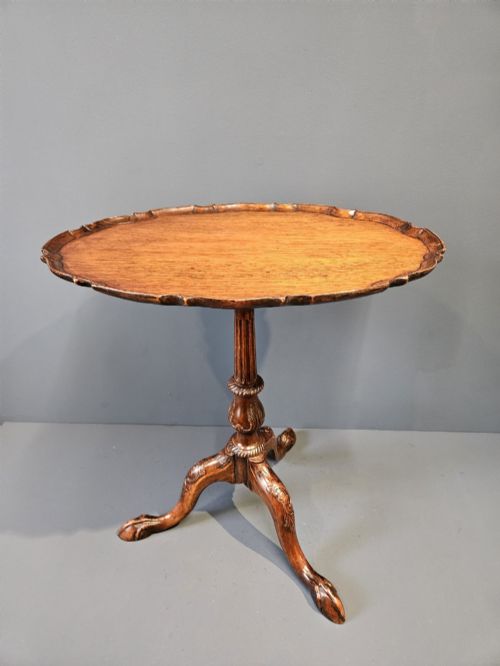
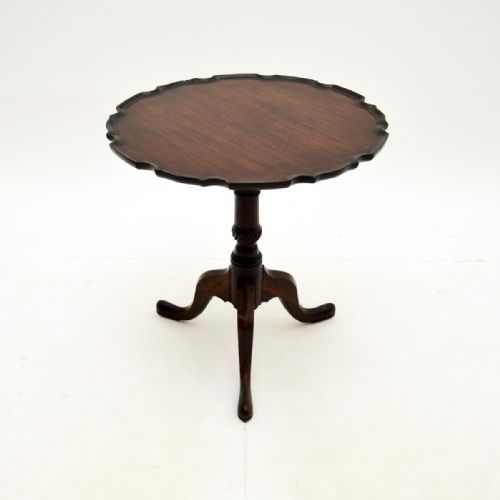
A piecrust edge table is a tripod piece designed for occasional use, wine service, or dining, distinguished by its raised, scalloped rim.
The pieces appearing on this page span from the eighteenth century to the twentieth century, encompassing Georgian originals alongside later Edwardian and revival interpretations.
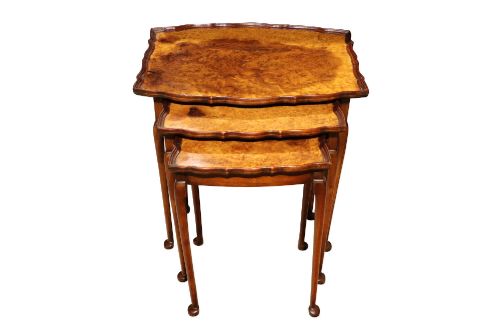
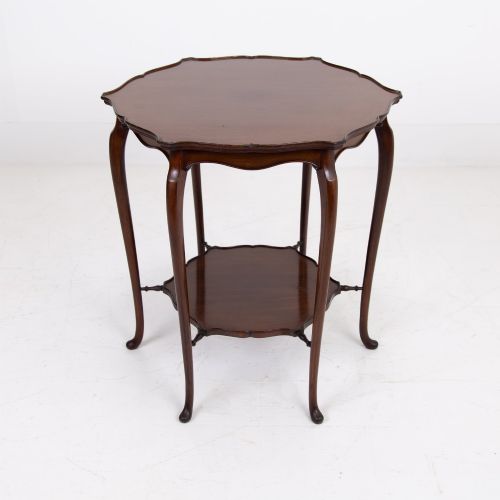
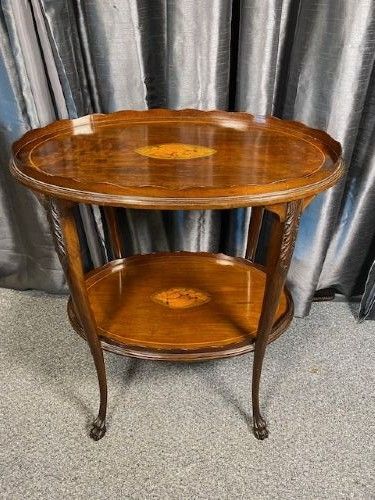
Forms range from small wine tables and tilt-top tripod designs to larger centre tables, coffee tables, and nests of tables.
Materials and construction
Makers utilised solid timbers and veneers, predominantly mahogany, alongside walnut, burr walnut, oak, yew wood, and satinwood.
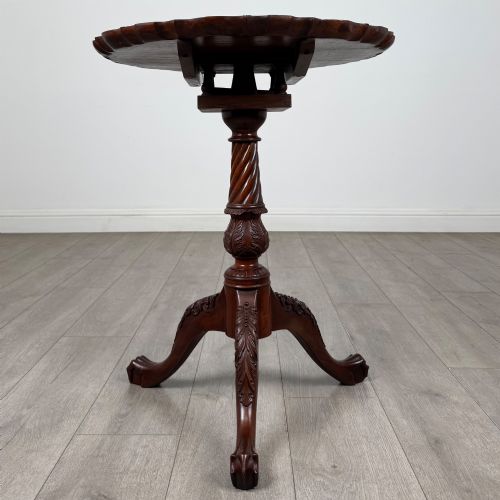
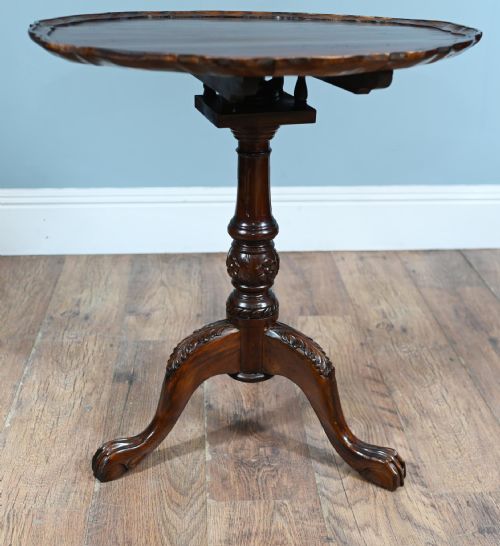
Construction techniques include birdcage mechanisms and tilt-top actions, allowing the circular top to pivot and fold flat when not in use.
The characteristic raised rim is carved directly from the solid timber of the top, creating the undulating edge that defines the style.
Piecrust Edge Table Retail Price Guide 2026
Typical asking prices for piecrust edge table among the pieces listed under this phrase on Sellingantiques today, from the lower quarter to the upper quarter. They describe what is for sale here now, not the wider market.
Listings feature mahogany predominantly, alongside burr walnut, oak, and yew wood across Georgian, Victorian, and Edwardian periods.
Distinguishing quality
The crispness of the carved moulding along the rim separates basic execution from finer examples, as does the figure and grain of the chosen mahogany or walnut.
Proportion and stability in the tripod base, particularly the execution of the cabriole legs and pad or claw feet, indicate the level of craftsmanship involved.
Shapland and Petter
The Piecrust Edge Table Glossary
- Piecrust edge
- A raised, scalloped perimeter carved from the solid wood of a tabletop. This decorative moulding emulates pastry crusts popular on eighteenth-century dining tables.
- Tilt-top mechanism
- A hinged block and catch beneath the tabletop that allows the surface to pivot vertically. This permits convenient storage against a wall when the table is idle.
- Birdcage
- A box-like wooden frame beneath the top of a tripod table that enables both rotation and tilting. It sits between the column and the underside of the surface.
- Tripod base
- A central pillar supported by three radiating legs. This configuration provides stable footing on uneven floors.
- Chippendale style
- A decorative manner drawing on eighteenth-century cabinet-making patterns associated with Thomas Chippendale. It frequently incorporates carved cabriole legs and claw and ball feet.
Piecrust Edge Table: Frequently Asked Questions
What is a piecrust edge table used for?
These tables function primarily as occasional surfaces for holding drinks, books, or small decorative items in a reception room. Many historical examples double as wine or tea tables due to their portable proportions.
Tilt-top variants allow the surface to be stored vertically against a wall when floor space is needed. This mobility made them versatile furniture in period drawing rooms.
How do I identify an eighteenth century piecrust table?
Eighteenth century pieces generally display dense, heavy mahogany with hand-carved scalloped rims rather than applied mouldings. The timber shows patination and wear consistent with age.
Examining the underside reveals traditional joinery marks, pegging, and hand-cut elements within the birdcage or pillar attachment.
What is a birdcage mechanism on a table?
A birdcage is a revolving wooden frame positioned at the top of the central pillar. It allows the table surface to both tilt and rotate horizontally.
This construction requires precise joinery to ensure the assembly remains stable while operating smoothly over centuries of use.
How do I clean and care for wood surfaces?
Dust the timber regularly with a soft, dry cloth to prevent grit accumulation on the polished finish. Avoid placing tables near direct heat sources or strong sunlight.
Apply occasional coats of appropriate wax polish to nourish the wood and maintain its natural lustre without building up heavy residue.