
Piecrust Edge Side Table
A piecrust edge side table brings tactile carved moulding and functional tripod support to a room, offering a surface for lamps or drinks.

Piecrust Edge Side Table
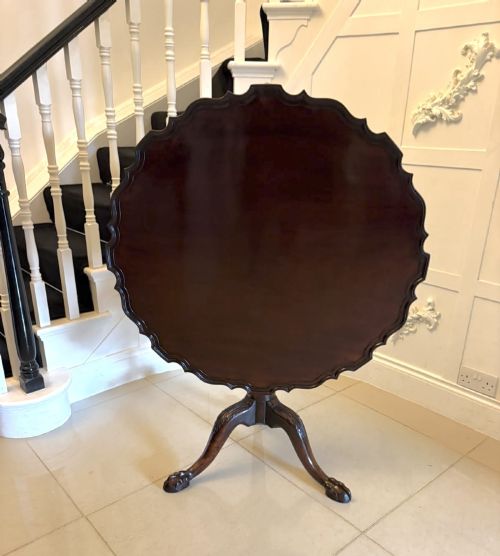
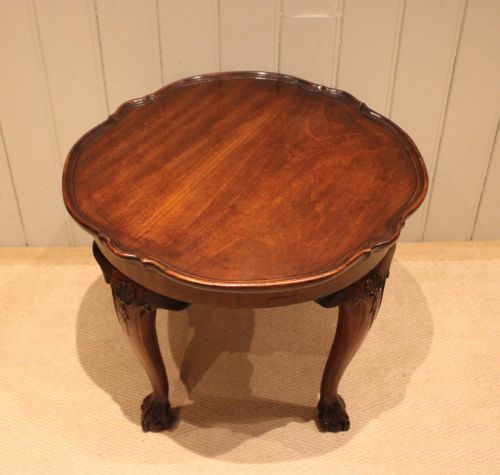
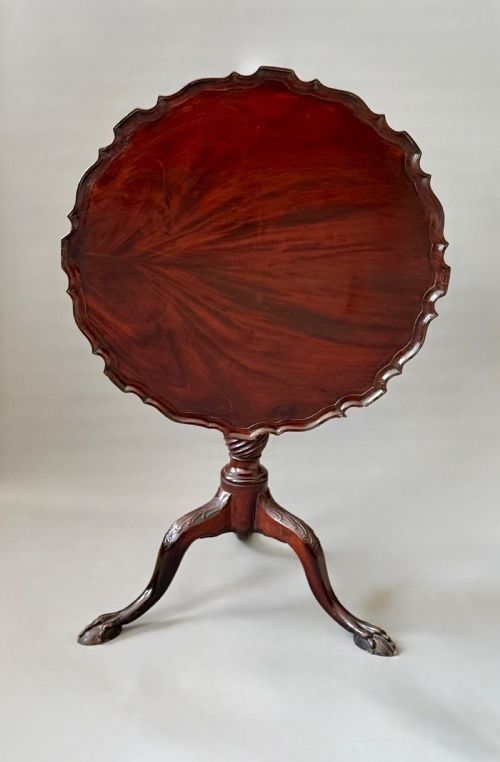
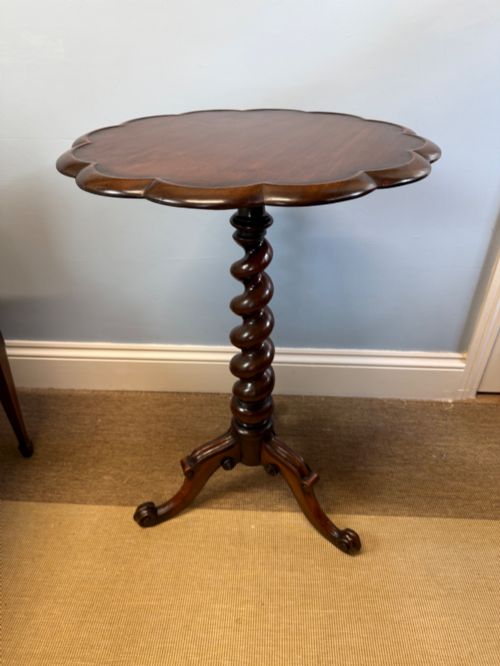
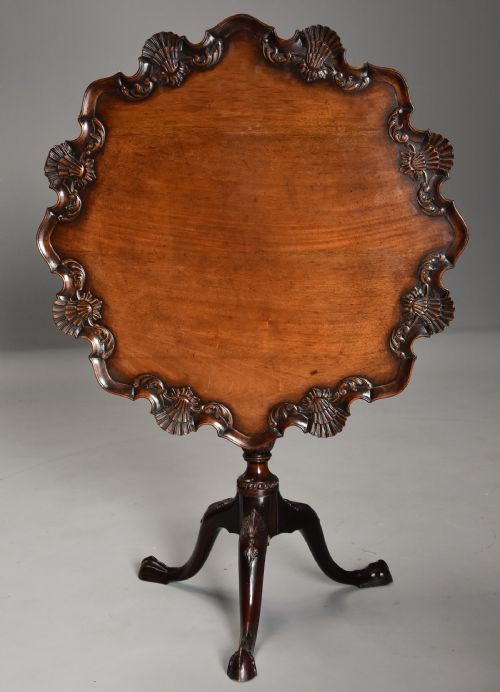
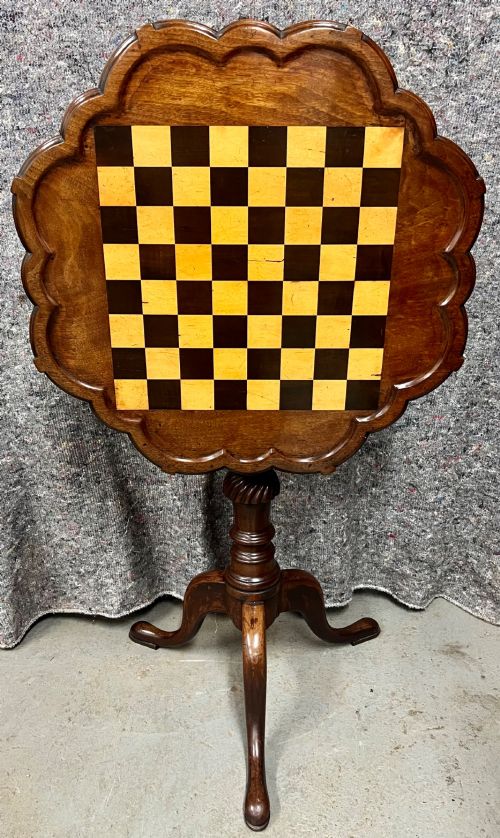
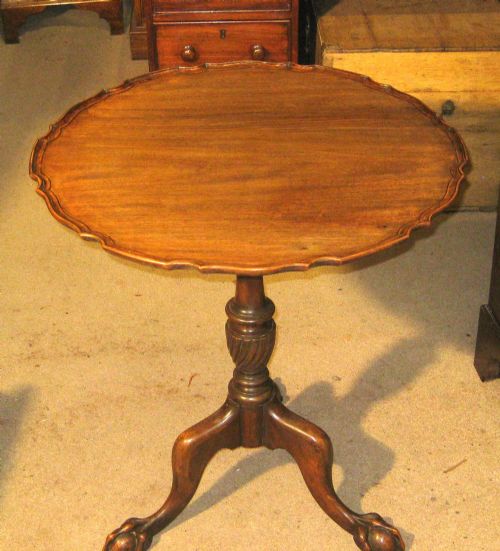
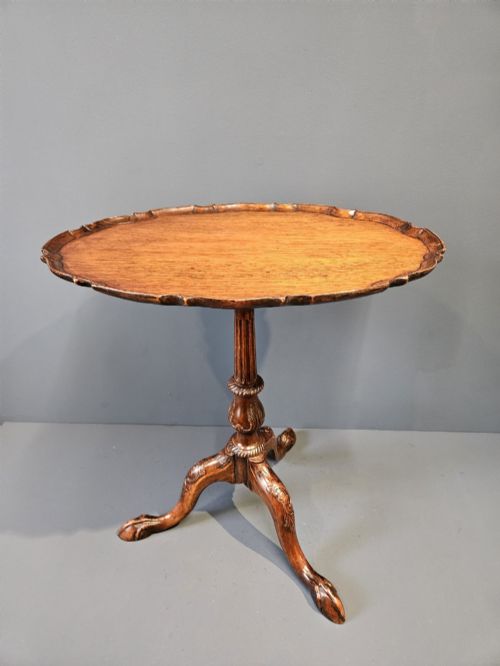
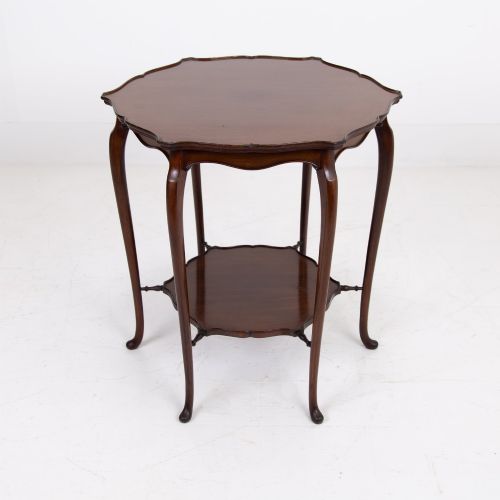
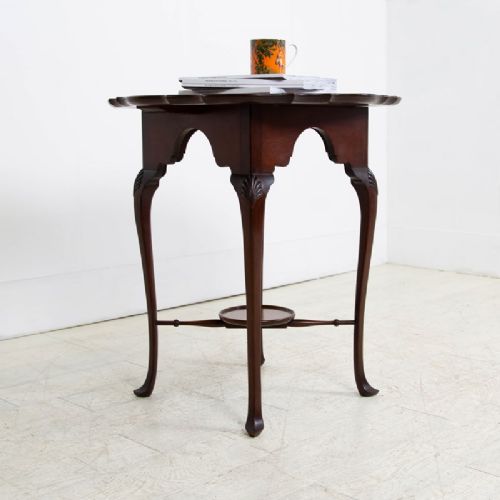
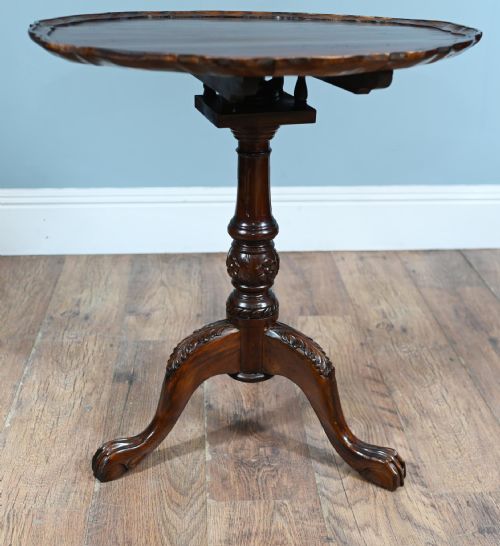
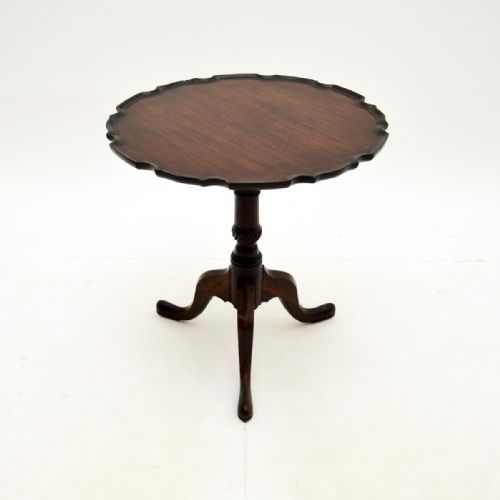
A piecrust edge side table is a small occasional piece defined by its raised, scalloped rim carved directly into the solid timber top. These tables frequently take the form of tilt-top tripod tables resting on a central pillar and three legs, though non-tilting occasional and coffee table formats also appear.
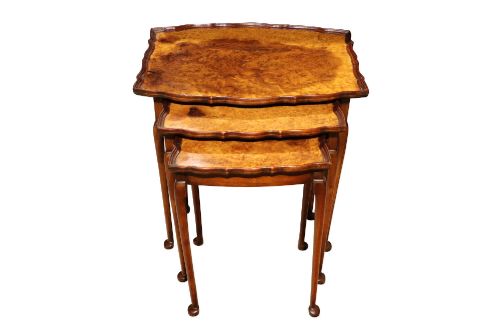
The pieces on this page span the eighteenth century through to the twentieth century, with strong representation from the Georgian period and later revival movements like the Chippendale style. Mahogany is the predominant wood encountered, alongside burr walnut and occasional examples in oak.
Buyers seeking this phrase will find authentic eighteenth-century examples alongside nineteenth-century pieces and twentieth-century revivals. The forms range from small wine tables and kettlestands to larger centre tables and nests of tables.
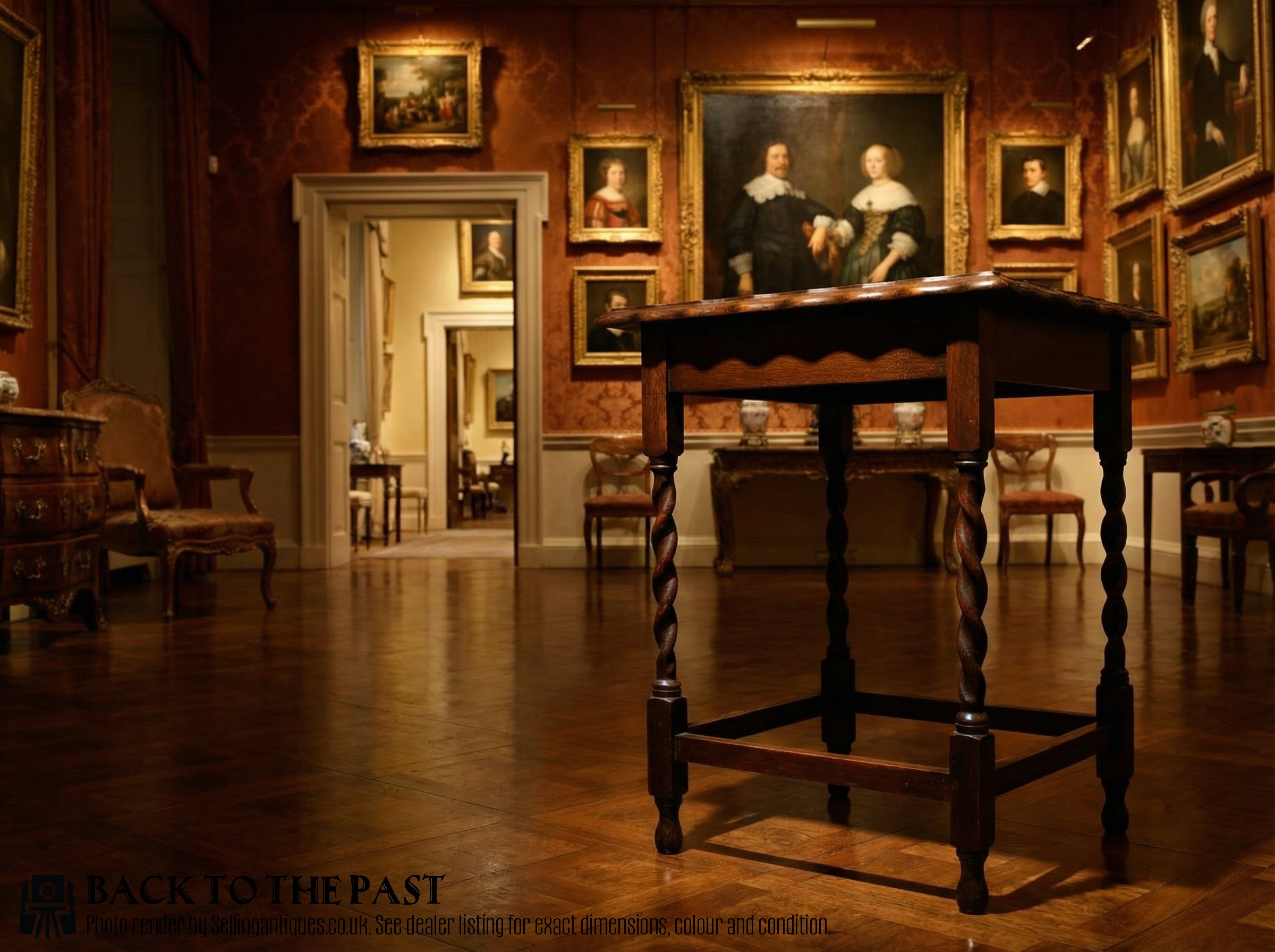
How they were made
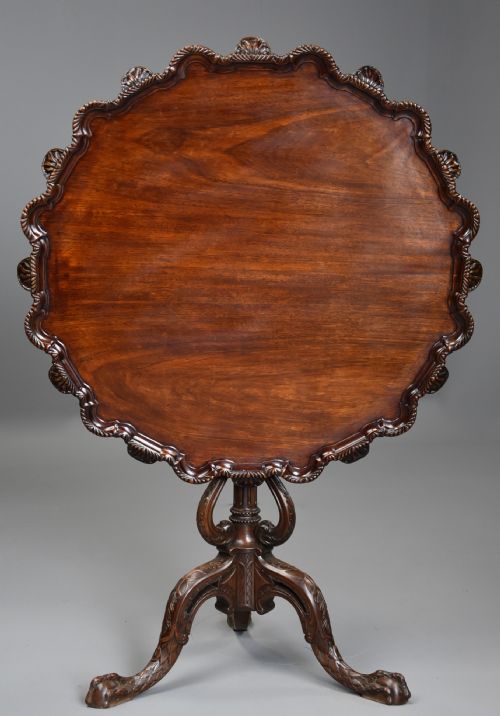
Cabinetmakers constructed the characteristic raised rim by carefully shaping a thick solid timber top so that the undulating edge remained integral to the wood rather than glued on. This required skilled hand-carving to achieve the signature moulded curves without compromising the grain.
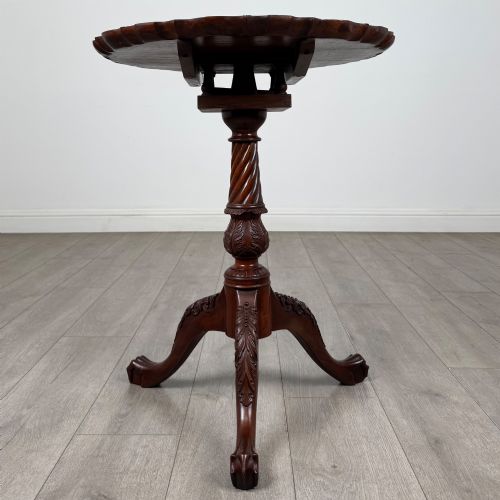
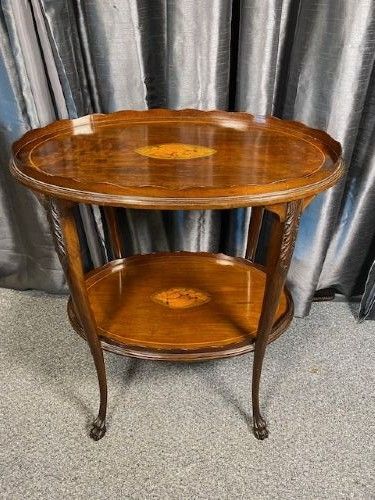
Many of the tripod formats incorporate a birdcage mechanism beneath the top, allowing the surface to both pivot and tilt for convenient storage when not in use. Brass components often appear in the fittings, and decorative touches such as wood inlay or figured veneers enhance the surfaces of walnut and mahogany variants.
Listings demonstrate a strong preference for mahogany, supplemented by burr walnut, oak, and brass details across various periods.
What varies in quality
The crispness and depth of the carved rim separate standard production from superior craftsmanship. Sharp, well-defined lobes on the piecrust edge demonstrate a carver of high ability.
Timber selection and figure govern the visual weight of the piece, with richly grained mahogany and burr walnut commanding attention over plain hardwoods. The structural integrity of the birdcage mechanism and the tight joinery of the tripod legs further distinguish finer workshops.
Shapland and Petter·S and H Jewell
The Piecrust Edge Side Table Glossary
- Piecrust edge
- A raised, scalloped rim carved from the solid wood top of a table. It mimics the fluted crust of a pastry pie and prevents items from sliding off.
- Tilt top
- A tabletop mounted on a hinge mechanism that allows it to swivel and fold into a vertical position. This saved floor space in historic interiors when the table was not in use.
- Birdcage
- A wooden framework beneath a tabletop that permits the surface to rotate and tilt. It sits between the pillar and the top, often utilising small turned spindles.
- Tripod table
- A freestanding table supported by a single central pillar resting on three spreading legs. This design provides stable footing on uneven floors.
Piecrust Edge Side Table: Frequently Asked Questions
What is a piecrust edge side table used for?
These tables served historically as small tea or wine tables, offering a convenient movable surface in sitting rooms. Today they function effectively beside armchairs as lamp tables or display surfaces.
Because many feature tilt-top mechanisms, they can be folded flat and placed against a wall when floor space is needed.
How do I tell an 18th century table from a revival?
Eighteenth-century examples often display natural timber ageing, hand-cut joinery marks, and specific secondary woods appropriate to the period. Revival pieces from the Victorian or Edwardian eras typically show machine-cut elements and different construction fasteners.
Comparing the timber patina and the wear patterns on the tripod base helps clarify the true age of the piece.
What does a birdcage mechanism do?
The birdcage is an ingenious wooden assembly fitted underneath the tabletop. It connects the surface to the central pillar and allows the table to both rotate horizontally and tilt vertically.
This feature let owners tuck the table neatly against a wall when not entertaining.
How do I care for a mahogany table top?
Keep wooden surfaces away from direct sunlight and strong heat sources to prevent the timber from drying out or splitting. Dust regularly with a dry cloth and apply a quality wax polish occasionally to nourish the grain.
Avoid using modern liquid silicones or harsh chemical cleaners that can damage historic finishes.