


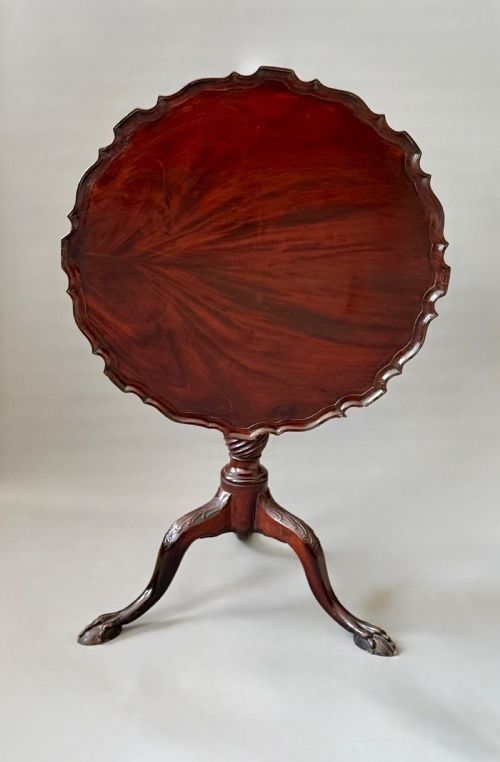
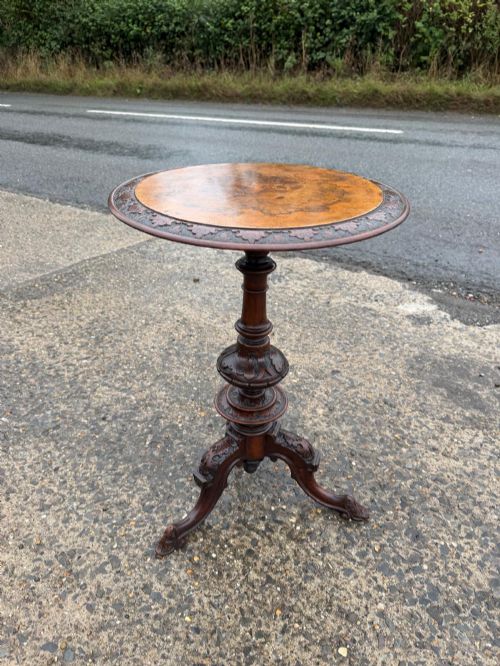
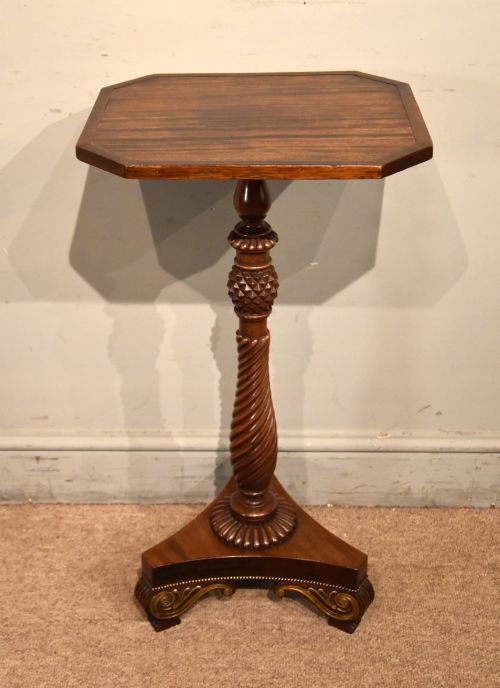
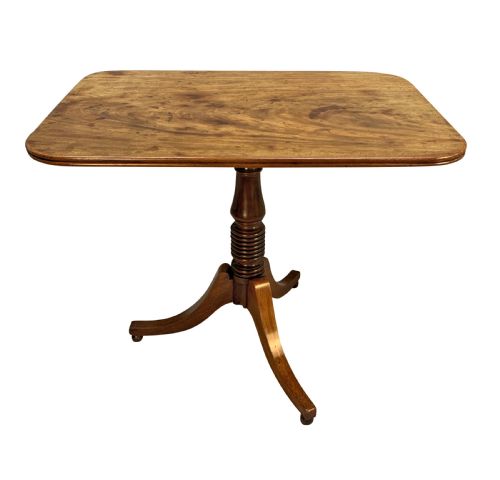
Mahogany Tripod Side Table
When you search for a mahogany tripod side table, you seek a versatile English classic designed for practical daily use beside a chair.
Mahogany Tripod Side Table
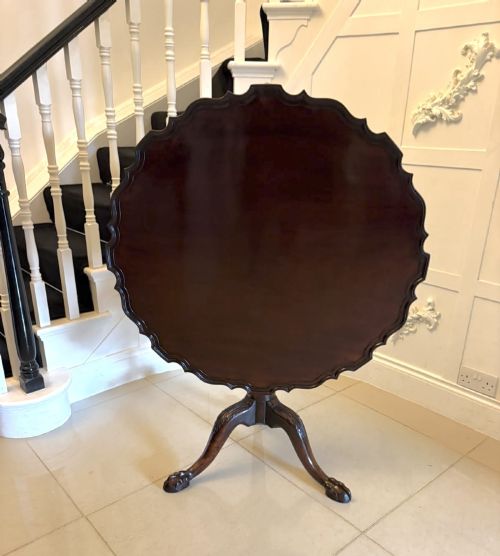
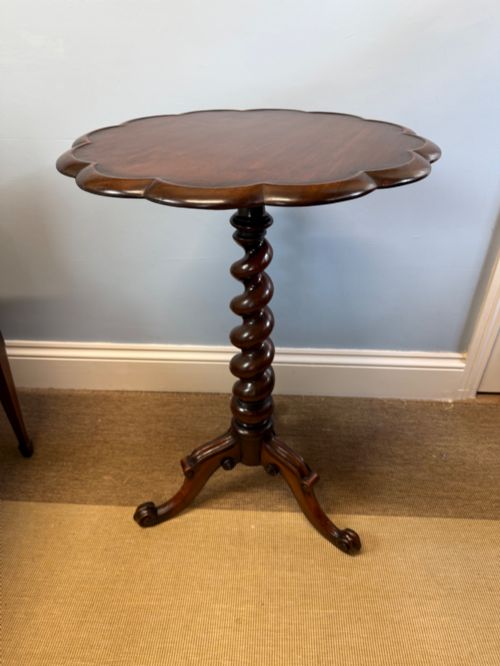
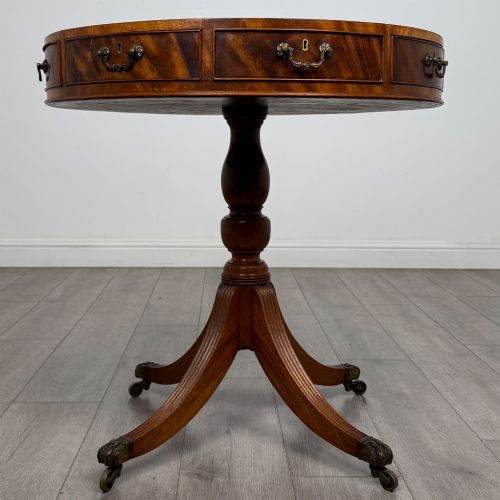
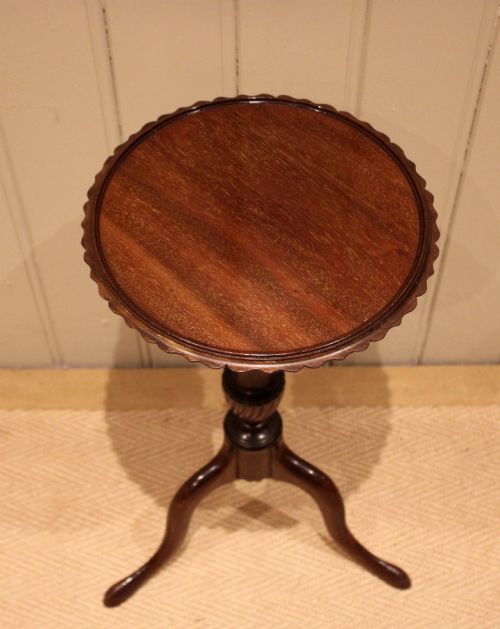
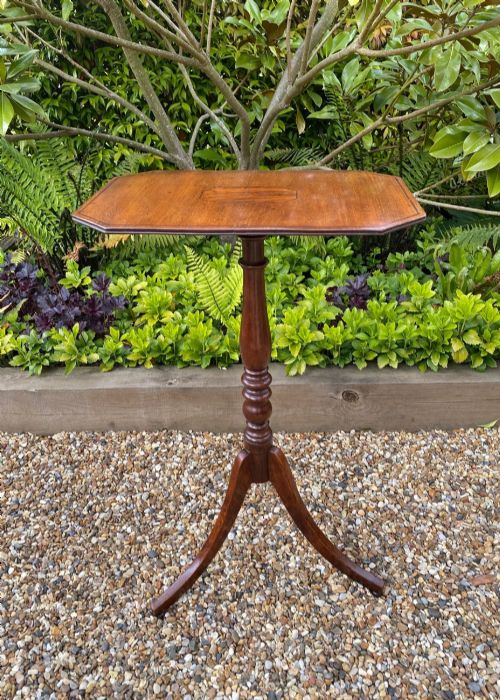
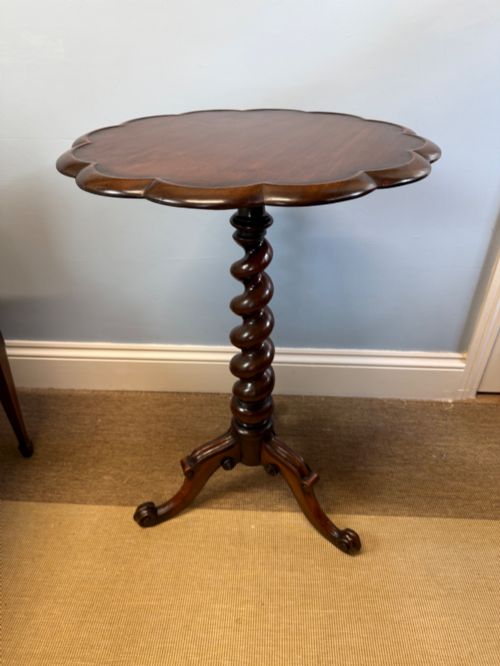
A mahogany tripod side table combines a single central pedestal supported by three splayed legs with a compact circular, oval, or octagonal top. These pieces appear frequently across Georgian, Regency, and Victorian periods, serving historically as wine tables, lamp stands, and occasional tables.
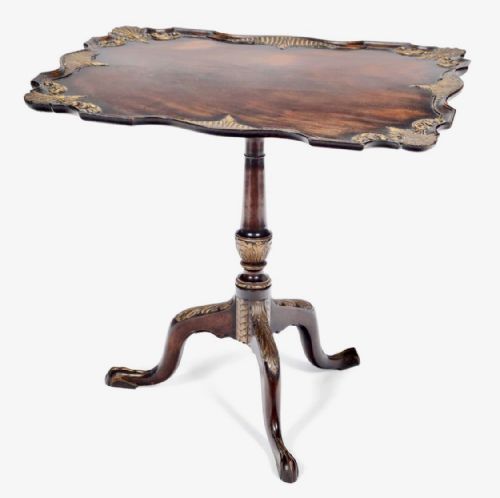
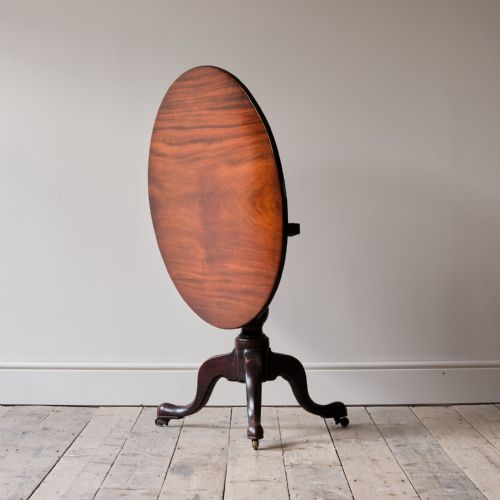
The most common forms on this page include tilt-top mechanisms allowing the top to pivot vertically when not in use, alongside fixed surfaces with piecrust or raised edges. Makers constructed these versatile stands from the eighteenth century through the Edwardian era to occupy minimal floor space while holding candles, books, or beverages.
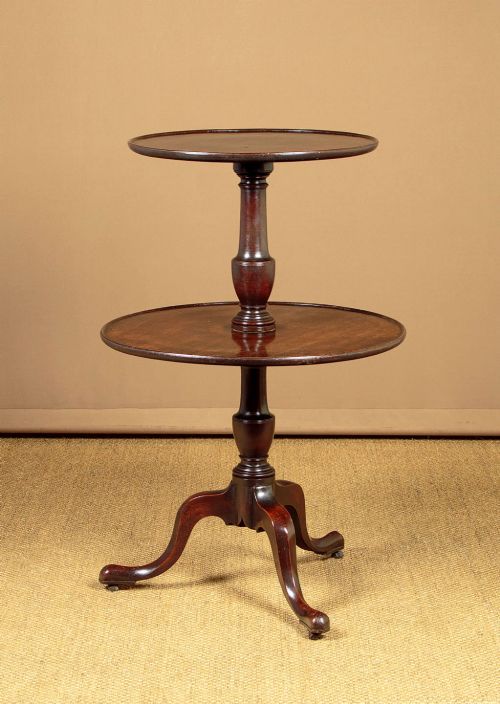
Examples range from plain circular surfaces to carved George III designs and later Chippendale revival interpretations. Buyers often find variations featuring birdcage actions, drop leaves, or two-tier étagère arrangements designed for domestic utility.
What Varies in Quality
The distinction between ordinary production and superior work rests upon the selection of timber and the precision of the carving. Figured mahogany with strong grain patterns elevates an object, whilst crisp hand-carved tripod legs demonstrate superior craftsmanship compared to plain or heavily cast replacements.
Mechanical execution also defines standard, particularly in the smoothness of the tilt-top action and the snug fit of the birdcage mechanism. Original brass hardware, stable joints without wobble, and undisturbed patination distinguish the finest examples from later revivals.
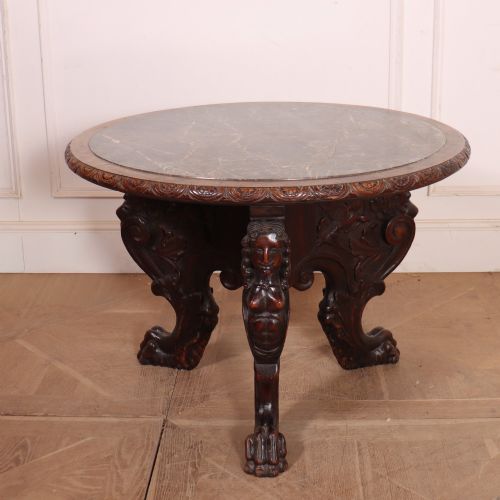
Listings feature examples spanning from the 18th century through the Edwardian era, incorporating mahogany, brass, leather, and marble.
Gillow·Swann and Millican
The Mahogany Tripod Side Table Glossary
- Tilt-top
- A tabletop hinged to a revolving block, allowing the surface to be folded vertically when stored against the wall. This clever mechanism saved valuable floor space in historical drawing rooms.
- Birdcage
- A wooden framework beneath the tabletop allowing the surface to both rotate and tilt on the central pillar. This sophisticated joint provides exceptional stability during daily use.
- Piecrust edge
- A raised, decorative rim carved with undulating curves resembling pastry work. Cabinet makers shaped these borders directly from the solid timber of the tabletop.
- Tripod base
- A supporting structure comprising three splayed legs radiating from a central pillar. This classical configuration ensures the table remains balanced on uneven historical floorboards.
- Dumb waiter
- A multi-tiered stand used for serving food or holding tableware without servant assistance. These freestanding pieces often feature graduating circular trays supported on a central column.
Mahogany Tripod Side Table: Frequently Asked Questions
What was a tripod table used for?
These pieces served multiple domestic functions in period interiors, holding candles, books, or tea equipment beside seating areas. Their portability allowed occupants to move them easily around the room as daily requirements shifted.
Larger variations functioned as supper tables or wine stands during evening gatherings. Their small footprint made them ideal companions for reading and needlework.
What is a birdcage action?
The birdcage is a small wooden cage structure fitted between the top of the pillar and the underside of the table. It permits the surface to rotate horizontally as well as tilt vertically.
This intricate assembly represents a mark of finer construction found on eighteenth-century and Regency examples.
Are these tables suitable for modern rooms?
Their compact proportions make them exceptionally practical for placing beside modern armchairs or beside a bed as a lamp stand. The sturdy three-legged base provides stability on modern carpets.
They offer functional surface space without overwhelming small interior layouts.