

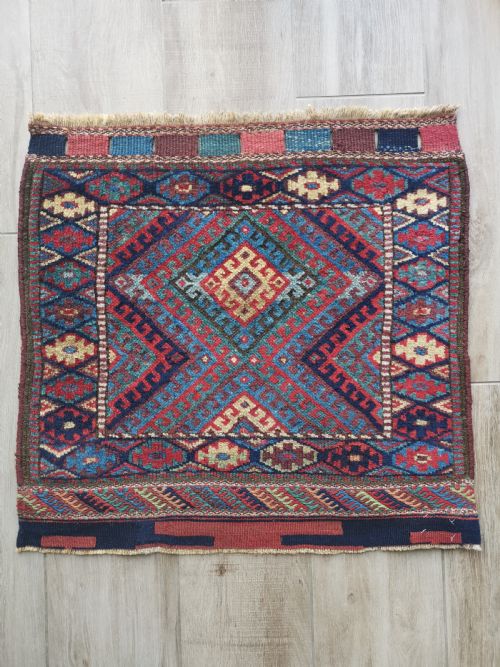
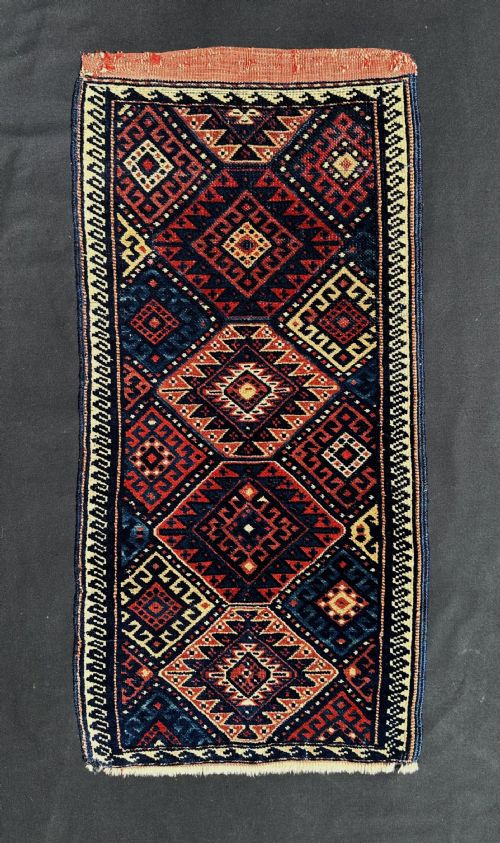


Persian Tribal Textile Fragment
These persian tribal textile fragment examples are woven utilitarian pieces carrying the distinct nomadic artistry of nineteenth and early twentieth century weavers.
Persian Tribal Textile Fragment
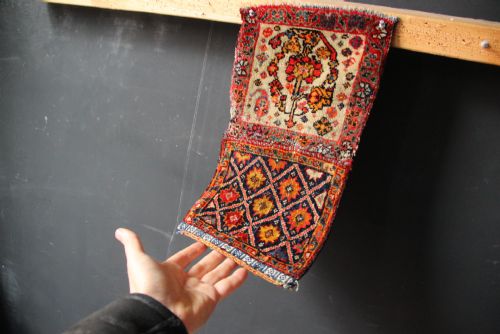
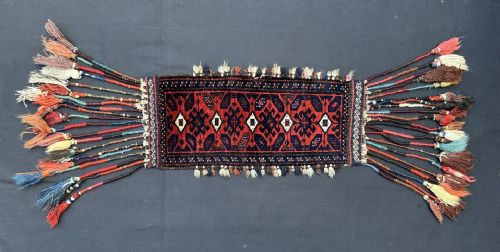
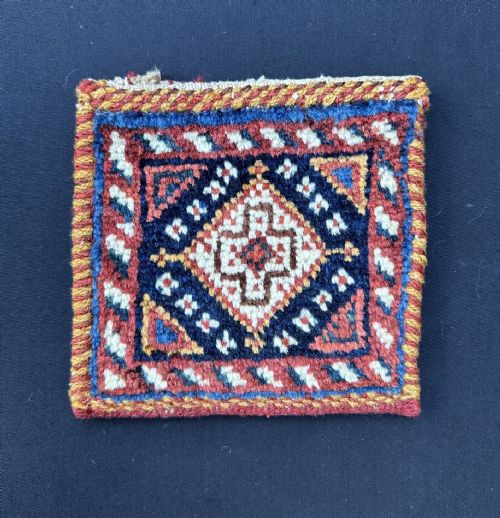
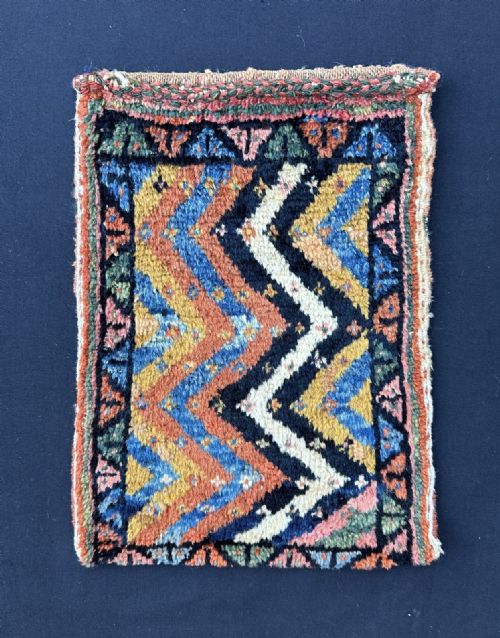
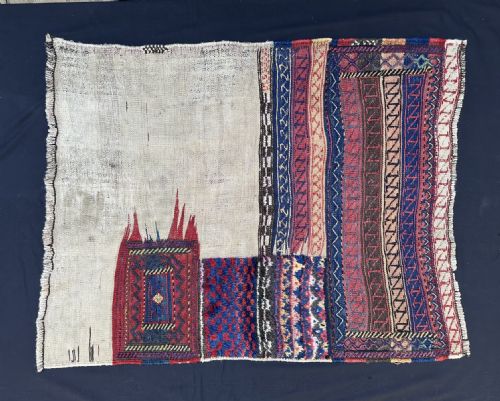
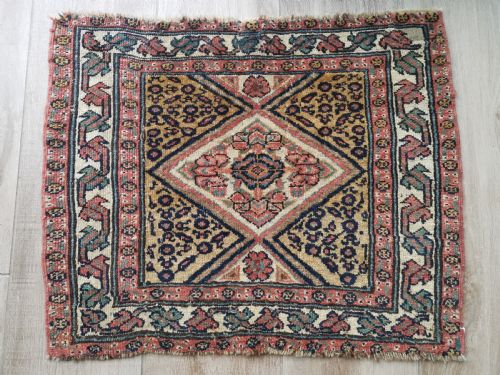
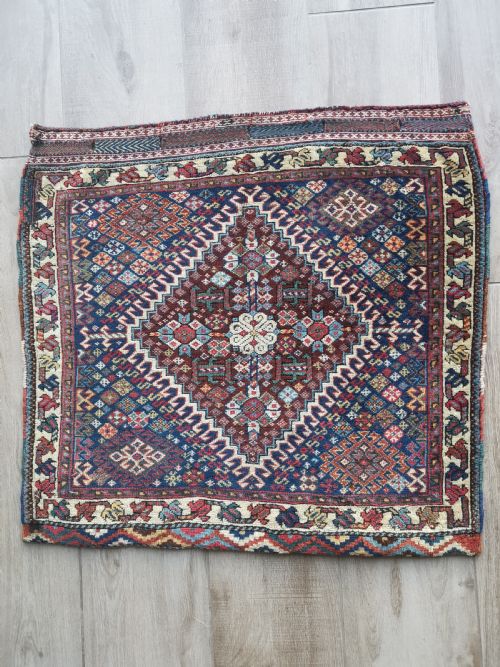
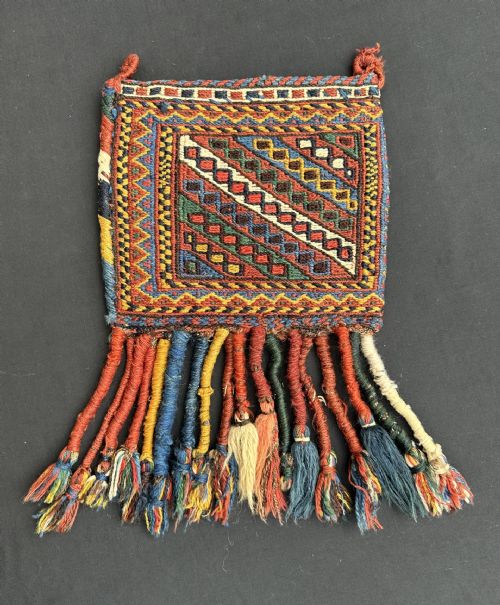
A persian tribal textile fragment brings nomadic village weaving into domestic spaces through surviving segments of utilitarian objects like saddle bags, wheat sacks, and cushion faces. These remnants preserve the traditional designs and practical weaving methods of groups including the Afshar, Qashqai, Baluch, and Shahsavan tribes.
Most pieces seen here originate from the nineteenth century through the early twentieth century, reflecting a period when tribal groups maintained traditional pastoral lifestyles. The selection spans specific regional forms from north-east, south, and western Persia, ranging from complete bag faces to mounted silk jajim panels.
Buyers seek these fragments for their concentrated design work and tactile wool texture, which encapsulate the decorative vocabulary of specific tribal groups in compact formats. They offer an accessible entry point into Persian nomadic weaving traditions without requiring the floor space of a full carpet.
How They Were Made
Weavers utilised hand-spun wool and cotton foundations, often combining plain weave, sumac technique, and hand-knotting depending on the functional requirement of the original object. The structural integrity relied on tight warp and weft tension to endure the daily rigours of nomadic transport.
Colour palettes derived from natural dyes and vegetable dyes, producing earthy tones and luminous hues that soften gracefully over time. The interaction between hand-spun wool fibres and natural dye absorption creates the characteristic depth found across these regional fragments.
Persian Tribal Textile Fragment Retail Price Guide 2026
Typical asking prices for persian tribal textile fragment among the pieces listed under this phrase on Sellingantiques today, from the lower quarter to the upper quarter. They describe what is for sale here now, not the wider market.
Listings feature nineteen-century nomadic weavings produced by tribes including the Afshar, Qashqai, Baluch, Lori-Bakhtiari, and Shahsavan across various Persian provinces.
What Varies in Quality
The standard of a persian tribal textile fragment depends upon the crispness of the tribal design execution and the lustre of the wool utilised in the pile or flatweave. Pieces exhibiting particularly vibrant natural dye palettes and finely spun fibres command greater appreciation among collectors.
Structural preservation and the completeness of the original design field also determine the standing of an individual fragment. Intact borders, clear tribal motifs like boteh or geometric tile patterns, and careful mounting elevate the piece as an authentic textile art object.
The Persian Tribal Textile Fragment Glossary
- Khorjin
- A traditional nomadic double saddlebag used for transport on animals, of which surviving faces are the most common fragments encountered. These items formed an essential part of daily tribal life before being separated from their original pairing.
- Sumac
- A warp-wrapping flatweave technique that creates a durable, structurally distinct surface texture often utilised by Shahsavan weavers. This method allows for crisp geometric patterning without the use of a cut pile.
- Boteh
- A stylised almond or paisley motif with a curved upper end frequently appearing in Afshar and other tribal designs. The symbol carries deep roots in Persian textile decoration.
- Jajim
- A flatwoven textile traditionally used as a cover or bedding band, sometimes constructed from silk or wool stripes. These colourful banded panels demonstrate alternative nomadic weaving skills beyond knotted pile carpets.
- Tacheh
- A specific type of large storage sack or wheat-sack produced by Lori-Bakhtiari nomads for household utility. They often feature bold geometric arrangements suited to large-scale grain storage.
Persian Tribal Textile Fragment: Frequently Asked Questions
What is a tribal textile fragment?
A persian tribal textile fragment is a surviving piece of a larger nomadic item, such as a saddlebag, wheat sack, or cushion face. These remnants are salvaged from worn utilitarian objects to preserve the artistic weaving and natural dyes.
Collectors frame or display these pieces as textile art to appreciate the compact geometric designs and regional motifs of specific Persian tribes.
How were these bags used?
Nomadic tribes utilised these woven containers for practical storage and transport during seasonal migrations. Items like the khorjin carried personal belongings on pack animals across the provinces of Persia.
Over decades, heavy wear on the lower sections often left only the front face intact, which was subsequently preserved for its aesthetic qualities.
How do I identify different tribes?
Regional identification relies on observing distinct design vocabularies, structural weaves, and colour combinations associated with specific groups. For instance, Afshar and Qashqai pieces often display particular floral or geometric medallions.
Examining the handling of hand-spun wool and the specific flatweave or knotting technique further helps localise the origin to areas like Kerman or Fars.
How should I display a fragment?
Many collectors choose professional textile mounting and framing behind conservation-grade glass to protect fragile wool and cotton fibres from dust and handling. This method supports the weight evenly and prevents distortion of the weave.
Alternatively, smaller fragments can be placed on designated flat surfaces or curated within textile displays away from direct sunlight.