

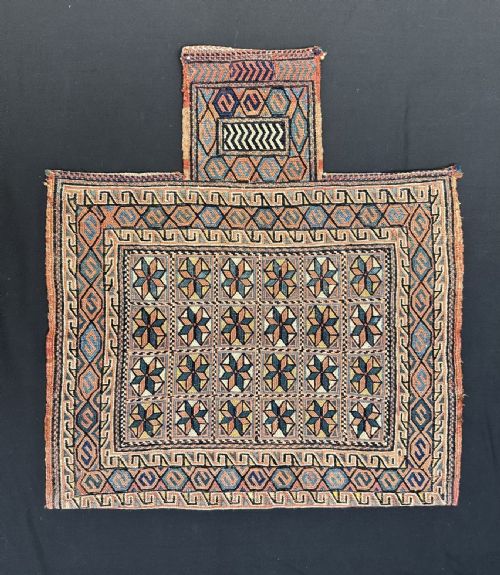


Geometric Persian Wool Bag
When you handle a geometric persian wool bag, you hold a piece of nomadic daily life woven with tribal patterns that practical people carried across the highlands.
Geometric Persian Wool Bag
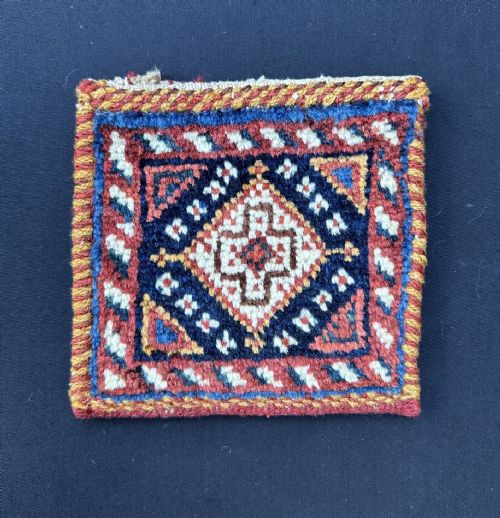
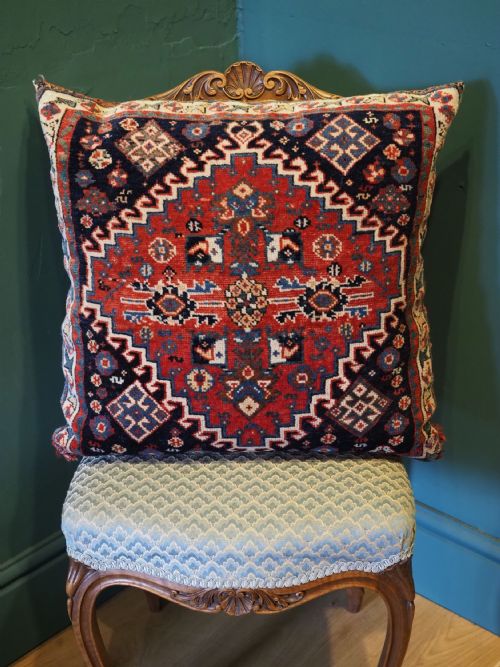
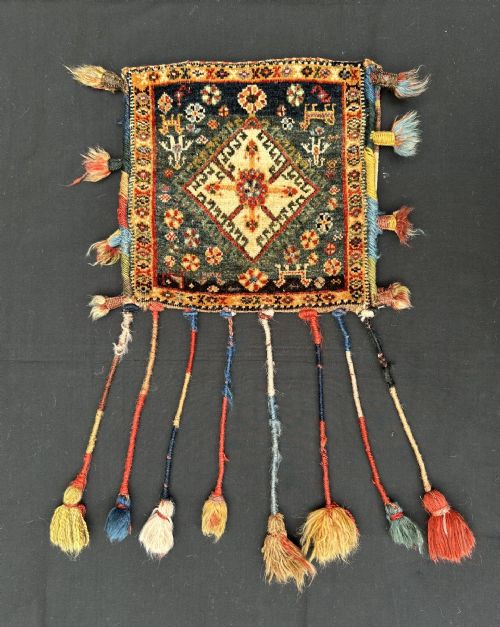
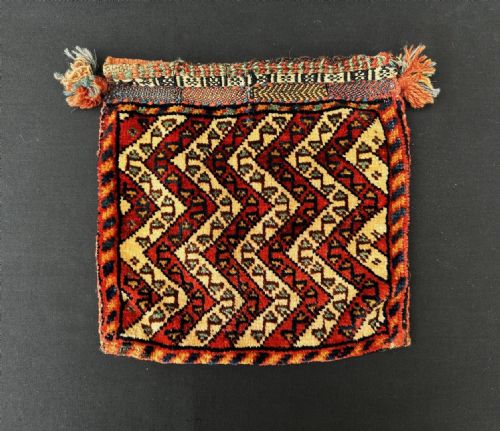
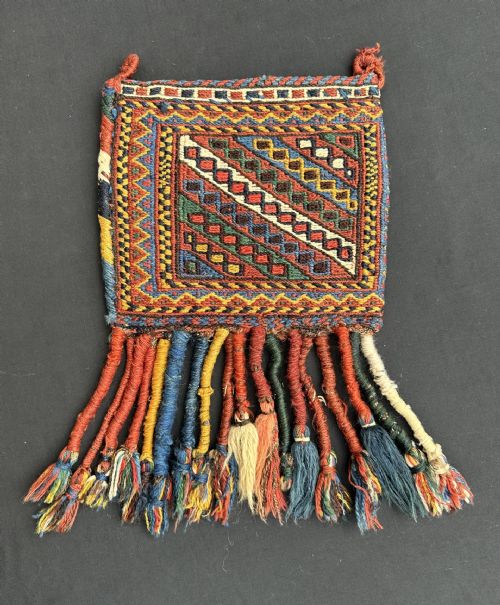
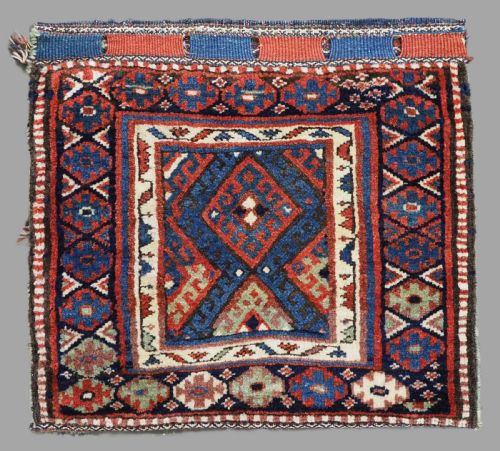
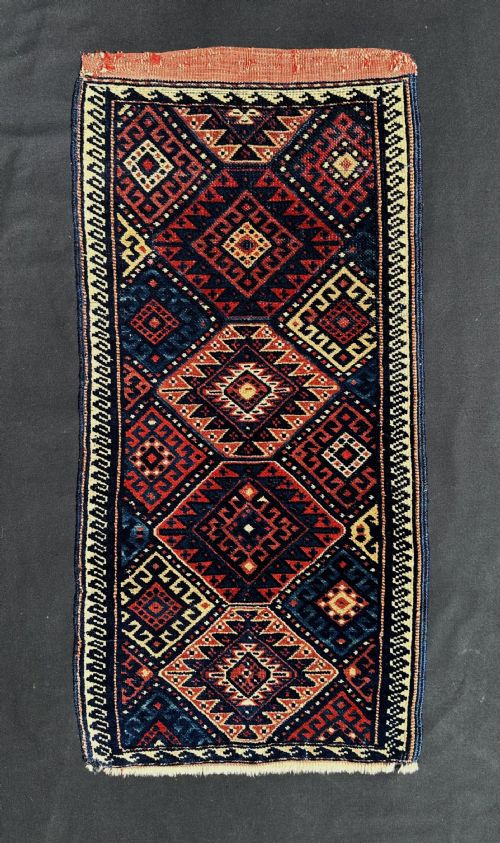
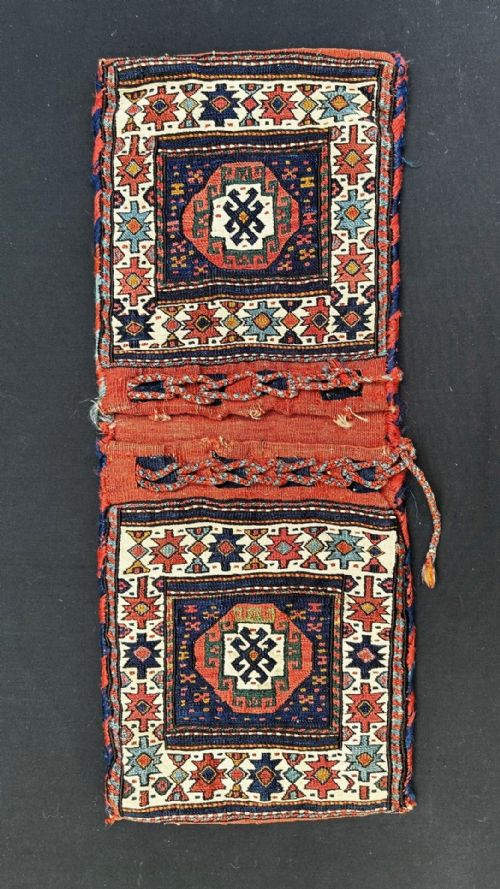
A geometric persian wool bag encompasses utility pieces woven by tribal and nomadic groups across Persia, ranging from complete saddlebags and storage pouches to individual bag faces and salt-bags. These items served practical roles in camp life and transport, often transformed into cushions or decorative wall pieces today.
You will most frequently encounter nineteenth-century vanity-bags, saddlebag faces, and storage pouches originating from tribes such as the Qashqa'i, Afshar, Shahsavan, and Kurdish groups. These pieces typically display structured geometric medallions, lattice motifs, and repeating tribal symbols woven by hand in regional wool.
How they were made
The makers utilised hand-spun wool for the pile and foundation, combining it with cotton for specific structural elements in certain regional weaves. Natural dyes provided the deep palette of reds, blues, and earth tones seen across the textiles.
Weaving techniques included standard knotting alongside flat-woven soumak work and soumac methods, which created crisp linear geometry and textured surfaces without a pile. These construction methods allowed the bags to endure the heavy friction of nomadic transit.
Geometric Persian Wool Bag Retail Price Guide 2026
Typical asking prices for geometric persian wool bag among the pieces listed under this phrase on Sellingantiques today, from the lower quarter to the upper quarter. They describe what is for sale here now, not the wider market.
Object forms span complete saddlebags, storage pouches, salt-bags, and vanity-bags attributed to tribes across Persia.
What varies in quality
Quality rests upon the handled quality of the wool, where a lustrous and supple handle indicates better fleece selection and preparation. Dyes derived from natural sources show greater depth and harmonious ageing compared to harsher chemical alternatives.
The precision of the geometric drawing and the tightness of the knotting or soumak technique reveal the weaver's skill. Pieces retaining their original plain-weave backs or complete structures hold higher integrity than isolated bag faces.
Afshar Tribes·Shahsavan Nomads·Baluch Salar Khani·Jaf Kurd
The Geometric Persian Wool Bag Glossary
- Soumak
- A flat-weave technique where coloured weft threads wrap around the warp threads in a continuous brocade-like manner. This method produces a durable fabric with a smooth face and loose floating threads on the reverse.
- Khorjin
- The traditional Persian term for a double saddlebag used by nomadic groups for transport. These items were designed to be slung over pack animals to carry personal possessions.
- Balisht
- A pillow or small cushion bag face produced by tribal weavers for domestic use inside tents. They share the structural motifs of larger storage pieces but are scaled for smaller domestic furniture.
- Tubreh
- A specific term for a small hanging bag or feed bag utilised within nomadic settlements. They often feature distinct regional banding and concentrated geometric symbolism.
- Medallion
- A central decorative motif placed in the field of the textile, acting as the focal point for the surrounding tribal geometry. These designs often reflect the specific tribal identity of the maker.
Geometric Persian Wool Bag: Frequently Asked Questions
What were these bags used for originally?
Nomadic tribes utilised these containers for practical storage during seasonal migrations, carrying salt, grain, personal items, or household goods on pack animals.
They formed an essential part of daily equipment, constructed to withstand the dust and wear of travel across rugged terrain.
How do I care for an antique wool bag?
Keep the textile out of direct sunlight to prevent the natural dyes from fading over time. Gentle vacuuming with a low-suction attachment helps remove dust without damaging the weave.
Avoid using water or chemical cleaners on historic wool, and consult a specialist textile conservator if deeper cleaning becomes necessary.
How can I tell different tribal designs apart?
Tribal groups employed distinct palettes, structural proportions, and characteristic geometric motifs passed down through generations. For instance, Shahsavan pieces frequently display crisp soumak work, whilst Qashqa'i examples often utilise rich madder reds and detailed polygon arrangements.
Examining the specific wool quality, knotting structure, and regional border designs helps narrow down the probable origin.
Can I use a bag face as a floor rug?
Bag faces were originally designed as containers rather than floor coverings, meaning their foundation structures and pile density vary. While some sturdy pieces handle light foot traffic, placing delicate or flat-woven items on walls or furniture preserves them better.
Using a suitable underlay helps stabilise smaller pieces if placed where people walk.