





South Persian Bag Face
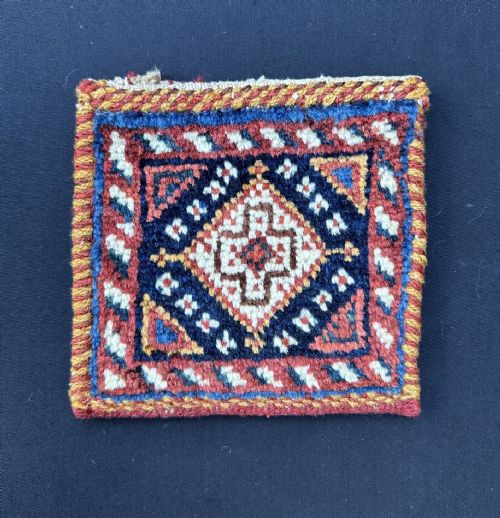
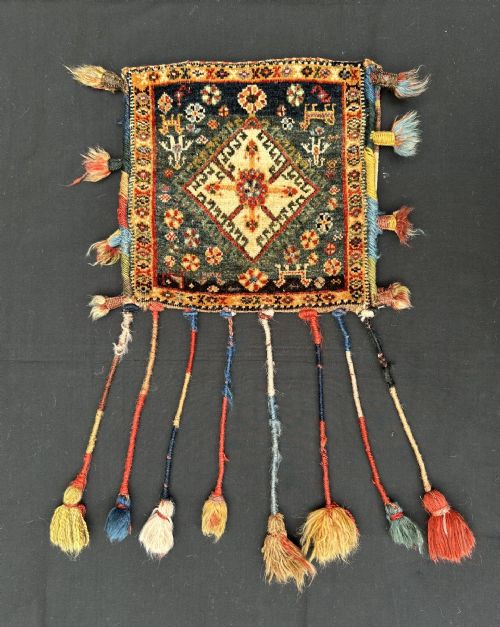
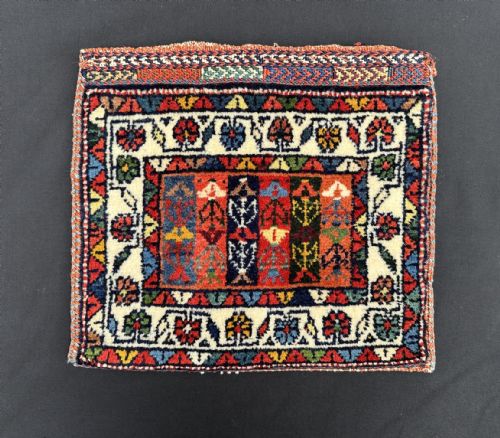
These south persian bag face examples are vibrant tribal weavings, prized by collectors for their rich iconography and nomadic utility.
South Persian Bag Face
A south persian bag face represents the front panel of a utilitarian nomadic container, such as a saddlebag or storage bag, preserved as a flat textile. When you examine a south persian bag face on this page, you encounter fragments originating from confederations like the Qashqa'i, Afshar, and Khamseh tribes.
The forms range from vanity bags and half-saddlebags to larger saddle bag faces featuring central medallions or boteh motifs. These pieces originate predominantly from the Fars and Kerman provinces, dating from the mid-nineteenth century up to the early twentieth century.
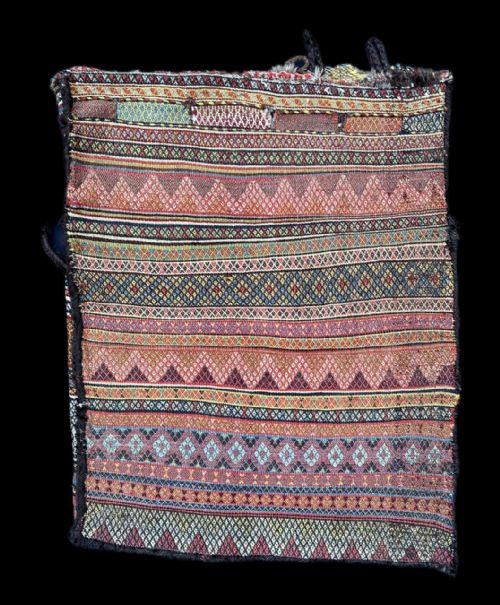
Tribal weavers utilised these textiles for daily transport and storage within nomadic encampments before the decorative panels were separated from their original woollen backs. The surviving formats demonstrate the distinct regional aesthetics of South-West Persia.
Materials and Construction
The structural foundation relies on hand-spun wool and cotton, forming the dense warp and weft threads that support the knotted pile. Weavers in these southern regions employed natural dyes to colour the fleece, yielding deep tones that anchor the geometric compositions.
The hand-knotted pile creates the tactile surface characteristic of these tribal weavings, executed with local wool known for a lustrous finish. Artisans worked within traditional tribal layouts, passing down specific patterns through generations without written drafts.
South Persian Bag Face Retail Price Guide 2026
Typical asking prices for south persian bag face among the pieces listed under this phrase on Sellingantiques today, from the lower quarter to the upper quarter. They describe what is for sale here now, not the wider market.
Nomadic weavers occasionally inserted deliberate small errors into geometric borders to ward off the evil eye.
Evaluating Quality in Tribal Weavings
The distinction between average and exceptional pieces rests upon the quality of the wool and the depth of the natural dyes. Lustrous, supple fleece retains its visual resonance over decades, whereas inferior wool can appear flat or dry.
Knot density and precision of execution also differentiate the work, as tighter knotting allows for sharper delineation of intricate motifs like medallions and boteh designs. The harmony and saturation of the palette further elevate certain examples above standard utilitarian items.
Afshar Tribes·Bolvardi Sub-Tribe
The South Persian Bag Face Glossary
- Boteh
- A stylised floral motif resembling a pear or almond, frequently utilised in tribal weavings. This ancient design appears across many southern Persian carpet traditions.
- Khorjin
- The traditional Persian term for a double saddlebag used by nomads for transport. Complete examples feature two pouches joined by a central web.
- Medallion
- A central decorative emblem placed in the field of the textile. It serves as the visual anchor for the surrounding geometric ornamentation.
- Confederation
- A political and social grouping of nomadic tribes in Persia, such as the Qashqa'i. These groups shared distinct weaving styles and regional palettes.
- Warp
- The stationary vertical threads stretched upon a loom that provide the foundation of the rug. Weft threads are interlaced across these longitudinal cords.
South Persian Bag Face: Frequently Asked Questions
What is a bag face?
A bag face is the decorative front panel of a nomadic storage or transport bag, preserved after the plain back has worn away or been removed.
These panels were woven by tribal groups for practical use in camps, utilising durable materials designed to withstand harsh conditions.
How do I hang a bag face?
Many collectors mount these textiles on a fabric sleeve or display them flat against a wall using conservation-grade clips.
Ensure the hanging method distributes the weight evenly across the upper edge to prevent distortion of the woollen foundation.
How do I date these pieces?
Dating relies on stylistic analysis, structural traits, and the presence of natural dyes rather than written documentation.
Pieces from the nineteenth century often exhibit specific palette shifts and looser, more expressive tribal motifs compared to later twentieth-century work.
Are these pieces made with natural dyes?
The listings here feature traditional natural dyes derived from local plants and minerals, creating harmonious and saturated hues.
Over time, these dyes age gracefully, developing a subtle patina that distinguishes them from later synthetic colorants.