




Persian Khorjin Bag
When you search for a persian khorjin bag, you seek a woven nomadic carrier that translates tribal identity into intricate geometric art.
Persian Khorjin Bag
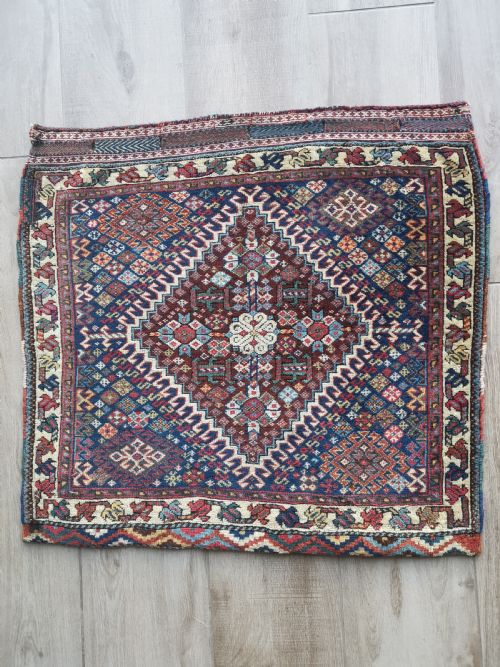
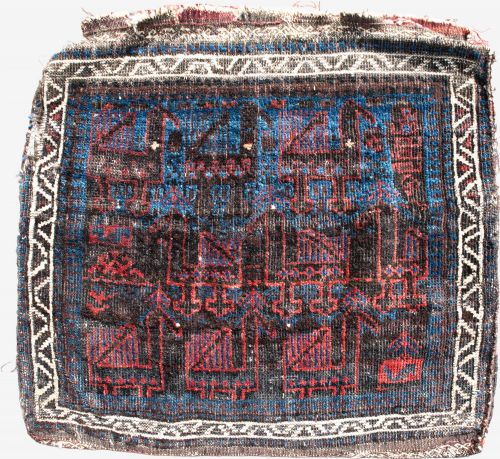
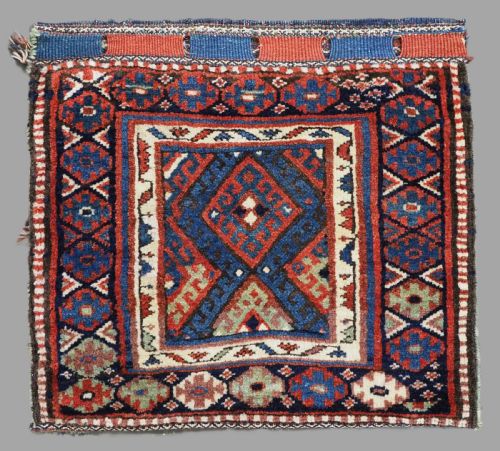
A persian khorjin bag is a traditional double saddlebag or single bag face woven by nomadic and village groups across Persia. These pieces served practical roles in daily pastoral life, used for transporting possessions on horseback, camel or donkey.
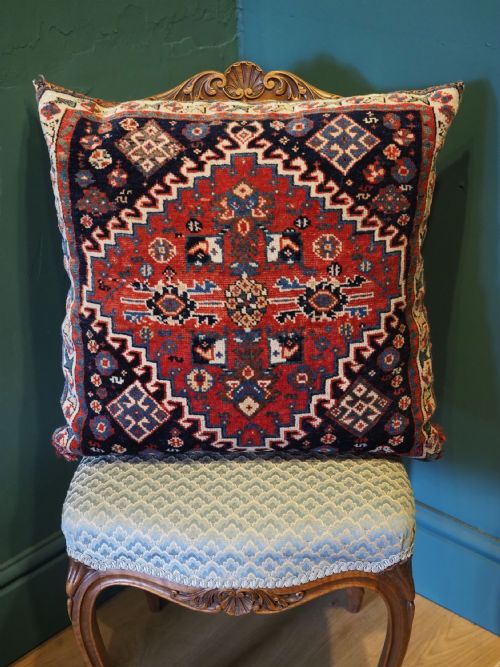
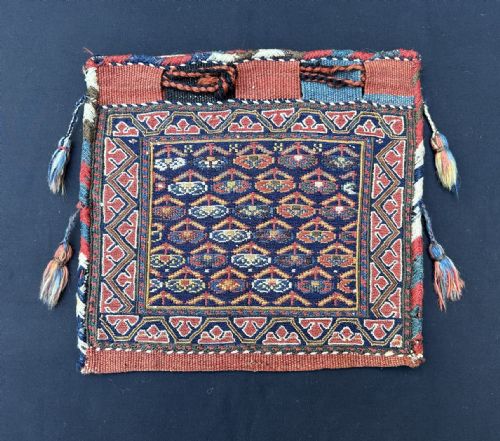
The selections available here range from complete double sets with their original plain-weave backs intact to individual bag faces, often subsequently mounted as cushions. Tribal groups such as the Qashqai, Afshar, Shahsavan, Jaf Kurd and Baluch produced these distinctive textiles during the nineteenth and early twentieth centuries.
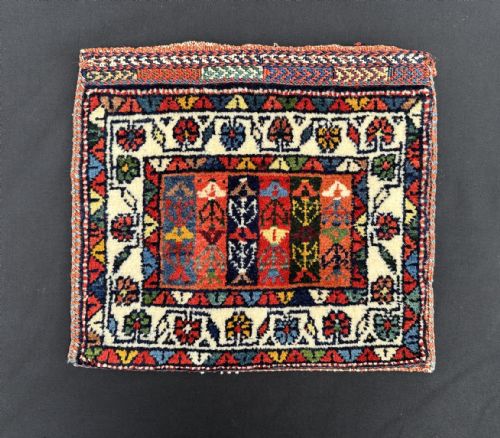
Collectors encounter various formats including small personal vanity bags, known as chantehs, alongside larger storage containers and saddlebag faces. Each weaving group brought specific regional motifs, palette choices and structural weaves to their khorjin production.
Materials and Construction
Weavers constructed these pieces using hand-spun wool for the pile and foundation, often supplemented by cotton foundations and goat hair edges for added durability against friction during travel. Natural dyes provided the rich palette of reds, blues and earthy tones seen across the surviving examples.
Techniques varied between piled knotted knotting and flatwoven structures like soumac or plain weave, sometimes incorporating cowrie shells and leather reinforcements. The structural integration of sturdy backs ensured the original bags could endure the rigours of nomadic migration.
Nomads occasionally stitched cowrie shells onto their bags to ward off the evil eye while travelling through remote mountain passes.
Evaluating Quality and Execution
Quality in these woven pieces rests upon the fineness of the knotting or precision of the flatweave, alongside the clarity of the drawing and geometry. Tighter structures and finely spun wool allow intricate motifs like boteh patterns, central medallions and tile designs to maintain sharp definition.
The saturation and depth of the natural dyes greatly influence the visual impact of a piece, with complex abrasash adding subtle tonal shifts across the field. Preserved completeness, such as retaining original plain weave backs or side finishes, elevates the historical integrity of the item.
The Persian Khorjin Bag Glossary
- Khorjin
- The Persian term for a double saddlebag utilised by nomadic tribes for transport and storage. These textile items are frequently separated over time into individual bag faces.
- Chanteh
- A small personal vanity bag or container woven by tribal groups for carrying small belongings. They often feature highly condensed versions of larger tribal carpet designs.
- Soumac
- A wrapping technique of flatweaving that produces a durable textile without a piled surface. This method creates characteristic raised patterns resembling braided rope.
- Bag face
- The decorative piled or flatwoven front of a saddlebag, separated from the plain back panel. Many survive independently after the structural joining panels wore away.
- Abrasash
- Variations in colour hue caused by changes in dye batches or hand-spun wool supplies. This characteristic indicates the use of natural dye methods.
Persian Khorjin Bag: Frequently Asked Questions
What is a khorjin bag?
A khorjin is a traditional double saddlebag woven by Persian nomadic tribes for practical transport during seasonal migrations. They functioned as durable containers for household goods.
Today, collectors appreciate them for their dense tribal iconography and vegetable-dyed wool construction.
How were these bags used?
Nomadic families draped these double bags across the backs of pack animals to carry grain, clothing and personal belongings. The sturdy construction protected contents from weather and constant motion.
Many surviving examples have been separated into single bag faces or adapted into decorative cushions for domestic interiors.
How do I identify tribal origins?
Tribal attribution relies on specific structural characteristics, wool qualities and distinctive design repertoires associated with regions like Fars, Kerman or Luristan. For instance, Afshar pieces often display boteh motifs, while Shahsavan items frequently utilise soumac techniques.
Palette choices and border arrangements also provide strong indicators of the specific weaving group.
How should I care for a textile bag?
These wool and natural fibre textiles require gentle treatment, avoiding direct sunlight to prevent natural dye fading. Regular light vacuuming with a suction-only attachment keeps dust from settling in the foundation.
Professional textile conservators should handle any deep cleaning or structural mounting requirements.