



Period Walnut Cupboard
A period walnut cupboard brings rich grain and deep colour to a room, offering timeless storage rooted in centuries of fine cabinet-making.
Period Walnut Cupboard
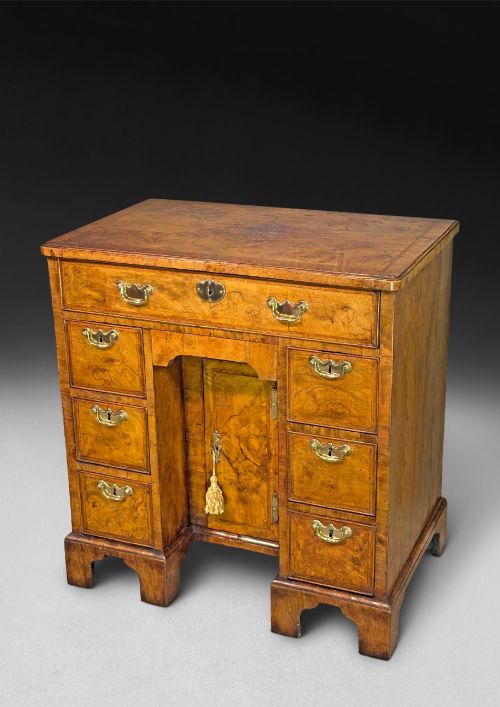
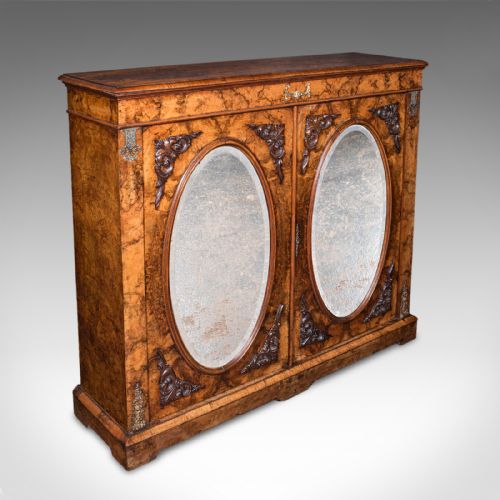
The selection includes specialised variations such as kneehole desks, cabinets on chests, and side cabinets influenced by William and Mary, Queen Anne, and Baroque styles. These functional items reflect the evolving interior storage needs of past centuries.
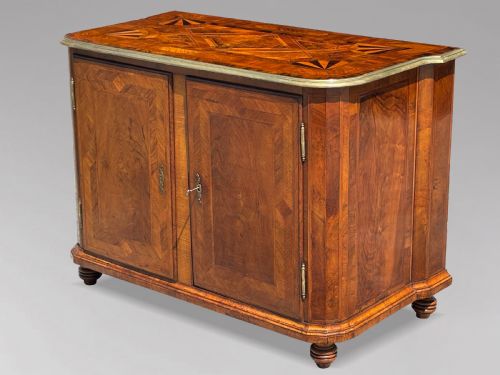
Origins span English, Dutch, Italian, and Maltese workshops, demonstrating distinct regional approaches to marquetry, oyster veneering, and architectural joinery. Each piece carries the distinct characteristics of its original era.
How they were made
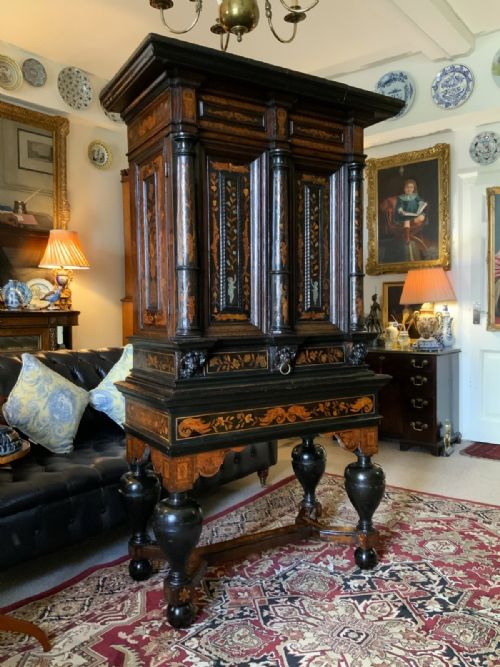
Cabinet-makers utilised solid woods like oak and walnut as sturdy structural carcasses, applying finely figured walnut, burr walnut, and olive wood veneers to visible exterior surfaces. Marquetry inlay, pewter stringing, and boxwood details frequently enriched the visual composition of Baroque and William and Mary pieces.
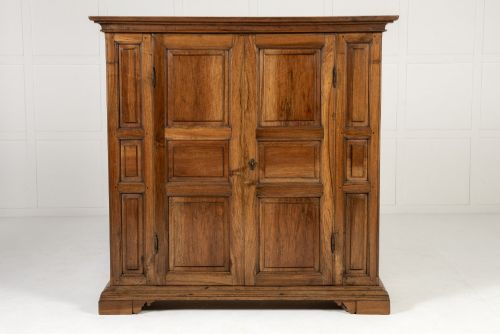
Construction techniques relied on traditional joinery, dovetailing, and careful timber selection to accommodate the natural movement of wood over time. Brass and ormolu hardware, including hinges, escutcheons, and drop handles, completed the construction of doors and drawers.
Listings feature walnut, burr walnut, oak, olive wood, and ormolu across 17th Century, Georgian, Regency, and 1880 periods.
What varies in quality
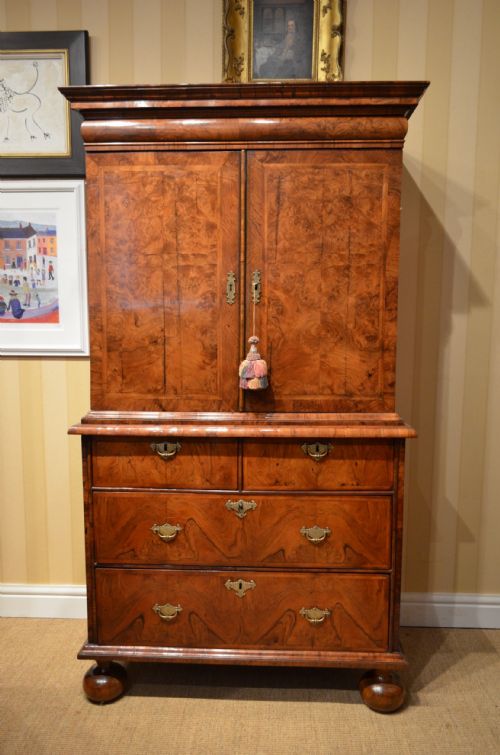
The distinction between tiers of quality rests upon the selection and matching of grain patterns, particularly in burr and oyster veneered surfaces. Superior examples display harmonious figure alignment across panels and drawers.
Depth of carving, precision of marquetry inlay, and the integrity of original brass hardware elevate certain pieces above standard utilitarian furniture. The sophistication of the underlying carcass construction and joinery further determines the standing of a cabinet.
The Period Walnut Cupboard Glossary
- Oyster veneer
- Small, circular slices cut across branches or small trunks of walnut or olive wood to create a repeating oyster-shell pattern on cabinet surfaces. This decorative technique is especially characteristic of late 17th-century furniture.
- Cabinet on stand
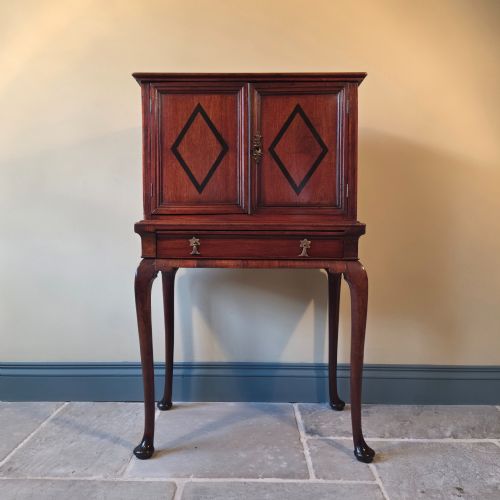
- A freestanding storage compartment raised upon a distinct supporting frame or legs. This form showcases elaborate veneering and joinery.
- Marquetry
- Decorative patterns formed by fitting together small pieces of veneer, sometimes incorporating pewter, boxwood, and exotic woods. It creates elaborate pictorial or geometric designs on the exterior of casework.
- Burr walnut
- Wood harvested from the grotesque growths or burls of walnut trees, prized for its swirling, highly figured grain patterns. It was extensively utilised for prominent decorative panels.
- Kneehole desk
- A compact writing desk featuring a central recessed space for the legs, flanked by pedestals of small drawers. Georgian examples often combine walnut veneers with fine brass pulls.
Period Walnut Cupboard: Frequently Asked Questions
What is a cabinet on stand?
A cabinet on stand is a two-part furniture form comprising an enclosed upper storage section elevated on a distinct supporting base with legs.
This form evolved to display fine veneers and marquetry at an elevated height, keeping the contents away from damp floors.
How do I identify William and Mary furniture?
William and Mary pieces date roughly from the late 17th century and often feature oyster veneers, geometric marquetry, and trumpet-shaped legs.
They emphasise architectural proportions and intricate surface patterns rather than heavy carving.
Where were corner cupboards placed?
Corner cupboards were designed to fit neatly into the corner of a room, maximising floor space while providing display or storage.
Georgian rooms utilised these architectural pieces to store porcelain, glassware, or documents.
What is burr walnut?
Burr walnut is timber taken from a tree growth that produces highly turbulent, swirling grain patterns rather than straight lines.
Cabinet-makers sliced this wood into thin veneers to create striking decorative panels on doors and drawer fronts.