



Small Wooden Cabinet on Legs
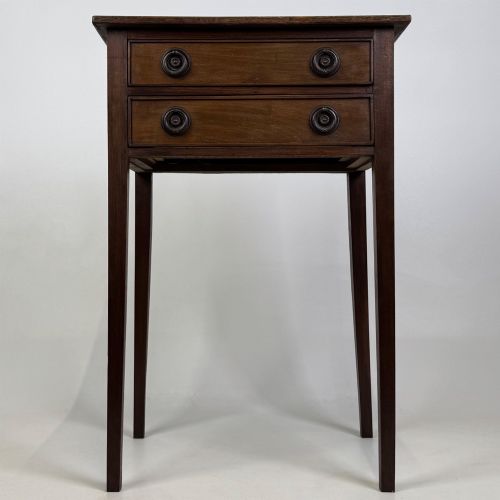
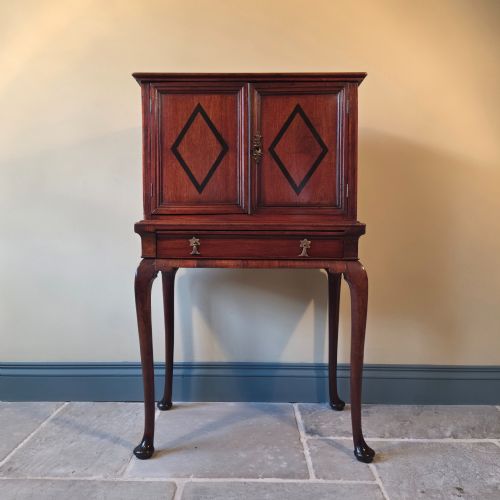
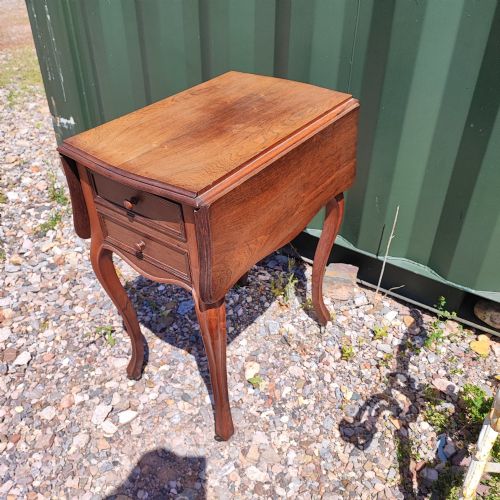
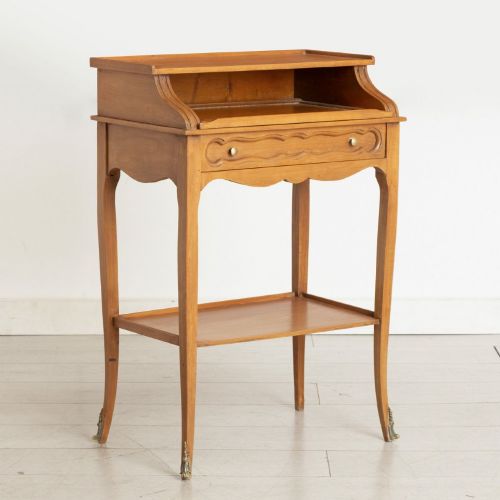
A small wooden cabinet on legs brings compact storage and architectural presence to a room, ranging from Georgian bedside tables to French commodes.
Small Wooden Cabinet on Legs
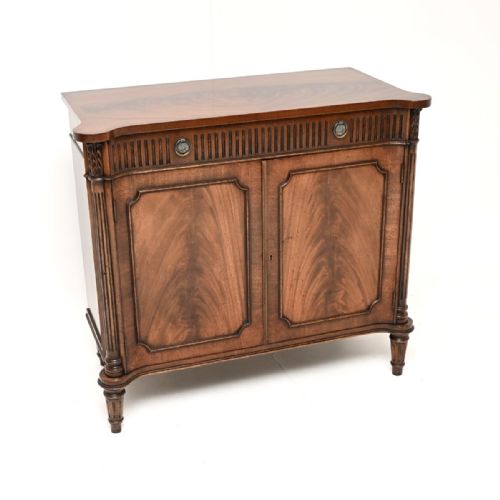
A small wooden cabinet on legs provides elevated storage within a compact footprint, uniting utility with decorative joinery. When searching for a small wooden cabinet on legs, buyers encounter forms such as bedside tables, diminutive commodes, cabinets on stands, and small sideboards.
The pieces span several centuries, including 18th century examples, Georgian items, Victorian designs, and 20th century pieces. Origins extend across English workshops and French provincial makers, alongside styles like Edwardian, Regency, and Louis XV.
Functional pieces take the shape of lamp tables, writing desks, and nightstands with drawers or doors. Each variation serves a domestic purpose, whether housing bedside essentials or displaying curated collections.
How they were made
Cabinet makers utilised dense hardwoods such as mahogany, walnut, and oak for structural integrity and longevity. Finer examples incorporate fruitwood, satinwood, and yew wood for decorative surfaces and contrasting grain patterns.
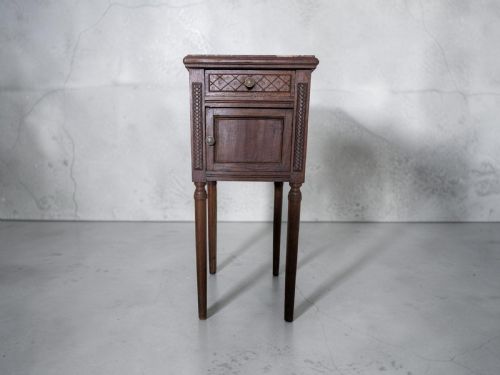
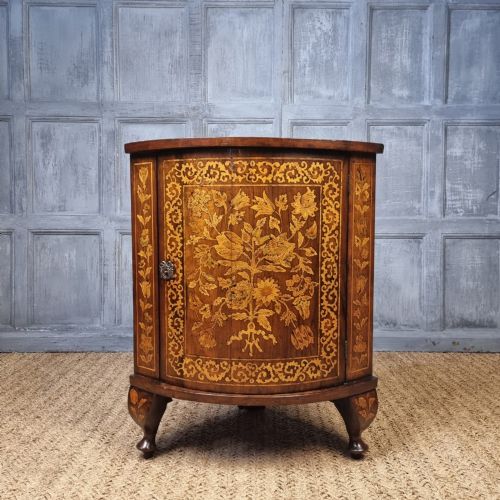
Surface embellishment relied on techniques like marquetry, quarter veneering, and fine inlay work using brass or lighter woods. Tops frequently feature inset marble slabs, particularly on French commodes and bedside cabinets from the nineteenth century.
Materials span mahogany, walnut, oak, fruitwood, satinwood, yew, and marble across 18th, 19th, and 20th century periods.
What varies in quality
The refinement of timber selection dictates visual appeal, with master makers choosing figured mahogany, burr walnut, and rich fruitwood grains. Superior pieces demonstrate meticulous attention to matching veneer patterns across drawer fronts and doors.
Joinery execution separates standard utilitarian items from exceptional commissions. Crisp dovetailing in drawers, precise inlay work, and balanced proportions on raised legs define the upper tier of craftsmanship.
The Small Wooden Cabinet on Legs Glossary
- Bow front
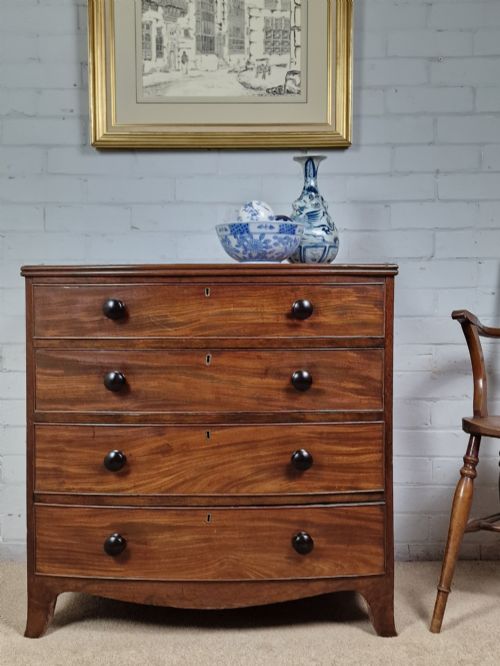
- A convex, curved front section typical of Georgian sideboards and chests of drawers. This curved profile softens room angles while maximising internal capacity.
- Commode
- A low chest of drawers or cabinet originating in France, frequently fitted with a marble top. These pieces combine decorative hardware with enclosed storage.
- Marquetry
- The art of applying decorative pieces of veneer to a structure to form intricate designs or pictures. Craftsmen utilise various coloured woods to achieve pictorial depth.
- Tambour
- A sliding surface made of narrow wooden slats glued to a canvas backing, allowing doors to curve around cabinet corners. This mechanism conceals interior compartments smoothly.
- Quarter veneering
- A technique where four matching slices of figured wood veneer are arranged symmetrically to create a mirror-image pattern. This method highlights natural grain movement.
Small Wooden Cabinet on Legs: Frequently Asked Questions
Where should I place a small wooden cabinet on legs?
These compact pieces fit easily beside a bed, in a hallway, or as an accent beside a seating arrangement. Their elevated legs maintain a sense of open floor space in smaller rooms.
They also function effectively as lamp tables or occasional surfaces where surface area is required without heavy furniture dominating the floor plan.
How do I identify a Georgian piece?
Georgian items often feature straight-grained mahogany, bow fronts, and restrained proportions with classical bracket or tapering legs. Construction relies on hand-cut dovetails and solid secondary timbers.
Design emphasis rests on architectural harmony and proportion rather than heavy surface ornamentation.
What is the difference between a commode and a bedside cabinet?
A commode generally denotes a lower, wider chest of drawers or cabinet, frequently featuring an imported marble top and French styling. They served formal reception rooms or bedrooms.
Bedside cabinets are typically narrower, designed specifically to stand beside a bed to hold lighting and nighttime necessities.
How do I care for antique wood surfaces?
Maintain timber with traditional beeswax applied sparingly and buffed gently with a soft cloth to nourish the grain. Avoid synthetic sprays and keep furniture away from direct heat sources.
Protect marble tops on French pieces from acidic liquids to preserve the polished stone finish.