

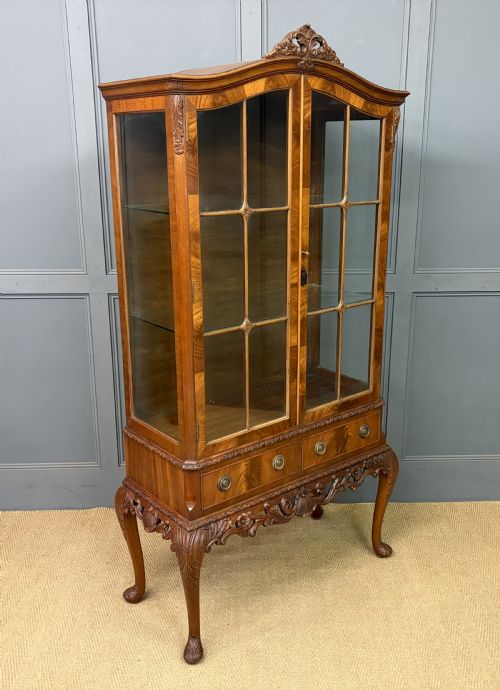
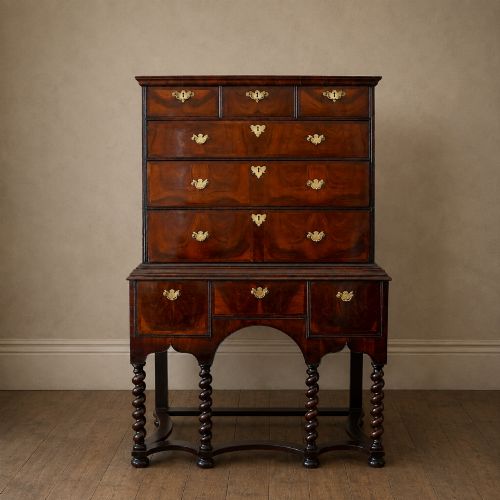
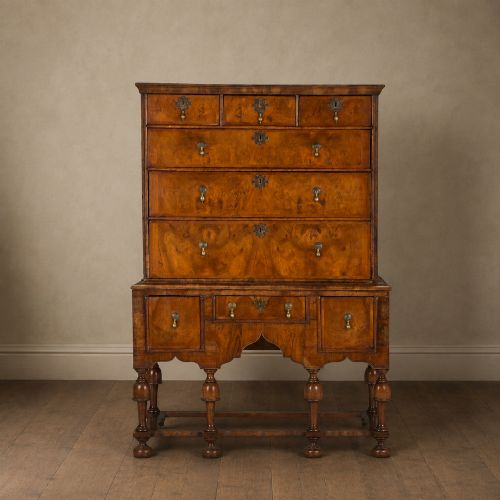
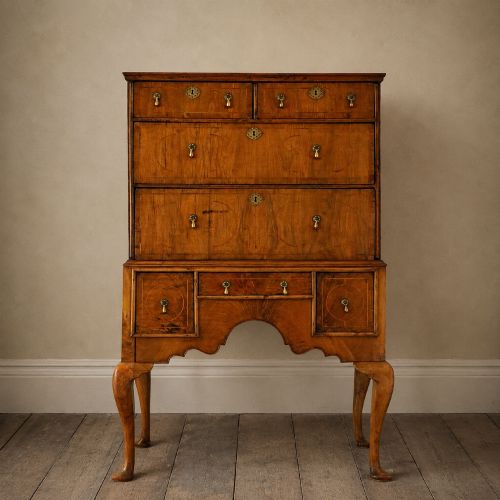
Queen Anne Cabinet on Stand
A queen anne cabinet on stand pairs elevated display with deep internal drawers, offering a commanding presence built for serious storage.
Queen Anne Cabinet on Stand
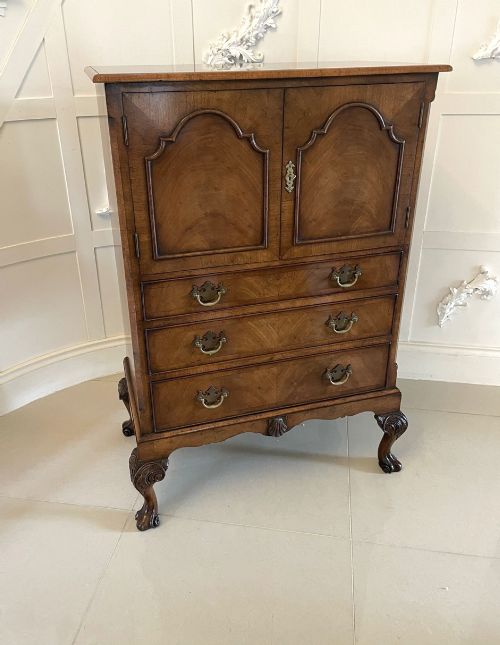
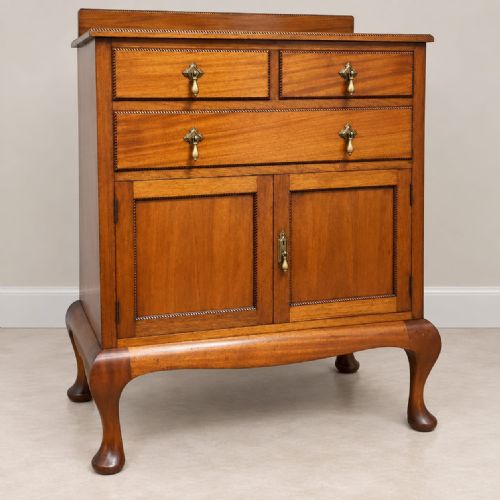
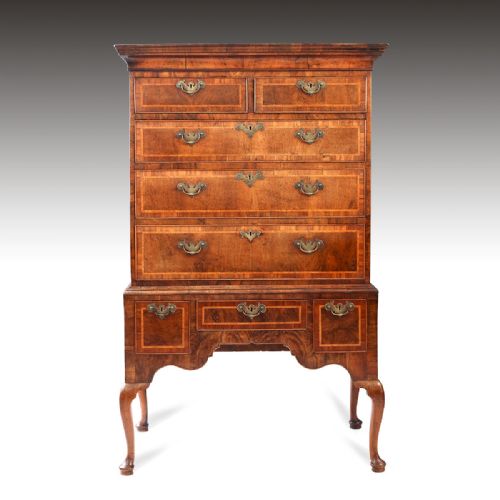
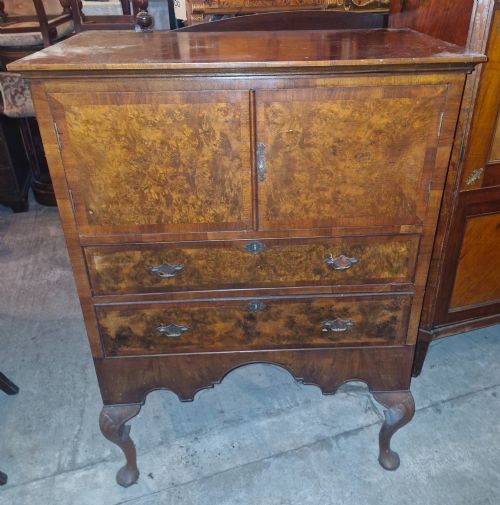
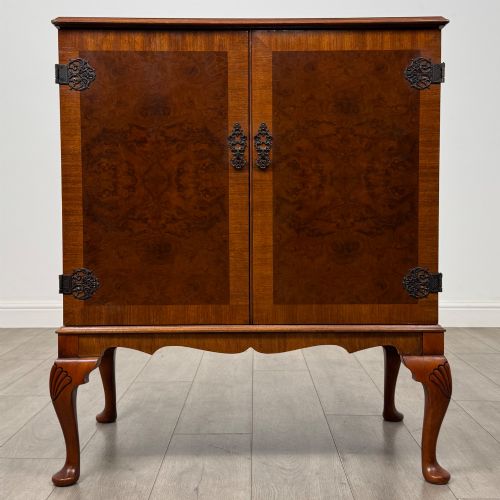
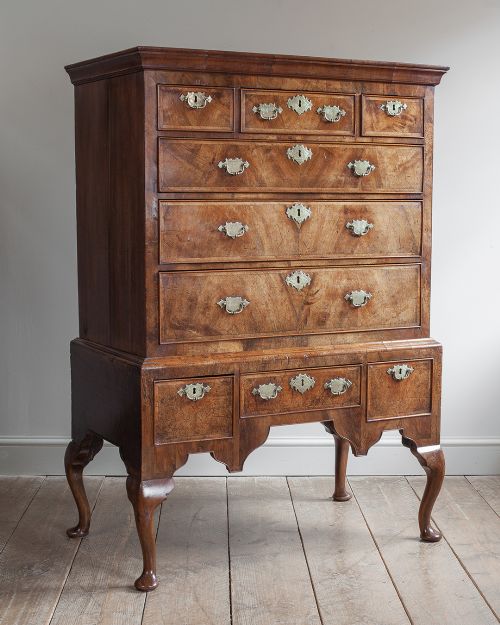
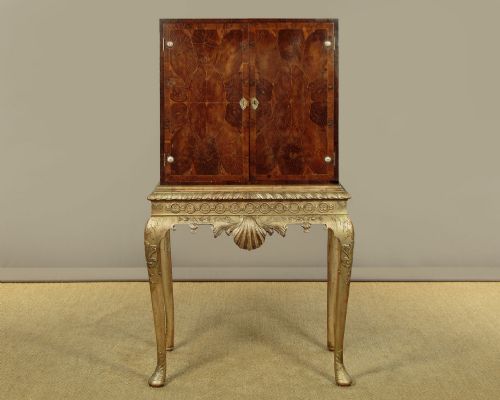
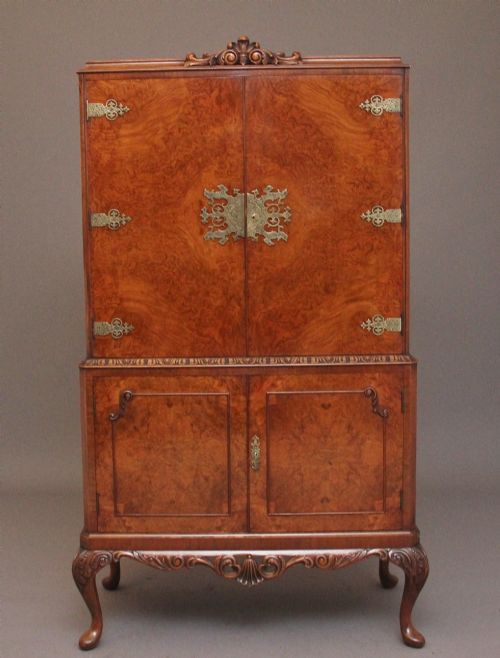
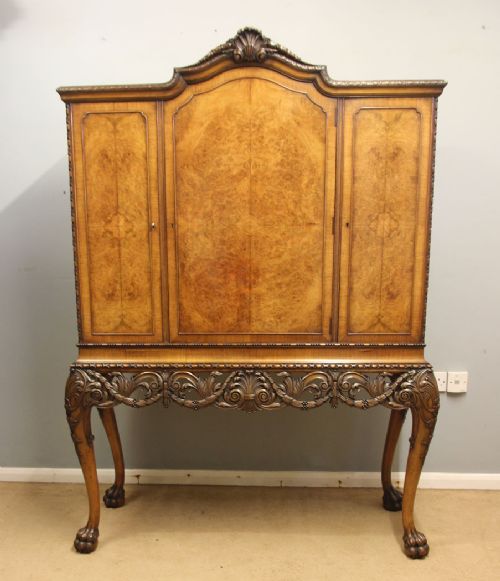
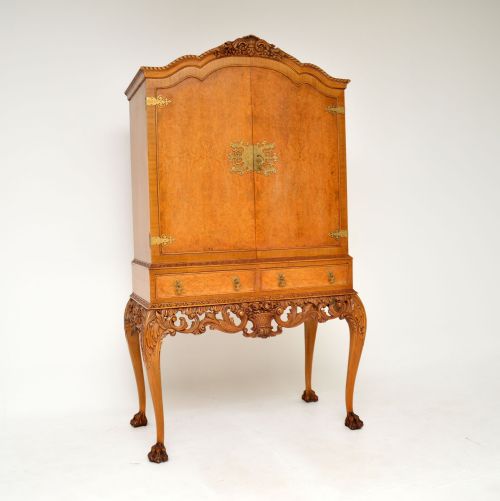
When you search for a queen anne cabinet on stand, you encounter a dual-structure storage piece comprising an upper enclosed cabinet and a matching supporting base. The form bridges the domestic requirements of the early eighteenth century with later revival periods.
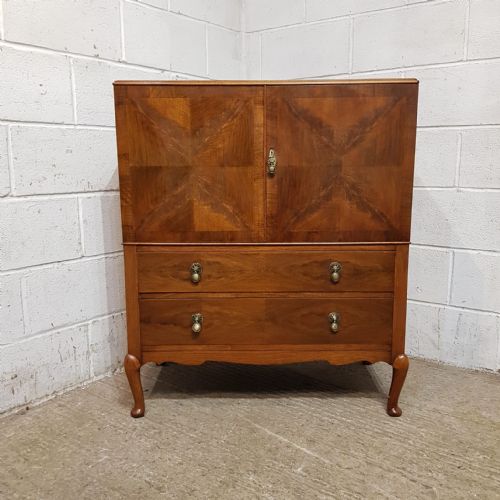
Original eighteenth-century examples emerge alongside significant numbers of early twentieth-century revival interpretations, particularly from the 1920s and 1930s. These later pieces often adopt cocktail or drinks cabinet formats while retaining the traditional raised silhouette.
The lower support typically utilises cabriole legs or a silver gilt stand, elevating the primary compartment off the floor. This configuration provides substantial storage capacity while maintaining a light visual footprint in a room.
Distinctions in Quality
The selection and bookmatching of burr walnut veneer determine the visual impact of the primary surfaces. Superior examples display symmetrical grain patterns that wrap continuously across the doors and drawers.
The relationship between the upper cabinet and the lower stand dictates historical integrity. Pieces featuring associated or later replacement stands differ from unified originals where the timber and construction methods match throughout.
Internal cabinetry execution reveals the underlying standard of the piece, from secret compartments to dovetailed drawer construction. Precision in the joinery ensures the heavy upper section rests securely on the supporting frame.
Listings feature walnut, burr walnut, oak, and mahogany across pieces spanning the early eighteenth century to the 1930s.
Maple & Co.
The Queen Anne Cabinet on Stand Glossary
- Cabriole leg
- A furniture leg that curves outward at the knee and tapers inward toward the foot, characteristic of the Queen Anne style. This form mimics the natural shape of animal limbs.
- Burr walnut
- A specialised timber veneer harvested from walnut tree growths, producing intricate, swirling grain patterns. It requires expert application to prevent splitting over large surfaces.
- Crossbanding
- A narrow strip of veneer laid perpendicular to the surrounding grain along the edges of a panel or drawer front. This technique frames the primary wood figure.
- Tallboy
- A tall chest of drawers consisting of one chest stacked directly upon another taller base section. The configuration maximises vertical storage space.
- Marquetry
- The art of applying decorative veneer pieces to a structure to form geometric or pictorial designs. Craftsmen utilise various tinted woods to achieve contrast.
Queen Anne Cabinet on Stand: Frequently Asked Questions
What is a cabinet on stand?
A cabinet on stand is a two-part furniture form featuring an enclosed upper storage section raised upon a distinct supporting base with legs.
This design lifts valuable contents away from damp floors and creates a prominent architectural feature within domestic interiors.
How do I spot a revival piece?
Revival pieces from the early twentieth century often display machine-cut dovetails, standardised hardware, and internal fittings adapted for modern uses like cocktail storage.
Examining the secondary timbers and the oxidation of the interior wood helps distinguish a 1920s interpretation from an 18th-century original.
Where should I place it?
These cabinets suit reception rooms, hallways, or dining spaces where their height and figured grain can be appreciated without crowding the floor plan.
Ensure the room humidity remains stable to protect the delicate walnut veneers from drying and cracking over time.
What is an associated stand?
An associated stand is a base paired with an upper cabinet at a later date, often because the original support was damaged or lost.
Collectors look closely at the mounting points and timber ageing to determine whether the two components originated together.